Subtotal $0.00


Magazines cover a wide array subjects, including but not limited to fashion, lifestyle, health, politics, business, Entertainment, sports, science,


Magazines cover a wide array subjects, including but not limited to fashion, lifestyle, health, politics, business, Entertainment, sports, science,
 Fact Checked by Coinsbeat Editorial Team | Expert Reviewed by Themiya
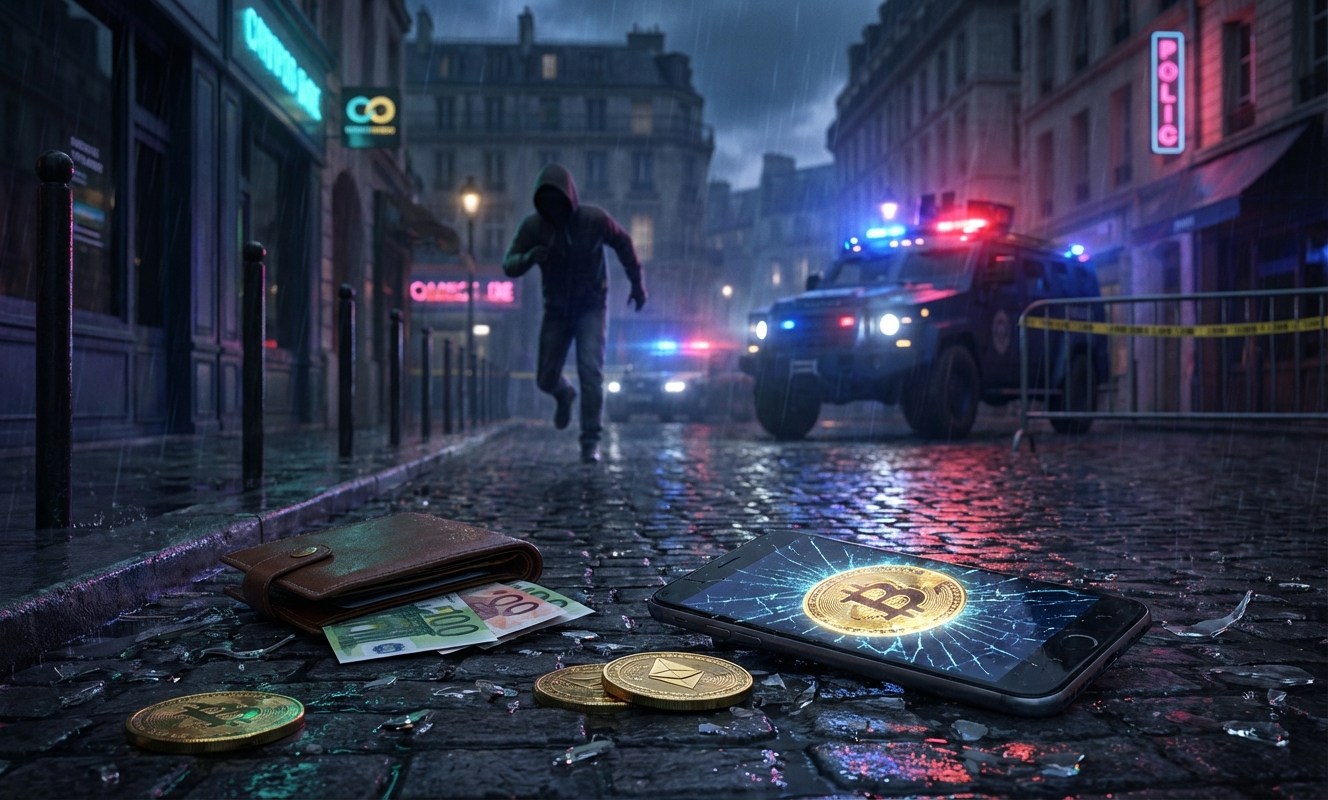
A suburban couple near Versailles. Three men faking police badges. A knife. And €900,000 in Bitcoin gone in minutes. That’s not a movie plot. That happened in March 2026, and it’s just the latest entry in what French authorities are now formally calling a “new criminal phenomenon.”
Let’s be real. This is not a story about one bad incident. This is a story about a structural crack in crypto’s founding ideology, one that the industry built an entire culture around and then quietly hoped nobody would exploit with a blade.
The whole self-custody pitch was built on a legitimate insight. Don’t trust exchanges. Don’t trust banks. Hold your own keys, and nobody can touch your money. Hardware wallets, seed phrases locked in safes, air-gapped cold storage. Brilliant against remote hackers. Completely useless when someone is pressing a knife against your ribs and demanding you sign a transaction right now.
That’s the wrench attack problem in plain language. And France is where it’s metastasizing fastest.
CertiK’s February 2026 report documented 72 verified physical coercion incidents globally in 2025. That’s a 75% jump year over year. Physical assaults specifically rose 250%. Europe accounted for over 40% of cases, and France led all countries. These are not random muggings. These are coordinated, intelligence-driven operations.
Think about what that requires. Criminals need to know who holds crypto, how much, and where they live. That’s not luck. That’s reconnaissance. And the crypto industry, with its culture of public wallet flexing, Twitter portfolios, and conference speaker bios listing fund sizes, has been feeding that intelligence operation for years without realizing it.
This didn’t explode overnight. It built methodically.
Notice the pattern here. It started with highly visible founders. Then it moved to their family members. Now it’s hitting private individuals with no public crypto profile at all, just a partner or professional connection to someone in the space. The victim pool is widening. Deliberately.

Here’s the thing. France isn’t just unlucky. Several structural factors made it a test case.
First, France has a genuinely large and visible crypto-wealthy community. Bpifrance, the state-backed lender, was actively funding crypto token projects. The ecosystem attracted serious capital and serious founders who were, frankly, very public about it. Rich targets, densely concentrated, in a country where criminal networks already had established infrastructure.
Second, and this is the part nobody wants to say out loud, KYC and reporting regulations may have created intelligence databases that got compromised. One related case from February 2026 explicitly involved suspicions of insider access to identity data from crypto-adjacent platforms. The Waltio breach was cited as a possible intelligence source for attackers. When you force crypto holders to register their identities and then fail to secure that data, you’ve essentially built a target list for organized crime. Honestly, that’s an uncomfortable thing for regulators to sit with.
Third, Bitcoin’s irreversibility is both its feature and its greatest liability in a coercion scenario. A bank transfer can be recalled. A SWIFT transaction can be frozen. An authorized Bitcoin transaction to a criminal’s wallet? Gone in the time it takes to broadcast a block. Speed plus irreversibility equals the perfect criminal instrument when you have physical control over the key holder.
Interior Minister Bruno Retailleau met with crypto industry leaders in May 2025. The meeting was kept so confidential that journalists were told not to film attendees, for their own security. That’s not how governments respond to phishing scams. That’s how they respond to organized crime targeting specific individuals.
What France put on the table was revealing.
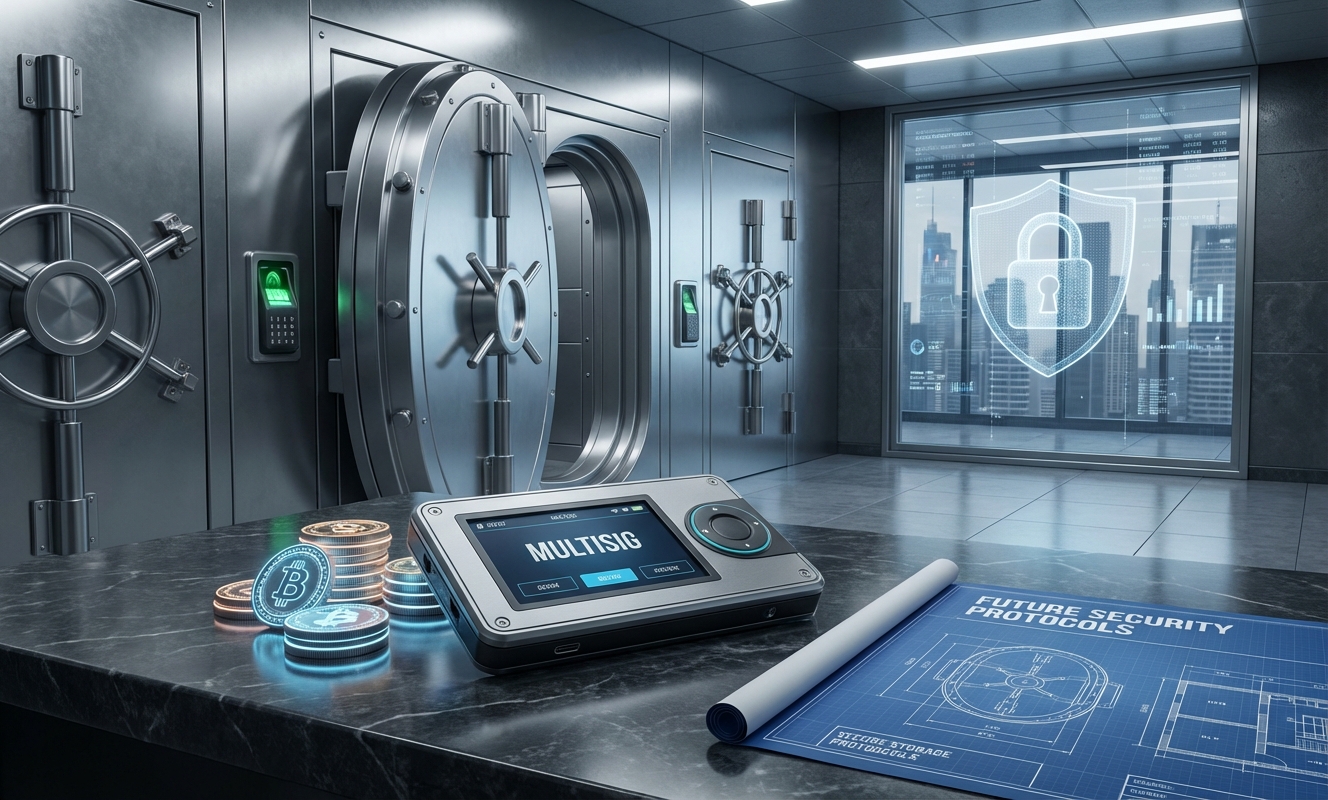
Read that last point again. The French state is now telling crypto holders to build in friction to their own access. Time-delayed transactions. Geographic key separation. Multi-signature approvals. These aren’t software features being suggested by a DeFi influencer. These are hostage risk mitigation strategies recommended by a national government.
There’s a genuinely unresolved tension sitting at the center of all this. Does more traceability help or hurt holders?
The French Interior Ministry’s position is that blockchain transparency is a tool. Since 2014, French magistrates have seized €90 million in crypto assets. Traceability enables recovery, prosecution, and deterrence. That argument has merit.
But Paymium’s Pierre Noizat, whose own daughter was almost kidnapped, publicly criticized European reporting requirements after the attack on his family. His argument is equally valid. KYC data and public registries don’t deter sophisticated, organized criminals. For those crews, that data is not a deterrent. It’s a shopping list.
The honest answer is that both positions are correct depending on who’s doing the attacking. For opportunistic street-level criminals, enforcement visibility might create hesitation. For the organized networks running the 2025 and 2026 French operations, that same visibility is pure reconnaissance value. And France’s cases look a lot more like the latter.
The adaptations already happening in the French crypto community tell you where the industry’s security model is heading. And frankly, it’s moving away from pure self-custody ideology toward something more operationally realistic.
Look, some of this will feel like a betrayal of crypto’s original ethos. Institutional custody? Multi-party approvals? That sounds uncomfortably close to the banking model that Bitcoin was designed to replace. But the alternative, as France is demonstrating, is becoming exit liquidity for organized criminal networks with knives and kidnapping logistics.
Here’s my skeptical take from an investor’s perspective. None of this is bearish for Bitcoin’s price in the short term. Criminals targeting Bitcoin holders is a perverse indicator of how desirable the asset has become. Nobody’s getting kidnapped over their Dogecoin bags.
But it does create a long-term friction problem for retail adoption. The entire pitch to mainstream users is that Bitcoin is simpler and safer than the legacy financial system. Explain that pitch to a suburban couple who just lost €900,000 at knifepoint. The security requirements that serious holders now need to consider, multisig, geographic separation, time locks, physical security, are not accessible to the average person. They’re complex, expensive, and operationally burdensome.
That creates a bifurcated market. Sophisticated, wealthy holders build fortress-level security infrastructure. Retail holders either stay on exchanges (reintroducing the custodial risk that self-custody was meant to solve) or hold in ways that make them vulnerable targets once their on-chain wealth becomes visible enough to attract attention.
Neither outcome is great for the “Bitcoin for everyone” narrative.
The French cases are not just a news story. They’re a threat model update that every serious crypto holder needs to run through their own situation.
The most dangerous shift in all of this is the one the French Interior Ministry already flagged in January 2026. The threat has moved from targeting visible professionals to targeting private individuals with no public crypto profile. The Le Chesnay couple weren’t industry figures. The magistrate wasn’t publicly known in crypto circles. Proximity to wealth, through a partner, a professional relationship, a neighbor, is becoming sufficient.
Once the targeting logic expands that far, there is no anonymity strategy that’s purely protective. The threat model has escalated from “don’t show off your wealth” to “the people around you are attack vectors too.” That’s a genuinely different and far harder problem to solve with any amount of technical sophistication.
France isn’t just the world’s worst crypto crime statistic right now. It’s the preview of what happens in every crypto-dense city once organized criminal networks realize the opportunity. The question isn’t whether this spreads. The question is whether the industry builds real-world security infrastructure fast enough to get ahead of it.
Based on the current pace? That’s not a bet I’d make with confidence.
References & Sources:
Criminals in France are increasingly resorting to physical violence, extortion, and home invasions (often referred to as “$5 wrench attacks”) to steal cryptocurrency. Because crypto transactions are irreversible and pseudonymous, attackers see holders as highly lucrative, untraceable targets. While these attacks previously focused on wealthy industry insiders, executives, or prominent influencers, organized crime rings are now broadening their scope to target average retail investors.
Attackers use a variety of sophisticated methods to identify and locate crypto holders. This includes exploiting data breaches from hardware wallet providers and crypto exchanges, utilizing social engineering, and monitoring social media activity. Many victims inadvertently expose themselves by boasting about their digital asset portfolios, NFT purchases, or new luxury lifestyles online, making it easy for criminals to trace their real-world identities and physical addresses.
A “$5 wrench attack” is a colloquial term in the crypto community for a physical assault or extortion attempt where a thief uses real-world violence—metaphorically threatening the victim with a cheap $5 wrench—to force them to surrender their private keys, passwords, or hardware wallet pins. Even if an investor utilizes the most advanced digital security protocols, such as cold storage or multi-factor authentication, they remain physically vulnerable to these brutal tactics.
To mitigate the risk of physical attacks, crypto investors must practice strict operational security (OpSec). The most crucial step is maintaining absolute silence about your holdings—never brag about your crypto wealth on social media or in public settings. Additionally, investors should use P.O. boxes for shipping crypto-related hardware, employ multi-signature (multisig) wallets that require multiple geographic approvals to move funds, and consider setting up a “decoy wallet” holding a small amount of funds to appease an attacker if forced under duress.