Subtotal $0.00


Magazines cover a wide array subjects, including but not limited to fashion, lifestyle, health, politics, business, Entertainment, sports, science,


Magazines cover a wide array subjects, including but not limited to fashion, lifestyle, health, politics, business, Entertainment, sports, science,
 Fact Checked by Coinsbeat Editorial Team | Expert Reviewed by Themiya
Bitcoin hit $72,734 on ceasefire headlines and traders immediately started celebrating. Slow down. A two-week truce between the U.S. and Iran is not a macro all-clear. It’s a pause in the worst-case scenario, and those two things are not even close to the same trade.
Here’s the thing about relief rallies. They price the removal of the immediate panic. They don’t price the slow grind of what comes after. Oil pulled back from its shock highs. Equities bounced. BTC followed. Classic risk-on rotation. But the fundamental plumbing underneath all of this, the physical cargo flows, the insurance terms, the shipping routes through the Strait of Hormuz, none of that snapped back.
The Strait carried 20.9 million barrels per day in the first half of 2025. That’s roughly 20% of global petroleum consumption and a quarter of all seaborne oil trade. You don’t fix that kind of chokepoint with a press release and a two-week handshake.
JPMorgan still sees oil elevated through Q2 with a credible path back to $150 if disruptions bleed into mid-May. UBS says infrastructure damage alone means production normalization takes considerably longer than the headline suggests. The EIA is flat-out saying that full flow restoration will take months, even after the conflict formally ends. These aren’t fringe takes. These are the institutions managing the portfolios of people who move markets.
Let’s be real about what JPMorgan, UBS, and the EIA are actually saying right now. Their research hasn’t pivoted to bullish. It’s pivoted from “active crisis” to “slow burn.” That’s a meaningful distinction, and most retail traders are completely missing it.
Morgan Stanley puts the consumer transmission plainly. A 10% oil price rise from a supply shock lifts U.S. headline consumer prices by roughly 0.35% over three months, with real consumption staying depressed for five to six months after that. So even if oil cools from the panic highs, the inflation pass-through is already baked in and running on a lag.
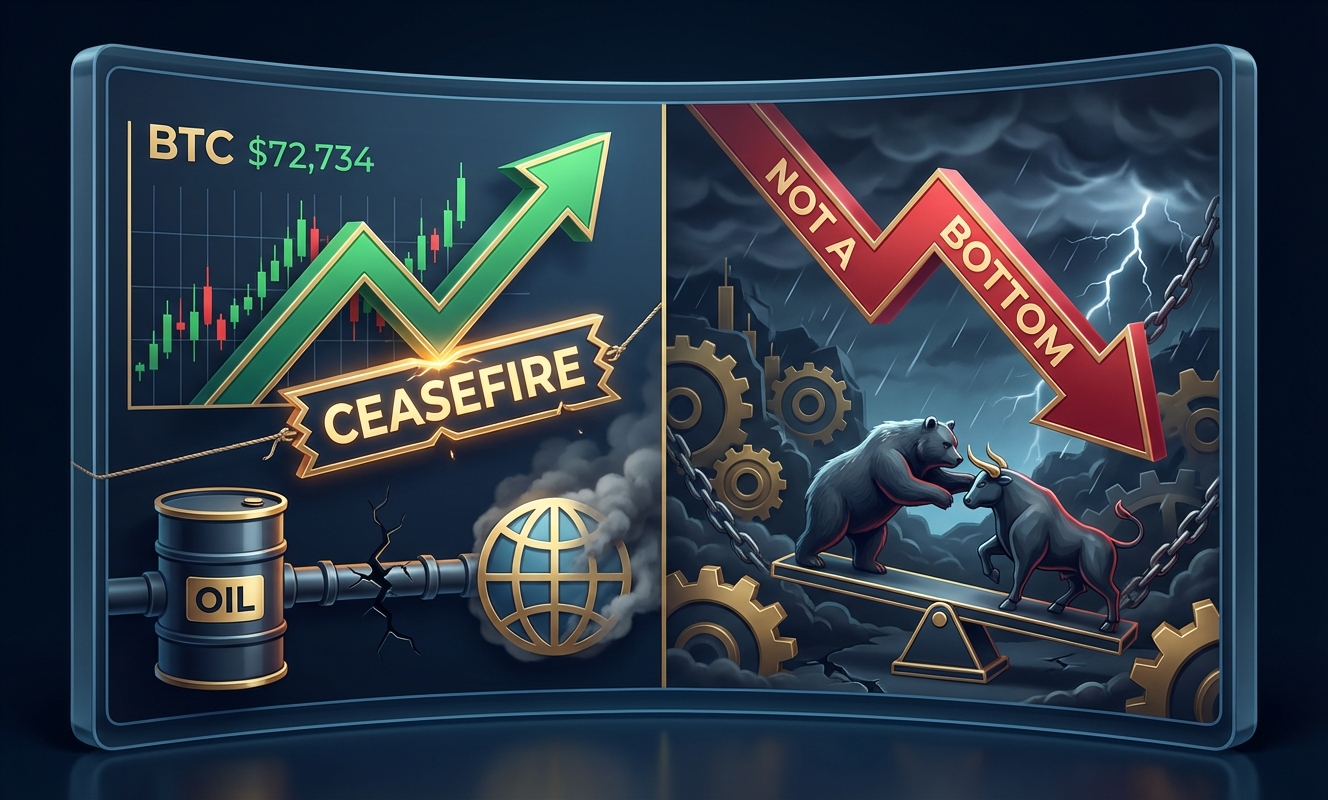
The transmission mechanism here is not complicated, but people keep skipping steps. Oil goes up. Inflation stays sticky. The Fed can’t cut. Liquidity stays tight. Risk assets, including Bitcoin, lose their bid. That chain hasn’t broken. The ceasefire just put a little slack in the first link.
BTC hit an intraday low of $67,769.96 on April 7 when the oil shock, a firmer dollar, and higher Treasury yields all hit simultaneously. The rebound since then is traders pricing a lower probability of an immediate worst-case energy spiral. That’s a legitimate trade. But it’s not a new bull market thesis.
UBS already pushed its Fed rate cut expectations back. Goldman raised its U.S. recession probability. The IMF said even a swift resolution leads to slower growth and higher inflation forecasts. Dallas Fed economists modeled a full Strait of Hormuz closure as cutting annualized global real GDP growth by 2.9% in a single quarter. We didn’t get a full closure, but we got close enough that the economic damage has already started bleeding through.
Honestly, the rate-cut question is now the only question that matters for Bitcoin’s next real move. Traders aren’t asking whether the oil shock is still intensifying. They’re asking whether the relief lasts long enough to give the Fed political and economic cover to ease later this year. That’s a much harder question to answer with a two-week ceasefire on the table.
Look, the base case has shifted from outright market panic to something more frustratingly ambiguous. Here’s how to think about the range of outcomes:
The distinction between reopening and normalization is where every credible institution is now converging. That’s not coincidence. That’s the actual signal.
Why would Iran agree to a two-week ceasefire while still maintaining structural leverage over cargo flows? Because a pause is not a surrender. Tehran’s primary card has always been Hormuz control. A short truce lets them bank diplomatic goodwill, ease international pressure, and still retain the physical infrastructure of leverage. The U.S. intelligence assessment from April 3 didn’t disappear because a truce was announced. It became a structural footnote instead of a live directional call.
Between you and me, the ceasefire is as much about Iran managing its own economic pain as it is about genuine de-escalation. Prolonged closure hurts Iran’s export revenues too. A pause buys everyone breathing room. It doesn’t resolve the underlying strategic standoff, not even close.
There’s also an interesting wrinkle that just emerged. Reports indicate Iran is now proposing Bitcoin payments as tolls for safe passage through the Strait. If that story develops legs, it introduces a scenario where BTC becomes embedded in energy geopolitics in a way that’s simultaneously bullish for narrative and deeply complicated for regulatory and macro optics. Watch that thread carefully.
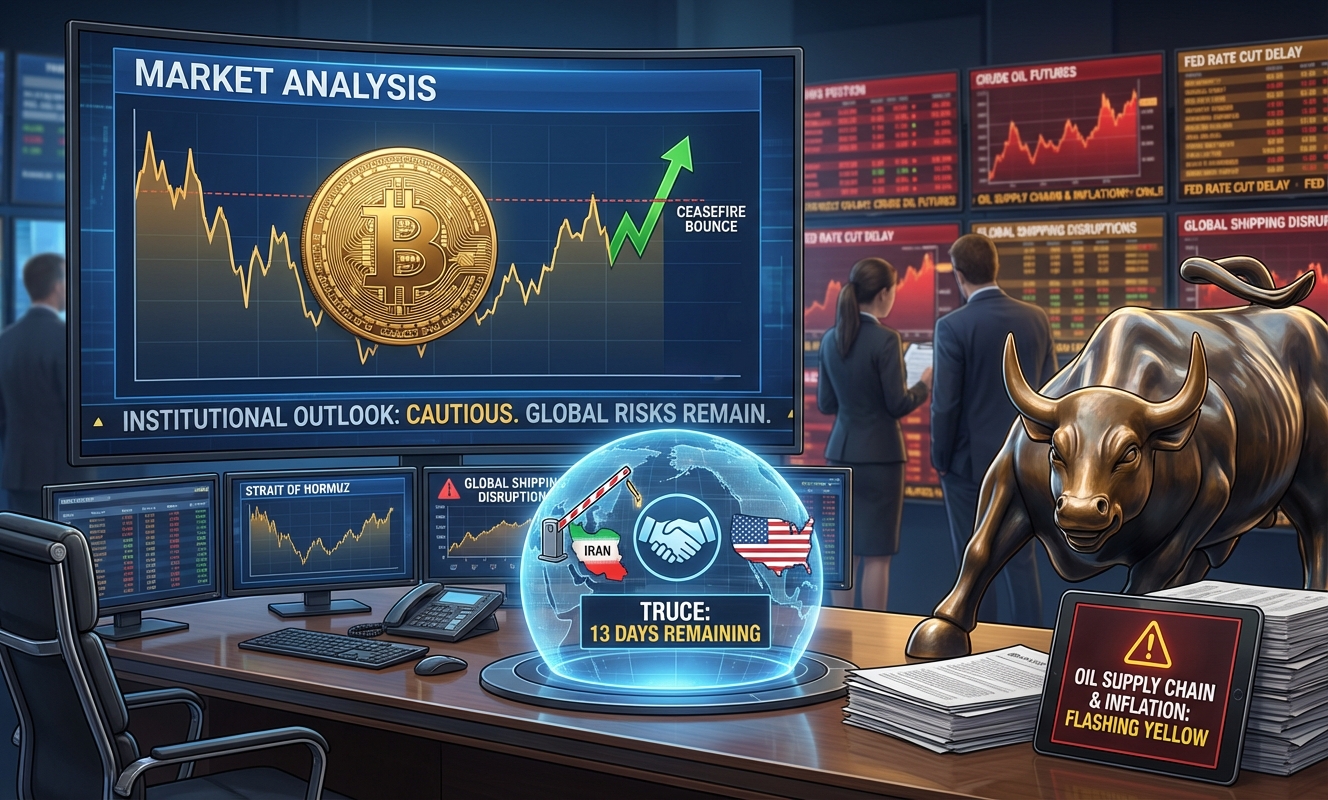
The current relief rally is priced on a two-week truce. That’s the entire foundation. If disruption re-escalates before mid-May, markets don’t just give back the relief gains. They overcorrect, because positioning shifted bullish on the ceasefire narrative and anyone who chased the bounce becomes exit liquidity for the next leg down.
Physical cargo pricing is the real-time indicator here, not front-month futures. During the peak panic, North Sea Forties crude hit $146.09 per barrel, Dated Brent reached $141.365, and some prompt cargoes traded above $150. European jet fuel hit $226.40 per barrel. That gap between physical cargo pricing and headline futures is where the actual inflation transmission lives. Watch prompt cargo spreads, not just Brent on a chart.
The bull case requires genuine free navigation, not just a ceasefire on paper. Insurance markets normalizing. Cargo routing returning to pre-conflict patterns. Shipping operators actually sending tankers back through without security premiums eating the economics. Until those conditions are visibly met, every Bitcoin rally built on ceasefire optimism carries a built-in timer.
Don’t front-run normalization. The mistake traders make in exactly these situations is treating the announcement as the event. It’s not. The event is when physical oil markets, insurance terms, and Fed rate-cut pricing all confirm that the macro chain is actually loosening, not just paused.
The relief rally is real. The macro all-clear is not. Those are two different things, and conflating them is how traders turn a good trade into a bad hold.
References & Sources:
Historically, Bitcoin has shown mixed reactions to geopolitical escalations, including tensions involving Iran. While Bitcoin has ticked up during initial threats of conflict as some investors seek non-traditional hedges against traditional market volatility, Wall Street warns that this momentum is often fragile. A full-scale conflict or disruption in critical areas like the Strait of Hormuz could lead to broader macroeconomic panic. If global equities experience a sharp downturn, Bitcoin may also face significant sell-offs due to widespread liquidity grabs, meaning a sustained upward trajectory is not guaranteed.
Geopolitical tensions in the Strait of Hormuz primarily affect Bitcoin through their impact on the broader global economy. Because the strait is a vital chokepoint for global oil supplies, disruptions there can trigger massive spikes in energy prices and subsequent inflation. Wall Street analysts warn that when central banks respond to this inflation with tighter monetary policies, risk-on assets—including cryptocurrencies like Bitcoin—often face severe downward pressure. Consequently, any short-term crypto rally during the initial shock may be highly fragile.
Bitcoin’s recent price rebound is considered fragile because it is occurring under the shadow of significant, unresolved macroeconomic and geopolitical threats. Wall Street has cautioned that the disruption in the Strait of Hormuz is not truly over. If supply chains are crippled and traditional financial markets plummet, institutional and retail investors alike are likely to liquidate highly volatile assets like Bitcoin to move into cash or traditional safe havens. This makes the current crypto rebound vulnerable to sudden and sharp reversals.
The narrative of Bitcoin acting as a “digital gold” or safe haven during Middle East conflicts remains highly debated among financial experts. While Bitcoin occasionally experiences short-term price bumps during initial geopolitical shocks, its long-term behavior often mirrors high-risk tech equities. If a conflict escalates into a severe economic downturn or a major disruption of global trade routes, the resulting liquidity crunches can drag Bitcoin prices down alongside traditional stocks, making it a potentially unreliable safe haven during prolonged global crises.