Subtotal $0.00


Magazines cover a wide array subjects, including but not limited to fashion, lifestyle, health, politics, business, Entertainment, sports, science,


Magazines cover a wide array subjects, including but not limited to fashion, lifestyle, health, politics, business, Entertainment, sports, science,

 Fact Checked by Coinsbeat Editorial Team | Expert Reviewed by Themiya
The party is over. If you’ve been using crypto’s wash-sale exemption to harvest tax losses and immediately buy back in, Congress has officially put a target on your strategy. The Digital Asset PARITY Act discussion draft isn’t some vague future threat. It’s a concrete, scoped-out rewrite of Section 1091, and the crackdown half of it reads like finished legislation.
Let’s be real about what this bill is. At its core, the PARITY Act is two very different documents stapled together.
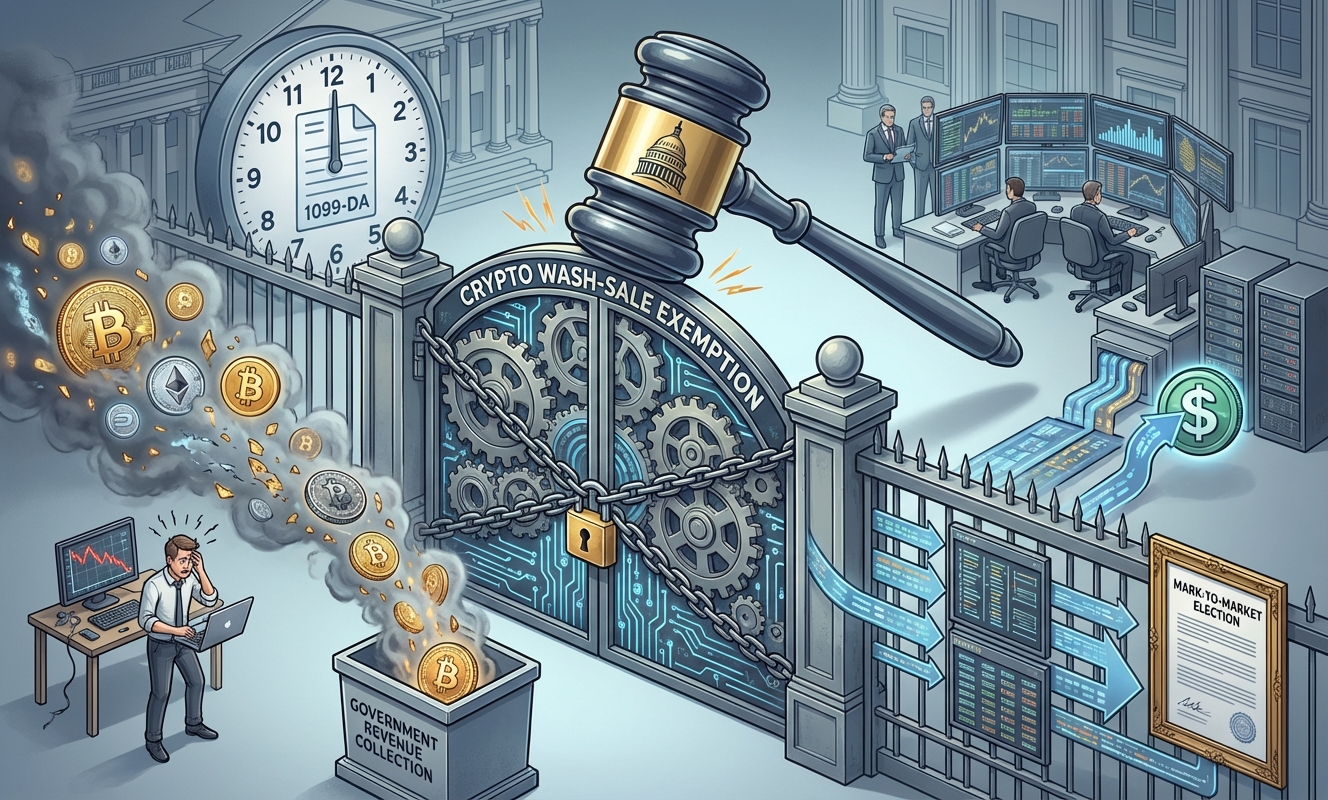
On one side, you have a sharp, decisive wash-sale expansion that covers Bitcoin, actively traded digital assets, derivatives, options, forwards, futures, and short positions. The 30-day replacement window, the same rule that has handcuffed stock investors for decades, now applies to your crypto portfolio. Effective immediately upon enactment. No phase-in. No grace period.
On the other side, you have a stablecoin payment carveout that reads like a first draft. Congress itself flagged multiple sections as still under “technical drafting review.” The $200 per-transaction threshold? Maybe included. The annual aggregate limit? Still being debated. The anti-abuse guardrails for related-party transactions? Flagged but not yet written into black-letter law.
The asymmetry here is not accidental. Congress knows exactly what it wants to kill. It’s still figuring out what it wants to build.
Here’s the thing. The IRS just finalized Form 1099-DA broker reporting requirements, covering all digital asset sales from January 1, 2025 onward. For the first time, the federal government has standardized visibility into retail crypto transactions at scale. The wash-sale loophole closure isn’t coincidental timing. It’s the logical sequel.
Think about it this way. The reporting infrastructure just got built. Now Congress is writing the rules to generate revenue from that infrastructure. The White House’s own 2025 digital assets report explicitly recommended extending wash-sale rules to crypto while exempting payment stablecoins. The Joint Committee on Taxation flagged the gap. This isn’t a surprise move. This is policy that was always coming, and the political will to push it through is clearly stronger on the crackdown side than on the relief side.
The real beneficiaries of this bill, once you strip away the press release language about “parity,” are institutional and professional trading shops. Why? Because the mark-to-market election, accessible to dealers and traders in digital assets, gives sophisticated operations a cleaner accounting framework. Retail traders lose their loophole. Professional desks get a structured elections pathway. Sound familiar?
Honestly, the Bitcoin and broader altcoin market implications here are significant and underappreciated by most people still focused on price charts.
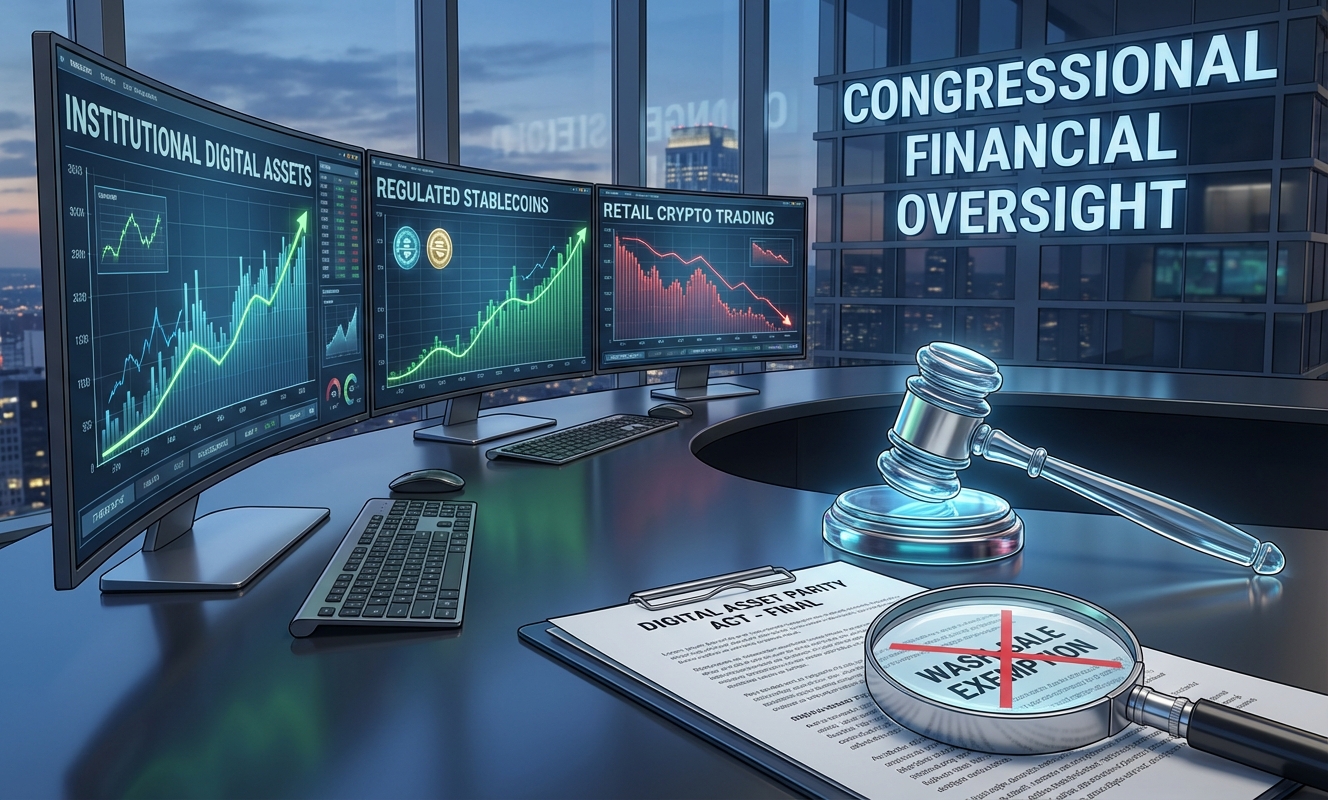
Look, the optimistic outcome is that the stablecoin carveout gets finalized cleanly, the $200 per-transaction threshold makes everyday crypto payments genuinely frictionless, and the whole thing accelerates on-chain dollar adoption. That’s the press release version.
The realistic version? The wash-sale crackdown survives largely intact because it has bipartisan support, White House backing, and generates federal revenue. The stablecoin relief section stays stuck in technical drafting review because the banking lobby and crypto firms are still fighting over stablecoin economics, specifically over whether stablecoin issuers can pay yield. Congress doesn’t resolve that standoff before the legislative calendar tightens. Retail traders lose the loophole with zero offsetting simplification.
The broader crypto legislation hitting a wall over stablecoin yield isn’t a footnote here. It’s the exact gridlock that could leave the PARITY Act with one functioning half.
This is the part nobody is saying loudly enough. The wash-sale effective date is upon enactment, not after a transition year. That means the moment this bill passes, any loss-harvesting strategy you’re running on crypto assets becomes subject to the 30-day rule retroactively for that tax year.
If you’ve built a portfolio management approach around crypto’s wash-sale exemption, here is what you need to be thinking about right now:
Between you and me, the real story here isn’t the stablecoin payment innovation angle that the policy architects are leading with. It’s that Washington finally has the reporting infrastructure to enforce wash-sale rules on crypto at scale, and it’s moving to use it. The relief side of this bill is a work in progress. The crackdown side is done.
References & Sources:
Yes, the IRS is well aware of your cryptocurrency purchases if you use a US-based exchange. Legal crypto exchanges are required to collect Know Your Customer (KYC) data and report user activity directly to the IRS. Starting with the 2025 tax year, this process is streamlined via IRS Form 1099-DA, which explicitly reports gross proceeds from your digital asset transactions. With Congress actively proposing the removal of Bitcoin tax loopholes to fund new initiatives, regulatory oversight and IRS tracking are only expected to become more rigorous.
Yes, any realized profit from cryptocurrency—even $1,000—is taxable. The IRS treats digital assets like Bitcoin as property, meaning they are subject to capital gains taxes similarly to stocks, bonds, and real estate. If you sell, trade, or spend crypto at a profit, you are legally required to report it on your federal income tax return. However, if you simply purchase and hold the cryptocurrency in your wallet without cashing out or swapping it, you do not have to pay taxes on those unrealized gains.
The proposed legislation primarily targets the “wash sale” loophole. In traditional finance, the wash sale rule prevents investors from selling an asset at a loss to claim a tax deduction, only to buy that exact same asset right back within 30 days. Because the IRS currently classifies Bitcoin as property rather than a security, crypto investors have legally exploited this loophole to harvest massive tax losses while immediately repurchasing their Bitcoin. Congress is proposing to close this loophole for decentralized cryptocurrencies to capture billions in previously lost tax revenue.
Lawmakers are proposing to shift certain regulatory safe harbors and tax exemptions toward regulated stablecoins to incentivize the use of US dollar-backed digital currency. Unlike Bitcoin, which is highly volatile and frequently utilized for speculative trading, regulated stablecoins maintain a 1:1 peg with the US dollar. By providing favorable tax treatments—such as exempting minor capital gains on everyday stablecoin purchases (the “de minimis” exemption)—Congress aims to integrate compliant digital assets into the mainstream payment system, encourage everyday utility, and protect the global dominance of the US dollar.
