Subtotal $0.00


Magazines cover a wide array subjects, including but not limited to fashion, lifestyle, health, politics, business, Entertainment, sports, science,


Magazines cover a wide array subjects, including but not limited to fashion, lifestyle, health, politics, business, Entertainment, sports, science,

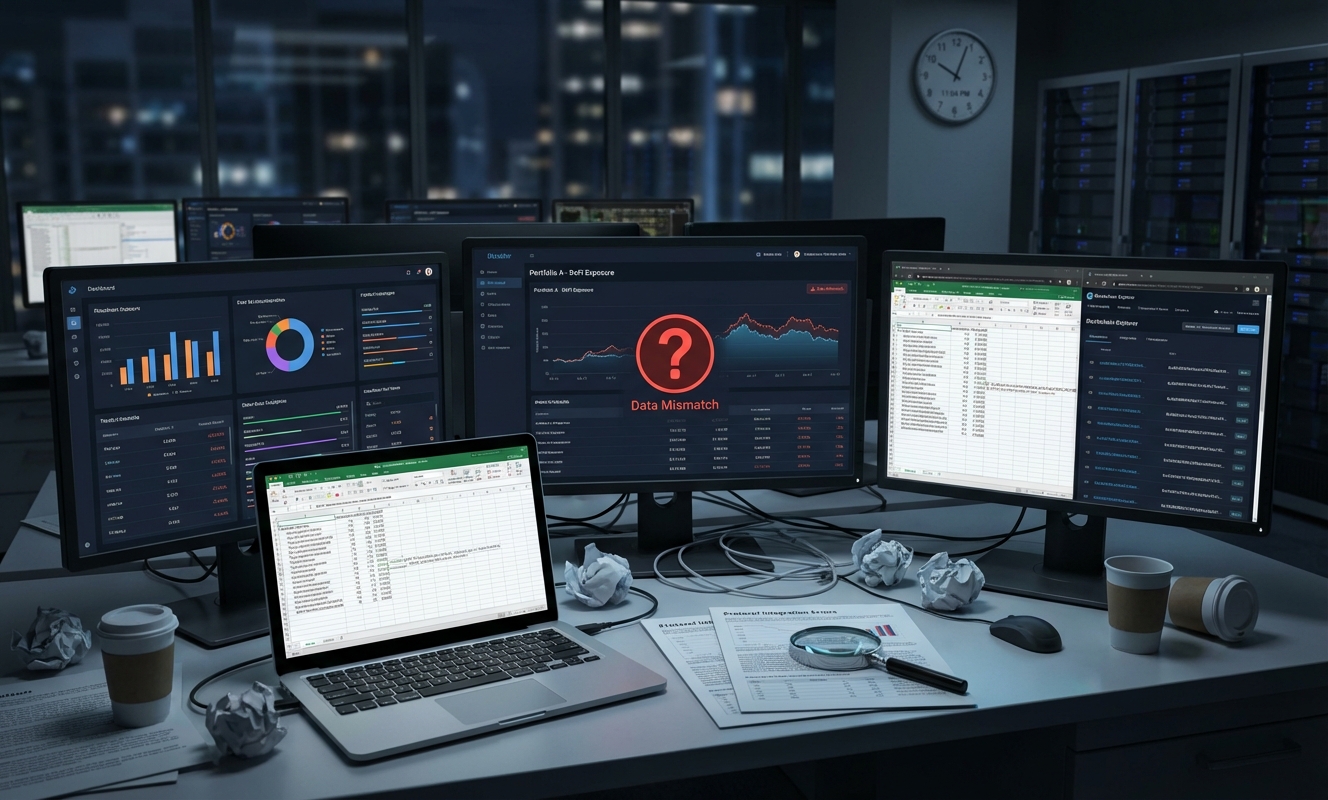
Institutional money is flooding into crypto. Liquid funds are multiplying. DeFi strategies are finally getting a seat at the serious table. And somewhere in the background, a hedge fund manager is hunched over a spreadsheet at 11 PM trying to manually reconcile three chains, five exchanges, and a Pendle position that won’t cooperate.
That’s the real picture. Not the glossy institutional narrative. The unglamorous, operationally chaotic reality that nobody in a conference keynote is going to admit to.
Here’s the thing about the crypto fund space right now. The capital is there. The strategies are sophisticated. But the back-office infrastructure? It’s embarrassingly behind.
Thomas Pratter, CEO at Renesis, is calling this out directly. And honestly, he’s right. Most emerging fund managers are stitching together their operations with custom scripts, manual exports, and spreadsheets that one bad API call away from turning into a liability. For a CeFi-only shop running spot and perps on centralized exchanges, that’s annoying but survivable. For anyone running real DeFi exposure, it’s a slow-motion operational disaster.
Think about what a DeFi-native fund is actually dealing with:
Now try producing a clean NAV for your LPs by Monday morning. Good luck.
Let’s be real about what’s actually at stake here. This isn’t a minor operational headache. It’s a capital-raising problem.
The funds launched in 2022 are hitting their three-year track record milestone. Institutional allocators, the ones writing the serious checks, are demanding Sharpe ratios, proper drawdown analysis, and auditable performance history. If your NAV calculation doesn’t accurately capture your DeFi positions, you aren’t just operationally messy. You’re telling sophisticated allocators that you don’t have control of your own book.
That’s career-ending stuff in traditional finance. In crypto, people have gotten away with it because the whole industry was early-stage chaotic. That window is closing fast.
The deeper issue is structural. Legacy portfolio management systems were built for a world where every position has a tidy ticker symbol and lives on a centralized exchange. Bolting DeFi onto these systems typically means wallet scanning. Which, fine, it tells you token balances. But it tells you absolutely nothing about the actual position mechanics. It has no idea what your Aave collateralization ratio is, how your impermanent loss is stacking up, or what your real funding rate exposure looks like on Hyperliquid.
Pratter’s piece argues that AI is the only realistic solution to keeping pace with DeFi’s fragmentation. And I’ll give him partial credit here, because the logic actually holds.
DeFi does move faster than any manual engineering team can track. New protocols every week. Forks. Upgrades. Mechanics that change without warning. A system that relies purely on hand-coded protocol integrations will always be chasing the market. Always behind by at least one cycle.
The pitch from Renesis is that their AI-powered categorization layer sits on top of 80+ manually mapped protocols and handles the long tail automatically. So when some new yield aggregator nobody’s heard of launches on a chain your engineering team hasn’t mapped yet, the system still recognizes it and categorizes it accurately in your portfolio view.
Honestly, that’s a reasonable use case for AI. Not magic. Not hype. Just practical pattern recognition applied to a genuinely fragmented data problem.
But here’s my skeptic’s lens on this. “AI-powered” is also the most abused phrase in fintech marketing right now. Every vendor from Bermuda to Singapore is slapping it on their product page. What actually matters is depth of protocol coverage, accuracy of position valuation, and whether the system handles edge cases without silently misfiring. Those are the questions any fund manager should be stress-testing before they trust a platform with live NAV calculations.
Strip away the marketing and the actual requirements are straightforward. Pratter outlines them and they’re hard to argue with:
The execution piece is the one most people underestimate. Front-running risk, slippage, and timing are all made significantly worse when your execution layer and portfolio layer don’t talk to each other. You’re flying partially blind every time you put on or take off a position.
Look, this piece is fundamentally a founder selling his product. Let’s not pretend otherwise. Pratter built Renesis, Renesis solves this problem, here’s a sign-up link. That’s the structure. And that’s fine. Founder-led product explanation is one of the most useful formats in this industry if the underlying problem is real.
The underlying problem is absolutely real. The tooling gap in DeFi fund operations is well-documented by anyone who’s spent time in the trenches. The spreadsheet horror stories are not exaggerated.
What’s less certain is whether the solutions currently on the market, Renesis included, have truly cracked the depth-of-coverage problem at scale. Claiming your AI handles the long tail of DeFi protocols is a bold statement when new L2s, new AMM designs, and new yield mechanics are launching faster than most teams can audit. The proof is in live portfolio accuracy under stress conditions, not in a demo environment.

If you’re a fund manager looking at platforms like Renesis, here’s how you actually stress-test one before handing it your NAV calculation:
Here’s the catch nobody talks about when it comes to automated DeFi portfolio tools. The more you trust automation, the more catastrophic a silent error becomes.
Manual reconciliation is painful. But it also means a human eyeball catches the moment something looks wrong. If your automated system misclassifies a position, misfires on a valuation, or fails to recognize a protocol upgrade, and you’ve removed the human check layer, that error compounds silently into your NAV, your LP reports, and potentially your actual trading decisions.
The right model is automation that surfaces discrepancies for human review, not automation that replaces human review entirely. Any platform that can’t clearly show you where it’s uncertain about a classification should be treated with serious caution. Confident misfires are far more dangerous than obvious gaps.
The infrastructure is maturing. The tools are getting better. But verify everything before you trust anything with the numbers that matter most.
Security risks are widely considered the biggest problem in DeFi, presenting a massive hurdle for liquid crypto funds. The open-source nature of the decentralized finance ecosystem, combined with the extreme complexity of smart contracts, leaves critical vulnerabilities that hackers constantly exploit. For liquid crypto funds trying to generate yield, navigating these smart contract susceptibilities without compromising client capital is a systemic challenge that goes largely undiscussed.
Legendary investor Warren Buffett has been fiercely critical of the cryptocurrency market, warning investors to take strict precautions. He has famously stated with near certainty that cryptocurrencies will come to a “bad ending.” Although he avoids shorting crypto due to its unpredictable volatility, he once told CNBC that he would gladly buy a five-year put option on every cryptocurrency if possible. This anti-crypto stance highlights the intense institutional skepticism and risk-management hurdles that liquid crypto funds face today.
Yes, you can easily lose money in liquidity mining due to a phenomenon called “impermanent loss.” When a liquid crypto fund or an individual investor provides assets to a DeFi liquidity pool, the constant price fluctuations change the ratio of the deposited tokens. If the liquidity provider decides to withdraw their share during a major price divergence, they often realize a net loss compared to if they had simply held their crypto assets. This makes liquidity mining a highly risky venture that requires careful calculation and hedging.
While DeFi promises high yields and decentralized token swaps, liquid crypto funds often face a dangerous liquidity mismatch. Many DeFi protocols require capital to be locked up for specific durations or suffer from sudden drains in liquidity during extreme market volatility. If a fund promises immediate liquidity to its investors but has its capital tied up in illiquid pools or complex staking mechanisms, it creates a structural crisis. In a mass withdrawal scenario, these funds could be forced to exit at massive slippage or freeze redemptions entirely.