Subtotal $0.00


Magazines cover a wide array subjects, including but not limited to fashion, lifestyle, health, politics, business, Entertainment, sports, science,


Magazines cover a wide array subjects, including but not limited to fashion, lifestyle, health, politics, business, Entertainment, sports, science,
 Fact Checked by Coinsbeat Editorial Team | Expert Reviewed by Themiya
A token launches. Numbers explode overnight. Holders triple in a day. A billion tokens get staked within hours. The project’s own tracker is the primary source of truth. If your instincts aren’t already tingling, they should be.
Let’s be real about what’s happening with G Coin and Playnance. There’s a genuine product underneath this launch. But there’s also a sponsored content campaign, a self-reported public tracker, and some metrics that deserve a second look before anyone starts allocating capital.
Here’s the sequence of events Playnance wants you to focus on. On March 13, the project reportedly had 200,000+ holders and a $38 million market cap before the token even launched. By March 18, that jumped to 623,272 holders. That’s roughly a 3x increase in roughly 24 hours.
Organic? Maybe. But in crypto, when holder counts triple in a single day around a token generation event, it usually means one of two things. Either the project has genuine viral traction, or the definition of “holder” is doing a lot of heavy lifting.
None of this proves fraud. But it should give every serious investor pause.
The staking rollout on March 16 is genuinely interesting from a tokenomics standpoint. More than 1 billion GCOIN locked within hours of trading launch. Lock periods spanning 6 to 18 months. Rewards tied to ecosystem activity rather than fixed inflation. On paper, this sounds disciplined.
Look closer though. When you incentivize people to lock tokens immediately after a TGE, you’re compressing circulating supply right at the moment price discovery begins. That’s not inherently manipulative. But it is a structural mechanism that supports price during the window when early backers and presale participants might otherwise be selling.
The “rewards tied to ecosystem activity” framing is also worth unpacking. It sounds more sustainable than inflationary rewards. But if the ecosystem activity metrics are also self-reported through the same tracker infrastructure, you’re trusting one company’s dashboard for multiple layers of your investment thesis. That’s a concentration of information risk that most investors don’t consciously price in.

Playnance says PlayBlock supports 10,000+ on-chain games, integrates with 30+ studios, and processes roughly 2 million on-chain transactions per day. Those are not small claims. They’re actually enormous claims for any blockchain gaming ecosystem.
For context, most established gaming chains with serious venture backing and years of development struggle to hit sustained daily transaction volumes anywhere near that figure. Honestly, if those numbers are accurate and verifiable on-chain, G Coin deserves far more attention than it’s currently getting from major analysts. If they’re not independently verifiable, they’re marketing copy. The difference between those two scenarios is the entire investment thesis.
This is the part nobody in the launch coverage wants to say loudly. The source article carries a paid/sponsored disclosure. Multiple pieces of positive coverage cited in the launch narrative, including MEXC distribution content and exchange-hosted articles, are promotional by nature.
That doesn’t mean the project is a scam. Plenty of legitimate projects use sponsored content during launches. But it does mean the information ecosystem around G Coin’s debut is not neutral. You’re reading a carefully constructed narrative, not organic analyst coverage. The “public tracker as scorecard” framing is smart marketing. It makes Playnance look transparent while keeping all the data inside their own infrastructure.
Positioning a token as utility-first is the right move after years of empty launches burning retail. It sounds credible. It differentiates from the blank-slate tokens that have wrecked countless portfolios.
But here’s the thing. Utility claims require utility proof. On-chain verification. Third-party audits. Real game studio partnerships with named counterparties. Published smart contract addresses. TVL data from neutral sources like DeFiLlama. None of the launch coverage I’ve seen provides that layer of verification. It provides impressive aggregate numbers from Playnance’s own systems.
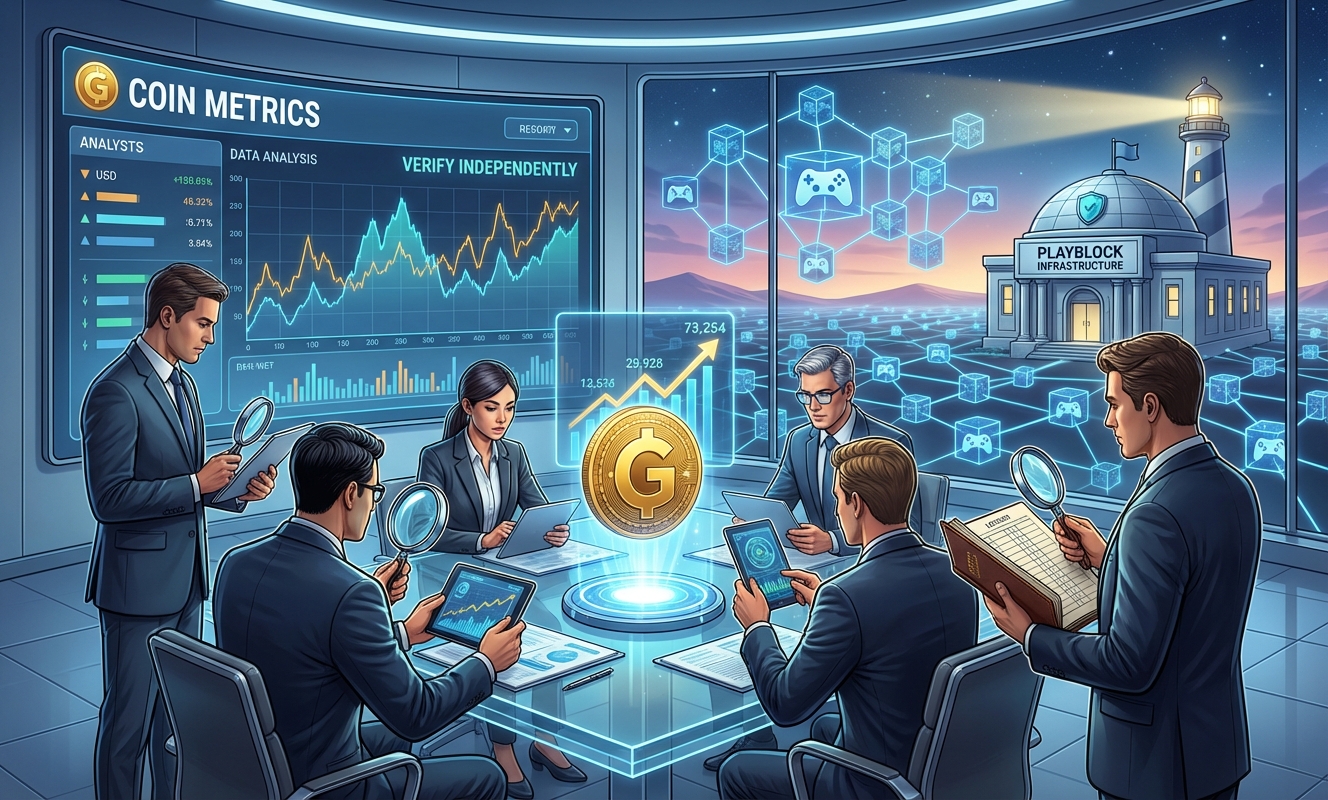
Between you and me, the gaming and prediction market sector is one of the few crypto verticals with a credible path to mainstream user adoption. If Playnance’s ecosystem metrics are even half-real, there’s a long-term story worth watching here. But “watching” and “buying at launch with staking commitments of 18 months” are very different risk profiles.
Presale participants have been holding since before March 13. Staking provides a mechanism to voluntarily lock supply. But early withdrawals are possible, and they only forfeit rewards, not principal. In a declining price environment, any presale holder who’s significantly in profit can exit without staking penalties by simply absorbing the reward forfeiture as a cost of liquidation.
Retail buyers entering during the launch week excitement are, structurally, the most recent money in. In crypto, the most recent money in is almost always providing exit liquidity for earlier participants. That’s not unique to G Coin. It’s the architecture of nearly every token launch. But it’s worth naming plainly so you can position accordingly.
Watch the tracker. Verify the on-chain data independently. And if the numbers hold up under scrutiny, this might actually be one of the more interesting gaming ecosystem plays of 2025. Just don’t let a polished dashboard do your due diligence for you.
References & Sources:
Yes, but it is important to distinguish between different tokens sharing the name. While there is a traditional G-Coin® that represents a digital title to physical gold, Playnance’s G Coin is a very real digital asset specifically built for the Web3 and blockchain gaming space. Playnance’s G Coin functions as a utility token that powers its ecosystem, allowing users to interact, trade, and earn rewards on a decentralized network. Its launch week serves as a live demonstration of its real-world application and market viability.
Spotting a crypto coin that is ready to surge in price requires monitoring trading volume, liquidity changes, and social sentiment. In many cases, sudden volatility or abnormal volume spikes in illiquid assets can signal an artificial “pump and dump” scheme driven by manipulation. Advanced traders often use on-chain analytics and machine learning platforms to track these activities. However, for utility-driven projects like Playnance’s G Coin, an organic price “pump” or rapid growth phase is usually spotted by watching real-time adoption metrics, network stress tests during launch week, and genuine community engagement rather than artificial market manipulation.
Playnance’s G Coin is the native utility token designed to power the Playnance Web3 gaming and decentralized finance (DeFi) ecosystem. Its primary utility includes facilitating seamless zero-gas transactions, rewarding active participants, and fueling the internal economy of the platform. By turning its launch week into a real-time growth test, the Playnance team uses G Coin to actively evaluate network scalability, user onboarding friction, and tokenomic stability under live market conditions.
A token’s launch week is the most critical period for a cryptocurrency because it transitions the project from theoretical models to live market dynamics. During this time, developers and investors monitor real-time data such as transaction throughput, smart contract stability, trading volume, and active wallet creation. For Playnance’s G Coin, treating launch week as a real-time growth test ensures that the ecosystem’s infrastructure can handle sudden spikes in user traffic and validates that the tokenomics are sustainable for long-term growth.