Subtotal $0.00


Magazines cover a wide array subjects, including but not limited to fashion, lifestyle, health, politics, business, Entertainment, sports, science,


Magazines cover a wide array subjects, including but not limited to fashion, lifestyle, health, politics, business, Entertainment, sports, science,

The headline number is a lie. Not an intentional one, but a lie by omission that the market keeps repeating because it’s convenient.
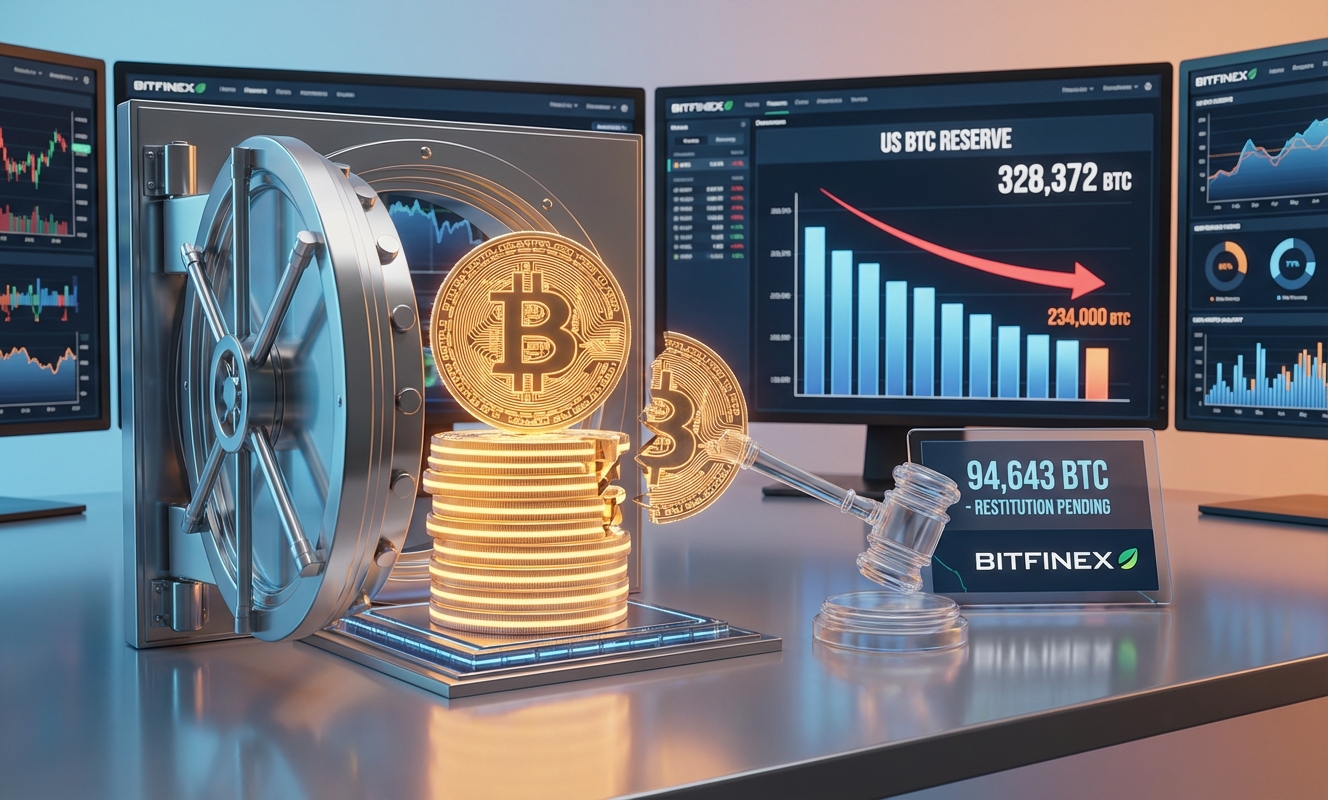
Everyone loves citing the US government’s 328,372 BTC stockpile as proof the Strategic Bitcoin Reserve is a geopolitical power move. Fine. But roughly 94,643 of those coins don’t cleanly belong to Uncle Sam. They belong, morally and legally, to the victims of the 2016 Bitfinex hack. A federal court is the only thing standing between that Bitcoin and a very awkward restitution transfer.
Strip those coins out, and your “world’s largest sovereign Bitcoin holder” drops to about 234,000 BTC overnight. No sale. No market dump. Just a court order and a suddenly smaller balance sheet.
Here’s the thing most retail traders completely miss. The Strategic Bitcoin Reserve isn’t some pristine sovereign wealth fund sitting in a government cold wallet. It’s a mix of fully forfeited assets, coins still tangled in criminal proceedings, and holdings with active restitution claims attached to them.
When Trump signed the executive order establishing the SBR, there was a specific carve-out baked right into the language. Dispositions pursuant to a court order are explicitly permitted. The framework was never built to override the rule of law. It was built alongside it.
So when prosecutors filed a motion in January 2025 asking a federal court to approve returning the Bitfinex BTC as in-kind restitution, that wasn’t a threat to the reserve policy. That was the reserve policy functioning exactly as designed.
The bullish crowd gets this wrong by counting all government-controlled BTC as permanently strategic. The bearish crowd gets it wrong by treating a court-ordered restitution transfer as equivalent to a government liquidation event. Both camps are trading on a misread.
Let’s be real about the timeline here. The original hack happened in August 2016. That’s 119,754 BTC stolen in one shot, one of the single largest thefts in this industry’s history. US authorities recovered 94,643 BTC in February 2022. Four years after the crime.
The recovery was impressive. The cleanup? That’s still ongoing.
The core legal dispute is genuinely messy. Two competing claims are fighting over the same pool of Bitcoin:
This isn’t a simple hand-the-coins-back situation. It’s a legal argument about who actually owns the economic loss. And the outcome will set precedent for how courts handle restitution in every major exchange hack that comes after this one.
That’s why the coins sit there. Immobilized. Visible on-chain, counted in every reserve tracker, but legally in limbo until the ancillary proceedings resolve.
Smart money found a way to trade this thesis before the court decides anything. That vehicle is UNUS SED LEO, the native token of iFinex and Bitfinex.
Here’s the structure that makes it interesting. Bitfinex has publicly committed to using 80% of net recovered funds to repurchase and burn LEO within 18 months of receiving any restitution. That includes the possibility of direct BTC-for-LEO swaps, bypassing open market sales entirely.
The math from K33 Research’s Vetle Lunde is worth walking through:
Do that math quickly. LEO is trading at a roughly 60% premium to its model-implied fair value. That’s the highest premium since the initial 2022 seizure announcement. Traders are front-running a court ruling that hasn’t happened yet, in a token with razor-thin liquidity and concentrated ownership.
Honestly, that setup has “violent both ways” written all over it.
Look, the actual BTC supply mechanics here are less scary than the narrative will make them sound. Even if Bitfinex receives the full allocation and executes the buy-and-burn plan over 18 months, that works out to roughly 139 BTC per day being recycled through LEO repurchases. That is not a supply shock. Bitcoin has absorbed far larger distribution pressure from long-term holders and ETF outflows over the past five months.
But we’re in a risk-off market right now. Spot Bitcoin ETFs have bled over $4.5 billion in outflows in 2026 alone. Sentiment is fragile. In that environment, a headline reading “US Loses 30% of Its Bitcoin Reserve” will move markets before anyone reads paragraph three.
That’s the actual danger. Not the coins moving. The narrative moving first, triggering reactive selling from traders who don’t understand the legal distinction between a restitution transfer and a government sell-off.
Whales who understand this distinction are positioned to buy that dip while retail exits as exit liquidity. Classic setup.
If you’re considering any position around this situation, here is what you need to hold in your head simultaneously.
The Bitcoin risk:
The LEO risk:
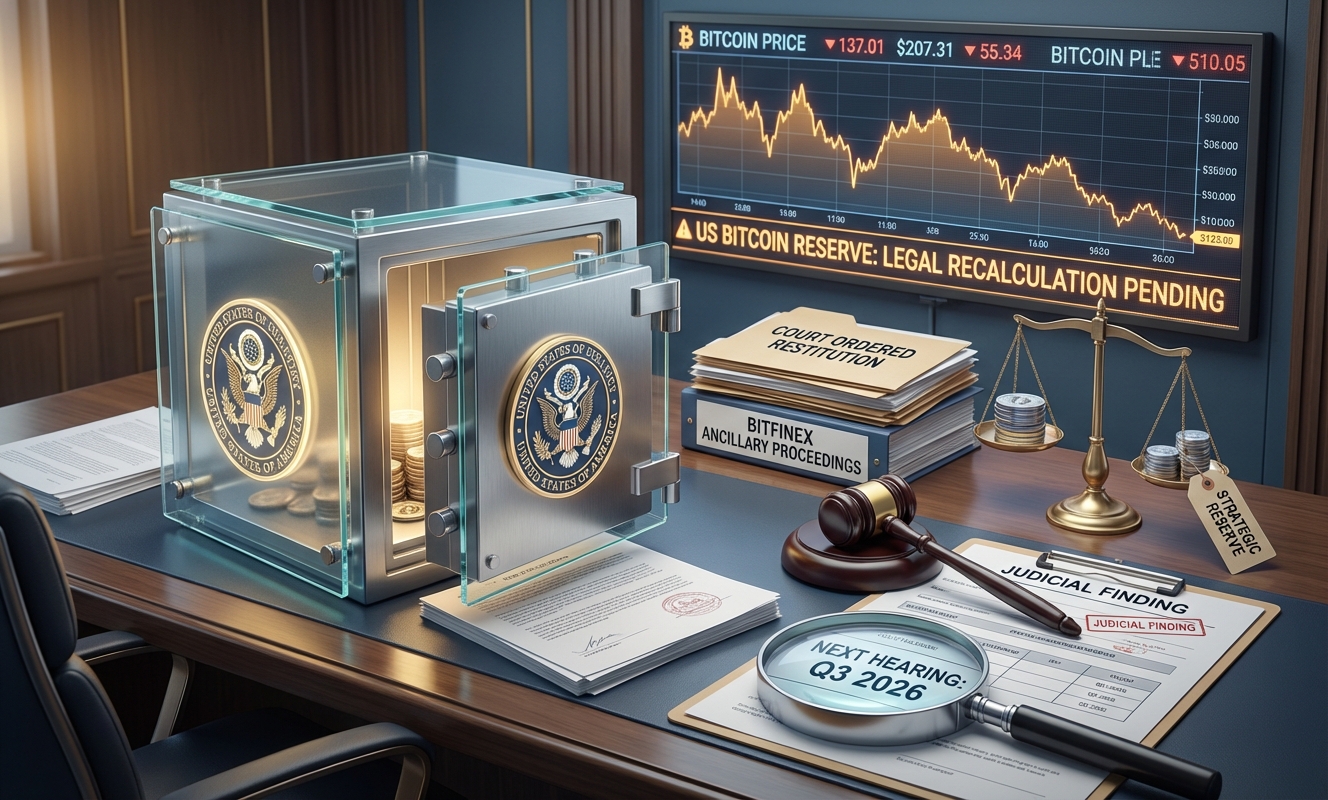
The alpha here isn’t in the chart. It’s in the legal calendar. Any filing in the Bitfinex ancillary proceedings is a potential catalyst. Specifically watch for a settlement between Bitfinex and former users, because a settlement removes the procedural delay and accelerates the restitution timeline.
If that filing drops and Bitcoin simultaneously dips hard on misread headlines, that is the entry point worth considering. You’d be buying a supply-shock-that-isn’t while the crowd panics about a government sale that also isn’t happening.
Between you and me, the traders who do their legal homework here will have a significant edge over the ones just watching price action. The SBR isn’t being dismantled. It’s following the rules it was built with. That distinction is worth a lot of money if you understand it before the market does.