Subtotal $0.00


Magazines cover a wide array subjects, including but not limited to fashion, lifestyle, health, politics, business, Entertainment, sports, science,


Magazines cover a wide array subjects, including but not limited to fashion, lifestyle, health, politics, business, Entertainment, sports, science,
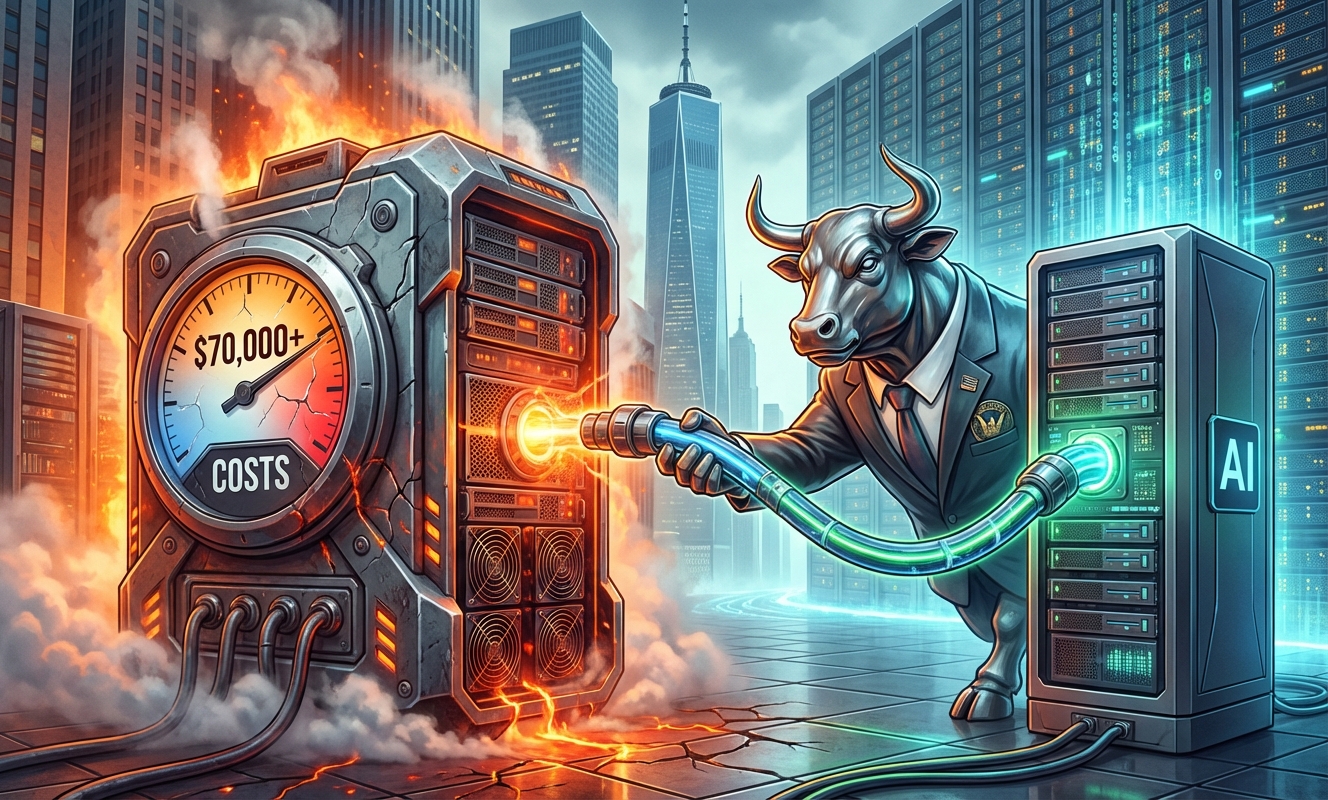
Let’s be real about what’s actually happening here. The Morgan Stanleys of the world aren’t suddenly bullish on crypto. They’re buying access to electricity. The Bitcoin mining industry just accidentally became the most valuable real estate play in America, and most retail investors holding these mining stocks have absolutely no idea the thesis has changed underneath their feet.
Here’s the thing that Wall Street won’t say out loud in its pitch decks. The investment thesis driving billions into public Bitcoin miners has almost nothing to do with Bitcoin. The block subsidy. The halving. The hashrate. None of it matters to Morgan Stanley’s structured credit desk.
What matters is this: the US power grid is choking.
The Electric Power Research Institute projects US data center electricity consumption could explode from 192 terawatt-hours in 2024 to nearly 790 terawatt-hours by 2030. That’s not a typo. We’re talking about data centers potentially consuming 17% of total US electricity generation within six years. And the grid buildout needed to support that demand is running roughly 1.5 to two years behind schedule, according to Bloom Energy’s own research.
So what does a hyperscaler do when it needs 200 megawatts of powered, permitted, grid-connected capacity right now? It can’t wait seven years for a new substation. It calls a Bitcoin miner.
That is the arbitrage. Full stop.
Bitcoin miners, by the nature of their business, spent years fighting utility companies for grid interconnections. They secured sprawling acreage. They got the permits. They built the substations. They did all the painful, unglamorous infrastructure work that AI companies now desperately need but cannot replicate quickly.
Core Scientific just closed a $500 million loan facility from Morgan Stanley, with potential expansion to a billion dollars. The draws are explicitly for data center development, real estate acquisition, and energy procurement. That’s not a crypto loan. That’s infrastructure finance. Those are terms you see on industrial warehouse deals and fiber backbone projects, not on anything that smells like Bitcoin speculation.
Google has backstopped around $5 billion worth of these miner-to-AI conversion deals. When Google guarantees your lease payments, suddenly a volatile mining company transforms into a creditworthy landlord. Loan-to-cost ratios hit 85%. Traditional banks line up. The whole financing mechanism becomes mainstream almost overnight.
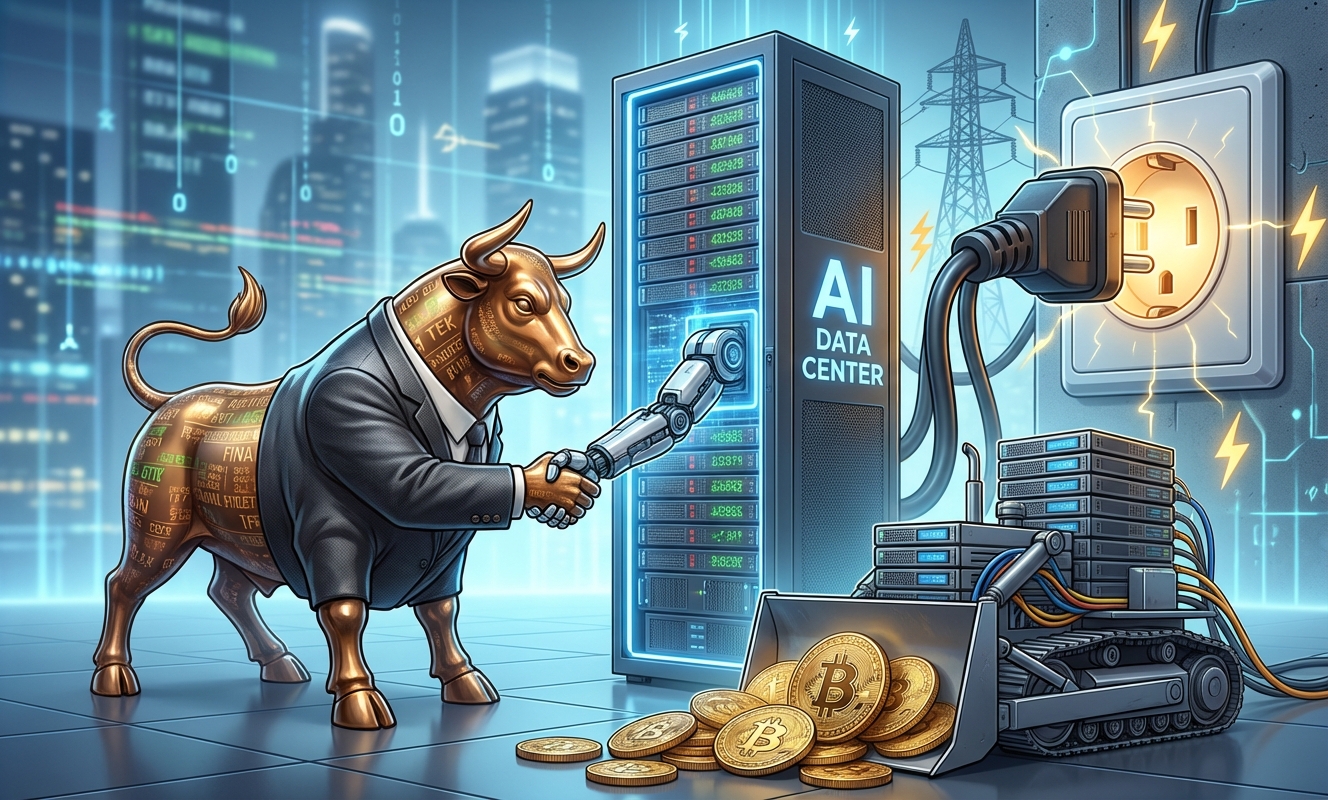
Honestly, you can’t understand this pivot without understanding how badly the April 2024 halving wrecked mining economics. The block subsidy got cut in half. Hashrate kept climbing globally. And then Bitcoin shed roughly 40% from its October all-time high of $126,000, sitting around $71,194 at the time of writing.
The result? CryptoQuant data shows the average cash cost to produce a single Bitcoin among publicly listed miners surged past $70,000 in Q4 2025. Factor in depreciation and stock-based compensation and the total cost of production is even uglier than that number suggests.
Miners can’t control Bitcoin’s price. They can’t control network difficulty, which just posted its biggest spike since 2021. What they can control is who their tenants are.
So the calculus became simple. Swap unpredictable crypto block rewards for multi-year, fixed-rate leases with creditworthy AI clients. Replace hashprice volatility with guaranteed uptime contracts. That’s not a strategy. That’s survival.
CoinShares estimates that Bitfarms, TeraWulf, CleanSpark, Hut 8, and others have collectively announced more than $43 billion in AI and high-performance computing contracts over the past year. The pivot is no longer a rumor. It’s already priced in, partially, and that’s exactly where the danger lives.
Look, the narrative around this AI pivot gets dangerously clean in most coverage. Let me add back the dirt.
A Bitcoin mine and an AI data center are not the same thing with different logos on the door. Not even close. Bitcoin mines are often metal sheds with evaporative cooling and basic internet connections. A Tier-3 AI data center needs direct-to-chip liquid cooling, redundant dark-fiber networking, weatherproofed structures, and backup generation capable of ensuring 99.999% uptime. If a crypto mine goes offline, the financial penalty is basically zero. If an AI data center goes dark for an hour, the contracts have teeth.
The capital expenditure required to bridge that infrastructure gap is immense. Hundreds of millions per site. And if a miner can’t secure the equity portion of that CapEx, their megawatt capacity is theoretically valuable but practically worthless to any serious AI developer.
This is the execution risk the market is glossing over right now. The companies announcing $43 billion in AI contracts still have to actually build the infrastructure those contracts require. Many of them are doing it with heavy debt during a period when Bitcoin revenues are compressed. That is a precarious position.
Here’s a wrinkle that will matter in about 18 months. Equity markets currently price Bitcoin mining stocks like high-beta tech plays. Retail traders buy them as leveraged Bitcoin exposure. That’s been the trade for years.
But if these companies successfully complete their transitions into predictable data center landlords collecting fixed rents, their multiples will compress to match real estate investment trusts or regional utilities. That’s not bullish. That’s actually a significant de-rating event for current shareholders who bought in expecting 3x Bitcoin exposure.
You could own a perfectly successful AI infrastructure company that generates stable cash flows and watch your stock underperform a vanilla utility ETF for a decade. The business wins. The speculative premium evaporates. These are not the same outcome.
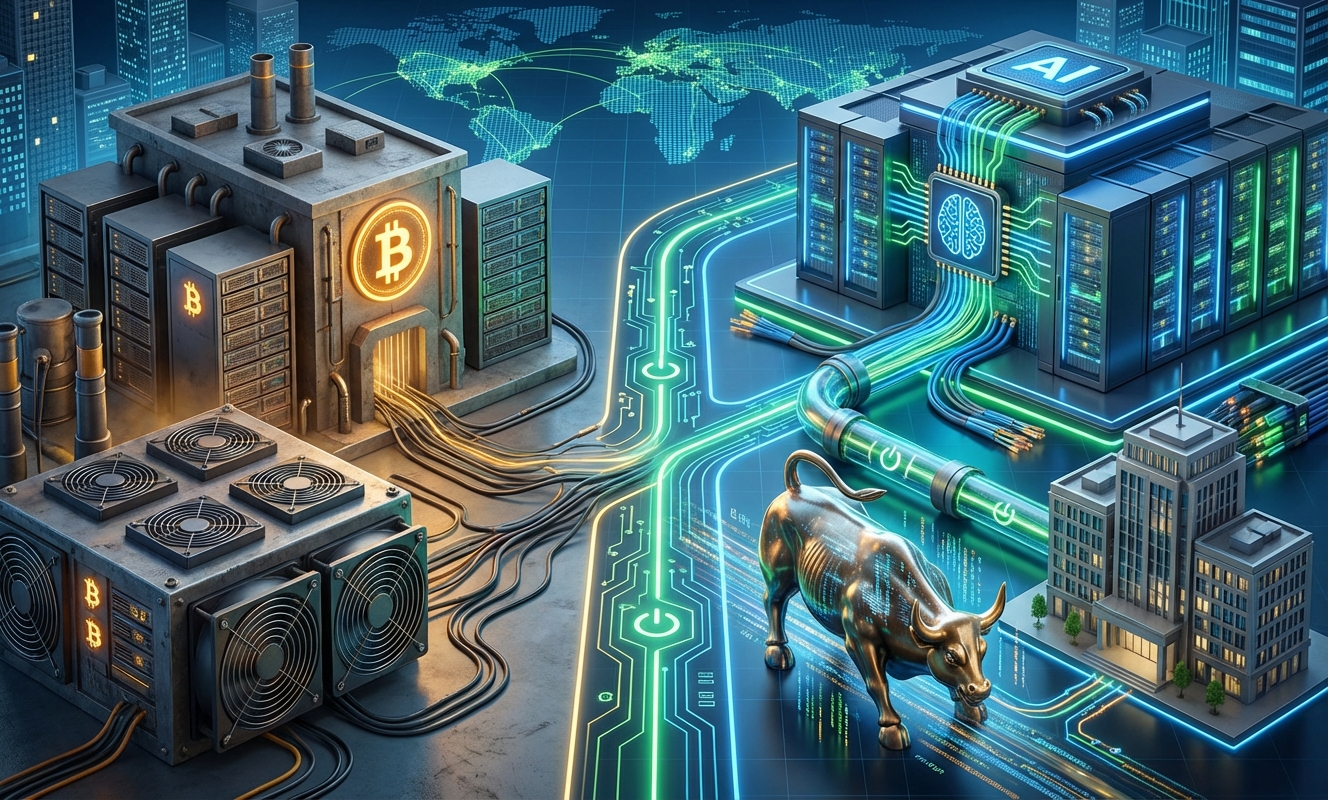
Between you and me, the biggest risk here isn’t execution. It’s timing and concentration.
Every publicly traded miner with a pulse is announcing an AI pivot simultaneously. When every player in a sector chases the same trade at the same time, using the same financing mechanism, with the same set of potential hyperscaler tenants, the pricing power shifts fast. AI developers will eventually have enough options to negotiate lease rates down aggressively. The scarcity premium on grid-connected sites will erode as NextEra and others add 15 to 30 gigawatts of new generation capacity by 2035.
And if AI infrastructure spending hits any kind of demand wall, whether from a recession, a hyperscaler earnings disappointment, or a breakthrough in energy-efficient computing, miners who loaded up on debt to fund expensive retrofits will face refinancing pressure with no fallback revenue stream. They’ll have abandoned pure Bitcoin mining economics and won’t be able to go back without rebuilding from scratch.
The companies that survive this transition will be the ones that secured blue-chip tenants before the crowding happened, locked in long-term fixed-rate financing while rates were manageable, and actually completed their infrastructure upgrades rather than just announcing them. Right now, the market is rewarding the announcement. It will eventually demand the proof.
Bottom line. Bitcoin miners stumbled into the most valuable infrastructure position in America by accident. Wall Street noticed before most crypto investors did. The smart money isn’t betting on Bitcoin’s price. It’s betting on kilowatt-hours. Understanding that distinction is the difference between riding this trade correctly and becoming someone else’s exit liquidity.
The cost to mine a single Bitcoin has surged past the $70,000 mark primarily due to the recent Bitcoin halving event, which slashed the block reward for miners from 6.25 to 3.125 BTC. This programmatic supply shock effectively doubled the energy and computational power required to produce the same amount of Bitcoin. Combined with rising global electricity rates, an all-time high network difficulty, and the continuous need to invest in next-generation ASIC mining hardware, the baseline operational costs for miners have reached unprecedented levels, putting immense pressure on their profit margins.
Facing squeezed profit margins from crypto volatility, Bitcoin miners are pivoting to Artificial Intelligence (AI) and High-Performance Computing (HPC) as a lucrative alternative. Miners already possess the core infrastructure required for AI operations: massive data centers, sophisticated cooling systems, and secured access to hundreds of megawatts of cheap power. By retrofitting their facilities and swapping out specialized Bitcoin ASIC rigs for high-end GPUs (like NVIDIA H100s), miners can lease their computing power to tech companies for training large language models. This transition offers a highly predictable, high-margin revenue stream compared to the unpredictable nature of cryptocurrency mining.
Wall Street is heavily funding this “escape hatch” because there is a severe global shortage of data center infrastructure capable of supporting the AI boom. Tech giants and AI startups are desperate for facilities that have already secured massive power contracts and grid approvals—a process that normally takes years. Wall Street investors and private equity firms view Bitcoin miners not just as crypto companies, but as deeply undervalued energy and infrastructure plays. By financing the costly hardware upgrades from ASICs to GPUs, Wall Street can capitalize on the explosive, stable growth of the AI sector while hedging against the risks of pure-play crypto assets.
While the transition to AI and HPC is a critical lifeline for struggling miners, it is unlikely to replace Bitcoin mining entirely. AI data centers have strict requirements that many existing crypto mines cannot meet, such as the need for 100% power uptime (Tier 3 or 4 standards), ultra-fast fiber-optic internet, and dust-free environments. Bitcoin mining, conversely, is highly flexible; it can operate on intermittent renewable energy or stranded gas and doesn’t require high-speed internet. Instead of a complete replacement, most large-scale public miners are adopting a hybrid strategy—using AI infrastructure for stable, premium revenue while continuing to mine Bitcoin to capture massive upside during crypto bull markets.