Subtotal $0.00


Magazines cover a wide array subjects, including but not limited to fashion, lifestyle, health, politics, business, Entertainment, sports, science,


Magazines cover a wide array subjects, including but not limited to fashion, lifestyle, health, politics, business, Entertainment, sports, science,
 Fact Checked by Coinsbeat Editorial Team | Expert Reviewed by Themiya
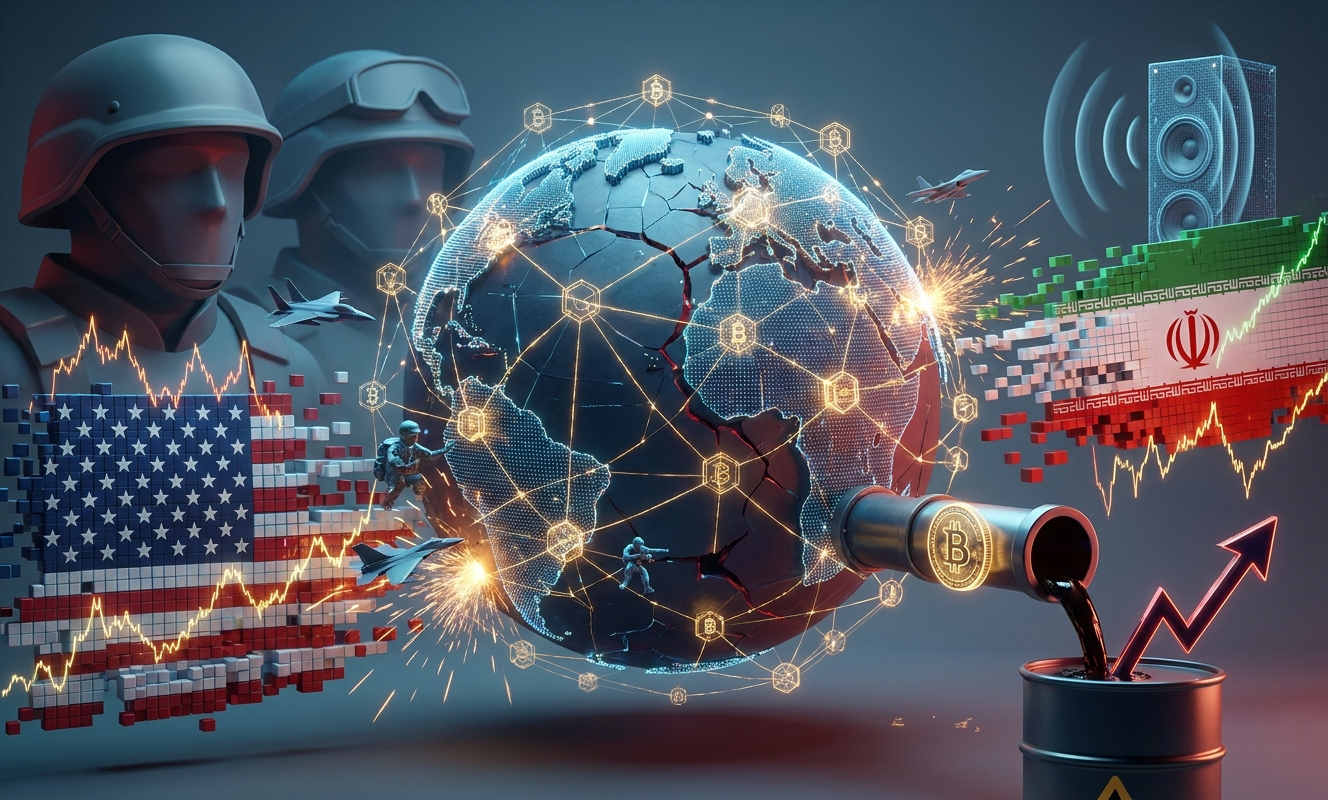
When a wartime official in Tehran starts publicly mocking “vibe-trading digital oil,” your first instinct might be to laugh. Don’t. That kind of rhetorical attack doesn’t happen unless something is drawing blood.
Iran’s parliament speaker Mohammad Bagher Ghalibaf didn’t stumble into crypto terminology by accident. He targeted it deliberately. And that tells you far more about where crypto’s market role is heading than any bullish price prediction ever could.
Let’s be real. State actors don’t waste political airtime attacking irrelevant things. When Ghalibaf stood up and took a swipe at synthetic oil trading on crypto rails while the Strait of Hormuz sits under active military pressure, he was reacting to something inconvenient.
Here’s the thing. The inconvenience isn’t that some degens are gambling on oil perpetuals. The inconvenience is that those perpetuals are now influencing first-mover price discovery during geopolitical shocks, before traditional energy desks in London and New York even open their terminals.
Think about what that actually means for a country trying to control the narrative around one of the world’s most critical oil chokepoints. The Strait of Hormuz moves roughly 20 million barrels per day, according to the IEA. That’s about a quarter of all seaborne oil trade. Iran has historically used the threat of closing that chokepoint as its most powerful piece of economic leverage over the West.
That leverage depends on controlling how the market reacts to the threat. And now, crypto rails are breaking that control.
Price formation that used to wait until Monday morning in New York is now happening at 3 AM on a Sunday on Hyperliquid. Ghalibaf can see it. That’s why he’s talking about it.
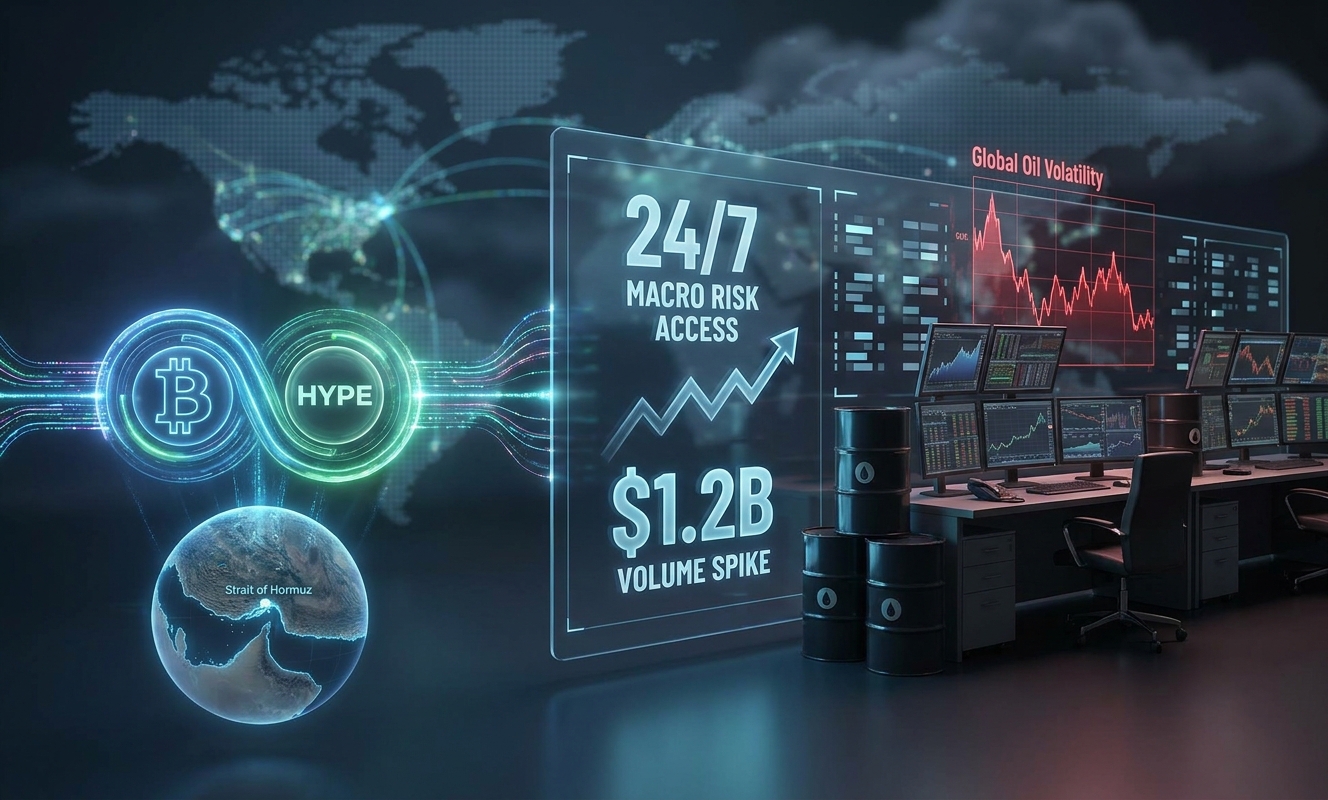
Hyperliquid’s oil-linked perpetual contract crossed $1.2 billion in 24-hour volume during peak Middle East tensions in March, as Bloomberg reported. That’s not a rounding error. That’s institutional-grade flow finding a venue that stays open when the old infrastructure is dark.
Honestly, most crypto people are still framing HYPE as a DEX token or a platform play. They’re missing the bigger picture. What Hyperliquid actually did here was become the overnight oil market during a live military crisis.
Consider the sequence of events:
That feedback loop is new. It didn’t exist three years ago. And it’s exactly the kind of structural shift that looks obvious in hindsight but gets dismissed right up until it becomes impossible to ignore.
HYPE’s price profile confirms the thesis. The token is sitting around $40.87, down a bit on the day but up over 3% on the 30-day. More importantly, it’s up nearly 94% over 90 days. That’s not pure speculation. That’s a venue trade. Traders are pricing in the idea that 24/7 macro risk access is a durable business model, not a one-off wartime novelty.
Look, Bitcoin doesn’t trade oil directly. But the chain reaction from this Hormuz situation runs straight through BTC’s macro environment, and anyone calling themselves a serious investor needs to map it clearly.
Here’s how the transmission mechanism actually works:
The IEA also flipped its 2025 global oil demand forecast from growth to a contraction of 80,000 barrels per day. That’s a dramatic reversal in a very short window. The macro implications haven’t fully priced in yet.
Bitcoin was trading around $75,219 as of April 20, showing a 6.22% gain over seven days and 6.51% over 30 days. Respectable resilience, sure. But that move is happening despite the inflation overhang, not because conditions are clean. If the ceasefire discussions stall and Hormuz pressure resurfaces, BTC’s exposure to the inflation-rate repricing chain becomes the dominant force, not the “digital gold” safe haven narrative.
It’s worth connecting the dots here because the Iran-crypto story has been building in layers. CryptoSlate reported that Iran floated the idea of Bitcoin-denominated payments as a toll for safe tanker passage through Hormuz. Now Ghalibaf is publicly attacking “digital oil” pricing.
Those two things might look contradictory. They’re not. This is actually a very coherent, if cynical, strategy. Iran is:
In other words, Tehran wants to use crypto when it’s convenient and attack it when it isn’t. That’s a state actor trying to weaponize and discredit the same tool simultaneously. And that kind of attention, frankly, is a sign that crypto has arrived in a very different kind of arena.

Here’s where this gets bigger than just HYPE or BTC. Wintermute launched a round-the-clock crude product through OTC channels in late March. Tokenized equities, extended-hours settlement, and 24-hour trading pushes are gathering real momentum across traditional finance.
Once that architecture spreads far enough, the line between “crypto market” and “macro market after hours” essentially disappears. You’re not trading crypto anymore. You’re trading everything, continuously, on infrastructure that started in crypto.
That’s the real story under all of this. The Hormuz crisis didn’t create this shift. It just forced it into the open faster than anyone expected.
Between you and me, the bull case for platforms like Hyperliquid rests on a single assumption: that geopolitical shocks keep landing outside market hours with enough frequency to justify 24/7 macro exposure as a permanent fixture. If the Hormuz situation resolves cleanly and stays resolved, volume on those oil perpetuals collapses back toward baseline. HYPE loses its second demand channel, and the venue trade thesis weakens fast.
For Bitcoin specifically, the risk isn’t a sudden crash. The risk is a slow grind driven by persistent inflation making the Fed’s job harder. Watch the CME FedWatch tool closely. If rate cut expectations keep getting pushed back, BTC’s resilience gets tested in a way a geopolitical pop rally won’t protect against.
The pro-tip here is this. Don’t trade Hyperliquid as a pure crypto sentiment play. Track it against oil volatility and geopolitical tension indices. When Hormuz headlines spike, that’s your signal. When the diplomatic calendar shows credible de-escalation windows, that’s your exit cue. The venue trade works in crisis mode. It’s a lot less interesting when the world calms down.
The bigger picture remains. A senior official in an active conflict zone is now publicly arguing about how digital instruments price oil risk. Crypto didn’t ask to be in this fight. But here it is, sitting at the table where wartime economics gets negotiated in real time. That is a fundamentally different place to stand than where this industry was even 18 months ago.
References & Sources:
Cryptocurrency is increasingly called “digital oil” because, much like crude oil, it has become a critical, globally traded resource that reacts sharply to geopolitical instability. During volatile events, such as the US-Iran ceasefire negotiations, nation-states and institutional investors often leverage crypto assets to bypass economic sanctions, secure wartime funding, or hedge against collapsing fiat currencies. This creates a parallel financial ecosystem where digital assets act as essential fuel for both economic resilience and wartime propaganda.
In modern conflicts, warring nations and state-backed actors use cryptocurrency trading not just for funding, but as a psychological tool and narrative device. By publicly showcasing crypto reserves or manipulating specific token prices, states can project financial strength despite heavy international sanctions. Furthermore, decentralized platforms are often used to spread wartime propaganda, solicit untraceable global donations, and craft narratives of economic independence, making crypto a vital weapon in digital information warfare.
The US-Iran ceasefire trading triggered intense volatility across the cryptocurrency market. As news of the potential ceasefire fluctuated, traders speculated heavily on the shifting geopolitical landscape, leading to massive price swings in major assets like Bitcoin and Ethereum. Investors who view crypto as a safe-haven asset quickly shifted their portfolios, while state-affiliated entities altered their trading strategies to capitalize on the uncertainty. This event underscored how deeply interconnected global peace talks and decentralized digital markets have become.
Regulating decentralized digital assets during international crises remains extremely challenging for global authorities. While agencies like the US Treasury can sanction specific wallet addresses and pressure centralized exchanges to freeze assets, the underlying blockchain technology allows for peer-to-peer, borderless transactions. This makes it difficult to completely shut off the flow of “digital oil.” As a result, global regulators are increasingly focusing on advanced blockchain analytics and international intelligence sharing to track and curb the illicit financial flows driving wartime operations.