Subtotal $0.00


Magazines cover a wide array subjects, including but not limited to fashion, lifestyle, health, politics, business, Entertainment, sports, science,


Magazines cover a wide array subjects, including but not limited to fashion, lifestyle, health, politics, business, Entertainment, sports, science,
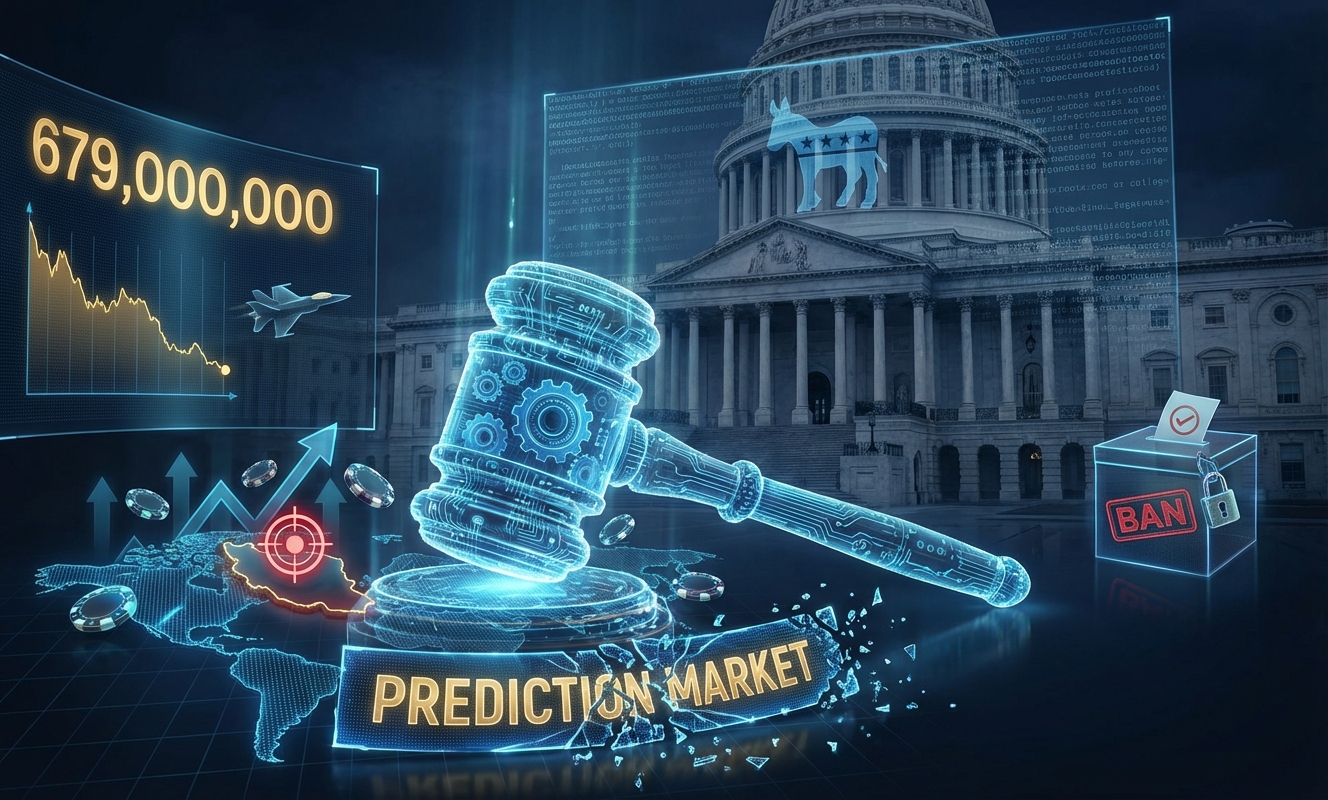
Ten accounts. A few hours before US missiles hit Iran. And $1.4 million in clean profit on Polymarket. You don’t need to be a conspiracy theorist to find that deeply, deeply suspicious.
That single data point, surfaced by Bubblemaps, has done more damage to the prediction market industry than years of regulatory hand-wringing ever could. And now Washington is coming. Hard.
Let’s be real about the scale here. We’re not talking about some degenerate gambling corner of crypto Twitter placing cheeky bets on election night. Reuters confirmed that $529 million was wagered on contracts tied to the timing of US-Israel strikes on Iran. Another $150 million flowed into markets betting on whether Supreme Leader Khamenei would be removed from power.
That’s $679 million concentrated around a single geopolitical event. In a weekend.
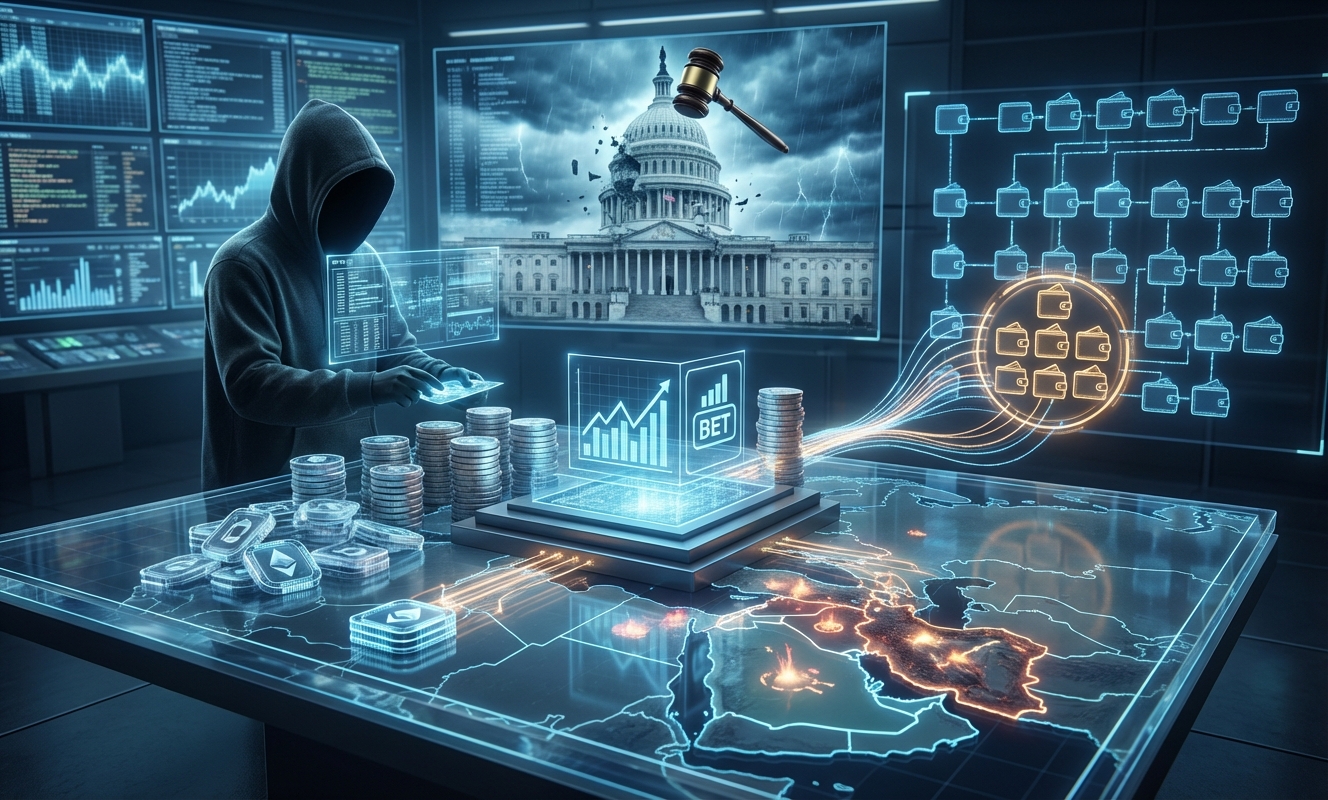
Now stack that against the Bubblemaps finding. About ten wallets, funded in the hours directly before the strikes, walked away with $1.4 million. The timing wasn’t a coincidence. Or if it was, it’s the most expensive coincidence in prediction market history.
Here’s the thing about insider trading in traditional finance. There are surveillance systems, reporting requirements, settlement delays, and paper trails going back years. On a crypto-native, offshore platform like Polymarket? You fund a wallet. You place a bet. You collect. The blockchain is public but attribution is a nightmare, and by the time anyone notices the pattern, the money is already gone.
Prediction markets have been growing for years. The CFTC has been wrestling with Kalshi’s market applications since 2022. None of that generated this kind of political heat.
The Iran wagers did something different. They connected three things that politicians absolutely cannot ignore: national security, public corruption, and visible, quotable numbers.
Senator Chris Murphy didn’t just call for a ban in some dry floor statement. He went on X and said White House officials were “secretly profiting off war.” That’s not a regulatory critique. That’s a political weapon. And once that framing takes hold, the industry is no longer arguing about market efficiency or crowd wisdom. It’s defending itself against accusations of treason-adjacent profiteering.
Honestly, the industry walked into this. Nobody forced Polymarket to list a contract on the removal of a foreign head of state during an active military operation. That’s not forecasting. That’s front-running geopolitical violence.
Washington is attacking this from multiple angles simultaneously, which tells you how serious the political pressure actually is.
Look, tracks one and two are political theater to varying degrees. They generate headlines. They let senators tweet outrage. But track three is where the actual future of this industry gets decided. Selig’s approach matters enormously because he’s essentially trying to build a regulatory fence that keeps the legitimate use cases alive while cutting off the most inflammatory contracts.
Here’s where it gets messy. Washington has real leverage over Kalshi. It’s CFTC-regulated, operates onshore, and has already voluntarily banned certain death-related markets. Kalshi CEO Tarek Mansour even refunded fees on the Khamenei market. That’s a company reading the room.
Polymarket is a different beast entirely. It runs on crypto rails, operates primarily offshore, and is currently fighting to re-enter the US market through a separate regulatory approval process. The Iran controversy hit Polymarket hardest precisely because that’s where the controversial volume was concentrated.
And Selig himself acknowledged the core dilemma. Ban these markets outright, and they go offshore, “just like crypto.” He said those words publicly. Which means the CFTC is essentially admitting that aggressive prohibition creates a version of the problem that’s harder to police, not easier.
So the likely outcome is a two-tier system. A narrower, more formalized onshore market regulated tightly by the CFTC. And a sprawling offshore market, crypto-native and harder to reach, where the really controversial stuff continues without much interference. That’s not a win for regulators. That’s regulatory theater with a side of jurisdictional impotence.
Here’s the timing issue that nobody is talking about loudly enough. Intercontinental Exchange, the parent company of the New York Stock Exchange, announced a $2 billion investment in Polymarket last October. Weekly transaction volume across prediction market platforms has hit nearly 45 million transactions, with notional volume exceeding $6 billion per week.
This is no longer a niche crypto experiment. Serious institutional capital is sitting inside an industry that senators are currently comparing to war profiteering. That creates a genuinely uncomfortable political dynamic.
On one hand, institutional involvement is the industry’s best argument for legitimacy. If ICE is in, this is market infrastructure, not gambling. On the other hand, it means a crackdown now directly threatens a major NYSE parent company’s balance sheet. Politicians don’t love picking fights with Wall Street, but they also can’t be seen defending “betting on whether Khamenei gets assassinated” when that framing is already dominating the news cycle.
Between you and me, ICE’s investment probably slows down the most aggressive legislative options. But it won’t stop the CFTC rulemaking, and it won’t prevent war-contract bans from passing if the political pressure stays hot.
Prediction market tokens and governance assets tied to platforms like Polymarket aren’t yet widely tradeable in the traditional sense, so the direct price contagion is limited. But there are second-order effects worth watching.

Step back from the outrage cycle for a second. The real question nobody is asking loudly enough is this: who benefits from keeping these markets legal in their current form?
Platforms collect fees on volume. Higher stakes, higher fees. War contracts generate massive volume. The incentive for platforms to list inflammatory contracts isn’t ideological. It’s financial. “Wisdom of crowds” is a marketing line. Volume is the business model.
And on the other side, who benefits from a crackdown? Every traditional derivatives exchange and political prediction aggregator that operates inside existing regulatory frameworks. This isn’t just a morality play. It’s a turf war dressed up as ethics legislation.
The single biggest danger here isn’t what Congress bans. It’s what the CFTC framework accidentally permits.
If regulators move too slowly, offshore platforms fill the vacuum and operate completely outside US oversight. If they move too fast with poorly drafted rules, they create a compliance burden that kills legitimate forecasting applications while sophisticated offshore operators simply ignore the rules entirely.
There’s also a genuine civil liberties angle that hasn’t surfaced loudly yet. Banning contracts based on subject matter is a form of content restriction. Legal challenges to that kind of prohibition could take years to resolve, creating a prolonged period of regulatory uncertainty that freezes investment and innovation across the entire prediction market sector.
The insider trading angle is the most legitimate concern here, and also the one where existing law already provides tools. Using material non-public information to trade derivatives is already illegal in multiple contexts. The problem isn’t that there’s no law. The problem is that attribution on crypto-native platforms is hard, enforcement is slow, and the wallets involved are long since emptied by the time investigators catch up.
Pro-Tip: If you’re holding any assets tied to prediction market infrastructure or governance tokens in this space, watch the CFTC’s advance notice of proposed rulemaking closely. The specific language around “contrary to public interest” determinations will tell you exactly which contract categories are in the crosshairs. That’s your signal for how wide the regulatory net actually gets cast. The congressional bills will generate the headlines. The CFTC rulemaking will do the real damage.
Democrats are moving to ban prediction markets tied to military action out of deep ethical and national security concerns. Lawmakers argue that allowing individuals to place financial wagers on conflicts, such as potential strikes involving Iran, creates perverse incentives. It essentially allows people to profit from war, human suffering, and geopolitical instability. Furthermore, officials fear that large-scale unregulated betting could be manipulated to influence public perception, spread disinformation, or inadvertently disrupt sensitive foreign policy and national security operations.
A staggering $679 million was reportedly wagered across various prediction platforms regarding the likelihood of military conflict involving Iran. These massive betting pools highlighted the rapid growth and normalization of betting on global crises. The sheer volume of money involved triggered immediate alarm bells in Washington, D.C., prompting Democratic lawmakers and regulators to urgently push for rules to shut down event contracts that commodify war, terrorism, and national security threats.
Prediction markets are financial platforms where individuals can buy and sell shares based on the predicted outcome of future events. For geopolitical events, users bet on highly specific scenarios—such as whether a country will declare war, if a diplomatic treaty will be signed, or if a military strike will occur before a certain date. The market prices fluctuate based on supply and demand, reflecting the crowd’s perceived probability of the event happening. While proponents claim these markets offer valuable real-time forecasting data, critics argue that placing financial bounties on military action crosses a dangerous ethical line.
The immediate legislative and regulatory push by Democrats is specifically targeted at prediction markets tied to military action, war, and terrorism. However, the crackdown could easily trigger broader regulatory scrutiny for the entire prediction market industry, which includes betting on U.S. elections, economic indicators, and legislative changes. Regulatory bodies like the Commodity Futures Trading Commission (CFTC) are already moving to establish stricter boundaries on what constitutes an illegal or unethical “event contract,” meaning broader political betting could face significant restrictions in the near future.