Subtotal $0.00


Magazines cover a wide array subjects, including but not limited to fashion, lifestyle, health, politics, business, Entertainment, sports, science,


Magazines cover a wide array subjects, including but not limited to fashion, lifestyle, health, politics, business, Entertainment, sports, science,
 Fact Checked by Coinsbeat Editorial Team | Expert Reviewed by Themiya
Down 55% in six months. Open interest torched by 78%. Sixty percent of the circulating supply sitting underwater. By any normal read, XRP looks like a crime scene right now. But here’s the thing: the data tells a more complicated story than the price chart does.
The fast-money crowd is gone. And what’s left behind might actually matter.
Let’s be real about what happened here. When Trump won in November 2024, XRP became one of the loudest lottery tickets in crypto. Retail piled in. Leveraged longs stacked up. Open interest exploded to a peak of $10.94 billion. That’s not organic demand. That’s a momentum trade wearing a fundamentals costume.
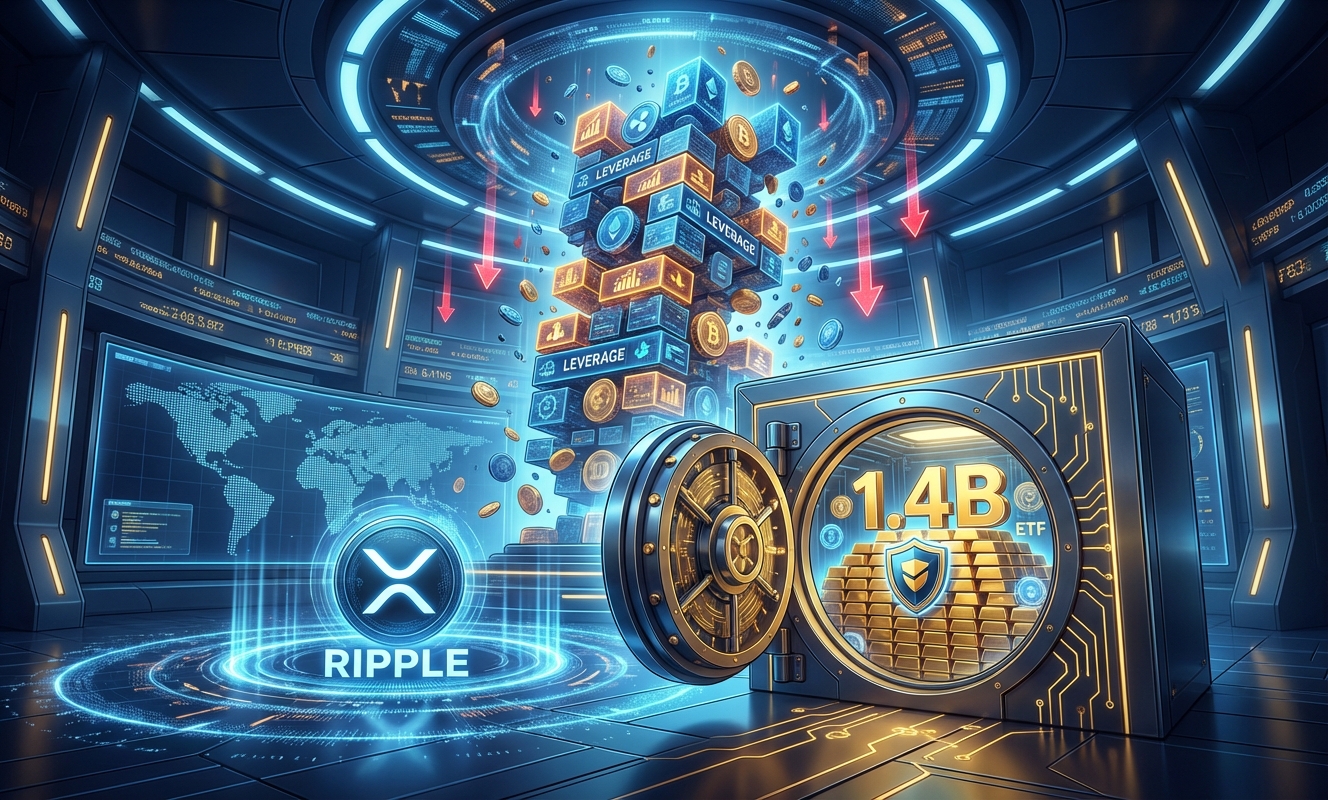
Fast forward to today. Open interest has cratered to roughly $2.40 billion, a 78% collapse, sitting at its lowest point since January 2025. Binance, the largest venue, is running just $222 million in XRP open interest. ByBit is at $195 million. These aren’t catastrophic numbers, but they are a shadow of what the peak looked like.
The liquidation pattern makes it worse. Long traders got absolutely punished. Repeatedly. That kind of one-sided liquidation cascade does two things simultaneously. It destroys retail confidence and it flattens funding rates, which shifts the market posture from aggressively bullish to neutral or even slightly defensive. Basically, the people using 10x to chase a token that already ran 400% have been educated by the market. Painfully.
Here’s where most analysts get lazy and just say “the selling is done.” Not so fast. Deleveraging removes one specific type of downside pressure, which is forced liquidations cascading on each other. It does not remove spot selling from people who bought at $2 and are slowly rage-quitting. Those are two very different things.
What the deleveraging does do is change the character of future price moves. Any recovery from here has to be built on genuine spot demand, not reflexive leverage piling back in. That’s a higher bar. It’s also a more honest one.

While the derivatives crowd was getting liquidated, something quieter was happening on-chain. On February 6th, Binance recorded an outflow of 530 million XRP, worth over $720 million at the time. Then on February 9th, another 278 million XRP walked out the door.
Look, exchange outflows aren’t a magic bullish signal. Let’s be honest about that. Internal wallet shuffles happen. Custody migrations happen. You can’t know for certain without more context. But the scale here is hard to ignore, especially when it’s happening simultaneously with ETF holders refusing to blink during a brutal drawdown.
XRP spot ETFs launched when the token was trading near $3. They are now sitting at $1.37. That’s a 45%+ drawdown for anyone who bought on day one. And yet, Bloomberg’s James Seyffart confirmed on March 10th that these products have accumulated over $1.4 billion in assets since November, with capital staying put through the entire slide.
Eric Balchunas from Bloomberg Intelligence called it “really impressive,” noting that inflows into a brand-new ETF during a reverse shiny object moment are, historically speaking, nearly impossible to sustain. He attributed the stickiness to buyers who are “largely XRP superfans versus casual retail.”
That’s not a dismissal. That’s actually a structurally important point. The XRP Army, as annoying as they can be to argue with on social media, has proven over years of SEC litigation and long dead-cat periods that they don’t sell. They accumulate. That cohort now owns ETF shares, which adds another layer of friction to any future supply dump.
Here’s something XRP critics consistently underestimate. Most large-cap altcoins are essentially pure beta plays on Bitcoin. When BTC pumps, they pump. When BTC dumps, they dump harder. There’s no independent fundamental narrative doing any heavy lifting.
XRP is increasingly different. Not perfect. But different.
Ripple just secured an Australian Financial Services License through its acquisition of BC Payments Australia. That follows recent licensing moves in the UK and Luxembourg. The company now claims over 75 regulatory licenses globally. Ripple Payments is active in more than 60 major markets and has processed over $100 billion in volume. Their stablecoin RLUSD crossed $1.3 billion in market cap and is now listed on Binance, which is arguably the strongest distribution lever available in crypto.
Garlinghouse is also publicly integrating AI into Ripple’s liquidity management and cash forecasting tools, which tells you this isn’t a company that’s just shilling its token. They’re building product. Quietly. While the price bleeds.
Regulatory licenses are not revenue guarantees. More importantly, Ripple’s business success does not automatically flow into XRP’s price. The company can process $200 billion in payments next year and XRP could still sit at $1.10 if Bitcoin enters a deeper bear phase. The correlation isn’t clean. Don’t let anyone tell you otherwise.
Ripple also still holds enormous XRP unlock power through its treasury. That’s a structural overhang that doesn’t disappear because the company got a license in Melbourne.

Honestly, this is where a lot of retail investors make the same mistake every cycle. They see deleveraging, whale accumulation, and ETF conviction and interpret that as a green light to lever up. It’s not.
Don’t front-run the recovery. Wait for open interest to start rebuilding alongside price, not before it. When you see OI climbing back above $3.5 billion with funding rates staying neutral or slightly positive, that’s the signal that fresh capital is entering without the froth. That’s a healthier setup to trade than trying to call the exact bottom on a coin where 60% of holders are already in the red and desperate for a relief rally to exit into.
Watch the ETF flow weekly. If those assets start leaving during any bounce attempt, that’s your warning that even the conviction holders are tapping out. Right now, they’re not. But markets change fast.
References & Sources:
Yes, Ripple can succeed without XRP succeeding. Financial institutions and banks can utilize RippleNet—Ripple’s robust messaging and settlement software—without ever touching the XRP token. They have the flexibility to settle transactions directly in fiat currencies or, increasingly, using Ripple’s own stablecoin, RLUSD. However, while Ripple can operate independently of XRP, the token remains an essential component for institutions utilizing On-Demand Liquidity (ODL) for instant, low-cost cross-border transfers.
Despite a massive 78% drop in XRP leverage, over $1.4 billion in ETF capital remains invested because institutional investors are focused on Ripple’s long-term utility and expanding global footprint. Institutional money typically favors fundamental value over short-term speculative market volatility. Ripple’s continuous banking partnerships, regulatory advancements, and robust global settlement infrastructure provide a strong anchor for long-term ETF investors.
A 78% collapse in XRP leverage indicates a massive flush-out of speculative, borrowed money from the crypto derivatives market. For spot and ETF investors, this is widely viewed as a highly positive, healthy market reset. It removes excessive market froth, reduces the risk of cascading liquidations, and allows XRP’s future price action to be driven by organic institutional demand and real-world utility rather than high-risk speculative trading.
Ripple’s expanding global footprint directly bolsters institutional confidence, establishing the foundation that keeps billions in ETF investments anchored securely. By securing international banking partnerships, launching the RLUSD stablecoin, and advancing seamless cross-border payment infrastructures, Ripple is cementing its real-world utility. This widespread institutional adoption of Ripple’s technology builds a stronger macroeconomic foundation for XRP to act as a premier bridge asset in global finance.