Subtotal $0.00


Magazines cover a wide array subjects, including but not limited to fashion, lifestyle, health, politics, business, Entertainment, sports, science,


Magazines cover a wide array subjects, including but not limited to fashion, lifestyle, health, politics, business, Entertainment, sports, science,
 Fact Checked by Coinsbeat Editorial Team | Expert Reviewed by Themiya
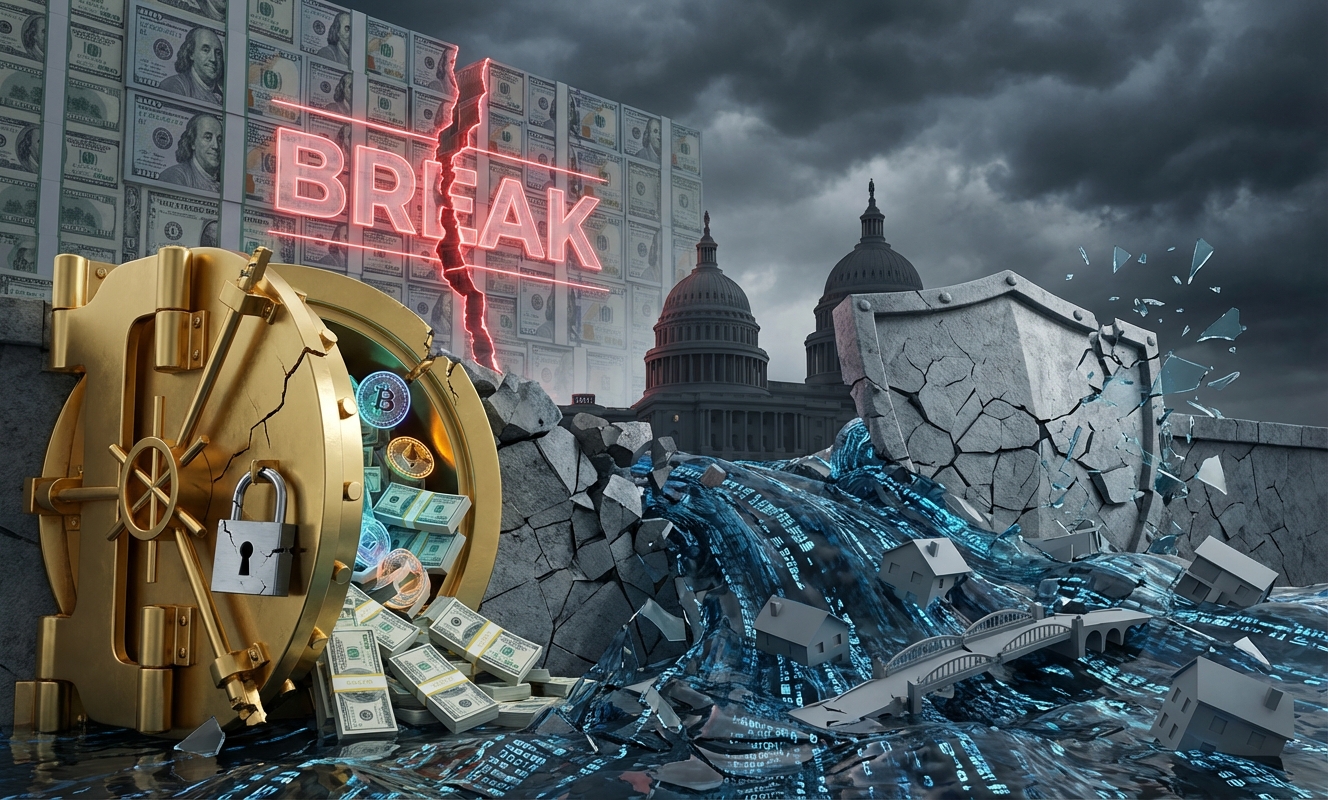
The Fed is rewriting the rulebook for the biggest banks in America, and the timing couldn’t be more telling. Three years after Silicon Valley Bank turned “liquid” into a punchline, regulators are preparing to loosen capital requirements, give banks credit for discount window access, and effectively free up over $175 billion in excess capital sitting on Wall Street’s balance sheets.
Let’s be real. This isn’t some routine regulatory tune-up. This is a 180-degree reversal from a 2023 proposal that would have forced major banks to hold 19% more capital. One administration’s “systemic safety measure” is the next one’s “drag on credit creation.” Pick your narrative.
Here’s the thing about capital rules. They aren’t just dry accounting policy. They decide how much risk banks can absorb before taxpayers get the bill. The original Basel III endgame package, pushed by then-Fed Vice Chair for Supervision Michael Barr in 2023, was blunt: the biggest banks needed thicker buffers. Full stop.
Banks hated it. They lobbied hard.
Now, Barr’s replacement, Michelle Bowman, announced on March 12 that the new draft lands “roughly flat or slightly lower” on capital requirements once all the moving pieces are counted. Surcharges on the largest global systemically important banks could also drop by around 10%. The banks won. Mostly.
The hidden incentive here isn’t complicated. A deregulatory White House, a friendlier Fed, and an industry that spent years building the case that tighter rules would choke off lending. The political wind changed, and the regulatory posture followed. That’s not cynicism, that’s just how Washington works.
Most of the headlines are focused on the capital number. Fair. But the liquidity piece is actually more structurally interesting, and potentially more dangerous.
Treasury is now floating the idea that banks should get regulatory credit for collateral they’ve already prepositioned at the Fed’s discount window. In plain English: if you’ve got assets lined up to borrow emergency cash from the central bank, that counts toward your liquidity buffer. You don’t have to hold as many truly liquid assets on your own.
Treasury is even calling this prepositioned borrowing capacity “real, monetizable liquidity.” Honestly, that phrase deserves a second read. They’re redefining what counts as safe by leaning harder into the assumption that the Fed backstop is always there, always functional, always stigma-free.
Except it wasn’t, right? SVB happened. Signature happened. First Republic happened. The discount window existed during all of those crises. Banks still didn’t use it until it was too late, partly because tapping it signals desperation to the market. Treasury’s answer to that stigma problem is to bake the window more formally into the rulebook rather than fix the stigma itself.
That’s a workaround dressed up as a reform.

Look, the timing here is a genuine contradiction. In 2023, the official post-mortem on SVB was clear: weak liquidity risk management, poor supervision, and inadequate buffers. The prescribed medicine was stricter rules, tighter oversight, more resilience baked into the system at the institutional level.
In 2026, with geopolitical risk climbing, US growth projections collapsing toward 0.7%, and credit conditions tightening, Washington’s answer is to ease those same rules while simultaneously making it easier for banks to lean on the central bank backstop.
Both things can’t be the right answer at the same time. Either banks need thick private buffers to survive panics on their own, or they need easier access to public liquidity and less internal friction. The 2026 framework chooses the latter. Senator Elizabeth Warren flagged this contradiction directly. She’s not wrong about the inconsistency, even if her objections are politically motivated.
If this rewrite passes in roughly its current form, here’s what you can reasonably expect large banks to do with the freed capital:
Supporters will call this a win for the real economy. Skeptics will note that the last time banks got this kind of flexibility, it didn’t end quietly.
Here’s the part that should make every crypto investor’s jaw tighten. While Washington is loosening the leash on traditional bank risk-taking, direct Bitcoin exposure on bank balance sheets still attracts punitive risk weights under Basel’s framework. We’re talking 1,250% risk weighting for direct crypto holdings in the strictest interpretation. That makes holding Bitcoin on a regulated bank’s books nearly prohibitively expensive, even when it’s technically legal.
So the message from regulators is essentially this: banks can carry more market risk, more credit risk, more reliance on Fed emergency infrastructure. But Bitcoin? Still too dangerous to treat like a real asset.
That asymmetry matters. It keeps large institutions from building meaningful spot Bitcoin positions on their own books. It limits the organic flow of institutional capital into BTC through the banking channel. And it pushes any crypto exposure toward ETF wrappers, derivatives, or custody solutions that keep the asset at arm’s length from the actual balance sheet.
Between you and me, this is regulatory favoritism dressed up as prudential caution. Banks can absorb the systemic risk of concentrated bond portfolios (see: SVB), but Bitcoin remains the boogeyman. The logic doesn’t fully hold.

Short term, the freed capital story is actually mildly bullish for Bitcoin, but not for the reasons you’d expect. It’s not because banks will suddenly start buying BTC. They won’t, not at scale, not under current rules.
It’s because $175 billion in freed capital looking for yield in a volatile macro environment eventually finds its way into risk assets. Some of that flows into equities. Some into credit. Some into alternative assets, including crypto, through family offices, hedge funds, and prop desks that aren’t subject to the same Basel constraints.
The macro backdrop is the bigger variable. US growth at 0.7%, oil surging on geopolitical tension, and the Fed navigating a genuine stagflation risk. Bitcoin has historically performed well as a perceived hedge when confidence in institutional stability wavers. And right now, Washington is quietly admitting that the banking system still needs a central bank lifeline to function in a crisis. That admission, buried in policy language about “real, monetizable liquidity,” is the kind of thing that Bitcoin’s core narrative was built around.
Risk Factor: This policy pivot eases restrictions during a period when macro stress is already building. Looser capital requirements and more reliance on Fed backstops mean the system carries less internal shock absorption. If credit conditions deteriorate faster than expected (and a 0.7% growth forecast with sticky inflation is not a benign environment), banks with thinner capital cushions and more balance sheet exposure face a faster path to distress than the current framework would suggest.
For crypto markets specifically, the danger is contagion speed. In 2023, SVB’s collapse hit crypto hard and fast because of deposit exposure and sentiment. A larger bank under a looser capital regime hitting trouble in 2026 or 2027 could trigger the same kind of rapid de-risking, with Bitcoin and altcoins serving as exit liquidity for funds that need to raise cash quickly.
Easing rules now, with growth slowing and geopolitical risk elevated, is a bet that the next stress event stays manageable. That bet might be right. It also might not be.
Pro-Tip: Watch the share buyback announcements from JPMorgan, Bank of America, and Goldman Sachs over the next two quarters. Accelerating buybacks will confirm that capital is being returned rather than deployed into lending or market-making. That’s the tell that the “credit creation” justification for the rule change was mostly cover for shareholder returns, not economic stimulus. If lending data doesn’t move while buybacks surge, the policy rationale falls apart in real time.
References & Sources:
The proposed $175 billion capital break refers to a significant reduction in the capital requirements that large U.S. banks are mandated to hold as a safety buffer. Originally drafted under the “Basel III endgame” rules to strengthen the financial system, the revised plan cuts the required capital increase by roughly half. This regulatory rollback means major financial institutions will have up to $175 billion freed up to lend, invest, or return to shareholders, rather than keeping it in reserve against potential catastrophic losses.
Capital requirements act as a crucial shock absorber during economic downturns, ensuring banks can absorb losses without collapsing or requiring taxpayer-funded bailouts. By reducing these mandatory reserves, regulators are effectively thinning the safety cushion that protects the broader economy. If a severe market shock occurs, banks with lower capital levels are at a much higher risk of insolvency, which could trigger a domino effect across the economy similar to the 2008 global financial crisis.
The Federal Reserve and other banking regulators are revising the Basel III endgame rules primarily in response to intense, multi-million dollar lobbying campaigns by the financial industry. Big banks argue that excessively high capital requirements stifle economic growth, limit lending to small businesses and consumers, and make U.S. banks less competitive globally. Consequently, regulators are proposing this compromised framework to balance systemic stability with the banking sector’s demand for operational flexibility and higher profitability.
Proponents of the break argue that it will benefit consumers by encouraging banks to offer more loans at competitive interest rates, thereby stimulating economic growth. However, financial watchdogs warn that the average investor and taxpayer bear the ultimate systemic risk. A weakened regulatory framework increases the likelihood of future bank failures, which can lead to tightened credit markets, loss of consumer savings, and potential government bailouts funded by taxpayer dollars. While everyday investors may see short-term dividend gains in the banking sector, they face much higher long-term economic risks.