Subtotal $0.00


Magazines cover a wide array subjects, including but not limited to fashion, lifestyle, health, politics, business, Entertainment, sports, science,


Magazines cover a wide array subjects, including but not limited to fashion, lifestyle, health, politics, business, Entertainment, sports, science,

 Fact Checked by Coinsbeat Editorial Team | Expert Reviewed by Themiya
Let’s be real about what just happened. In the span of a single week, BMO partnered with CME and Google Cloud on tokenized cash, Nasdaq got SEC approval to settle tokenized stocks and ETFs, bank regulators cleared blockchain-based securities from extra capital charges, and Congress held a full hearing on tokenization with draft legislation already on the table. That’s not a coincidence. That’s a coordinated land grab And most retail crypto holders are completely missing what it means for them.
Stop thinking about this as Wall Street finally “getting” crypto. That framing is wrong. Honestly, it’s dangerously wrong if you’re allocating capital based on it.
What legacy finance wants is operational continuity. That’s it. Global commodity markets already reprice at 3 AM. Margin calls on LSE derivatives don’t wait for a Chicago trader to wake up. But the actual settlement infrastructure? It still runs on business hours, batch windows, and fax-era back-office logic that was never built for a 24/7 interconnected economy.
Tokenization is the fix. Not because banks love decentralization. Because they’re bleeding efficiency in a world that never sleeps, and blockchain rails happen to be the best available solution right now.
BMO said it explicitly. Their tokenized cash platform with CME is built specifically for off-hours margin calls and derivatives settlement. JPMorgan’s Kinexys pitches the same thing in slightly more polished institutional language. Citi frames it as real-time liquidity infrastructure. The vocabulary changes. The goal doesn’t.
Here’s the thing most analysts are skipping over in favor of the “faster settlement” headline. Mobile collateral is the real prize.
During a market stress event, the problem is rarely just price. Capital gets stuck. Transfers lag. The gap between a margin call and actually usable cash starts to compound fast. That’s where major institutions have historically bled money, and that’s exactly what tokenized collateral solves.
Citi is already building it. BMO’s CME deal is built on the same logic. This isn’t efficiency theater. This is a structural overhaul of how institutional capital moves under pressure, and whoever owns that infrastructure owns the most valuable chokepoint in modern finance.

The March 25 House Financial Services Committee hearing wasn’t symbolic. Look at what was actually on the table.
Even the NASAA letter, which came in skeptical, accepted that tokenized securities are real securities subject to existing law. That’s the tell. When the skeptics start arguing inside your framework instead of against it, you’ve already won the conceptual fight.
Congress isn’t trying to build a new financial system here. They’re trying to legally absorb the tokenized one into the old one before it grows too large to control.
This is where it gets complicated for anyone holding RWA tokens or betting on tokenization narratives in altcoin season.
The bullish read is obvious. Institutional validation, regulatory clarity, real use cases. Tokens tied to real-world asset protocols like Ondo, Maple, or Centrifuge look like infrastructure plays if banks actually need permissioned DeFi rails. The narrative writes itself.
The bearish read is less popular but more honest.
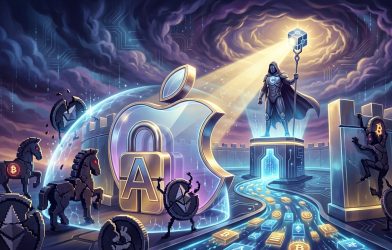
Let’s be blunt. Wall Street isn’t tokenizing assets so your Ethereum wallet can hold a slice of Apple stock. They’re tokenizing assets so their own settlement systems can move faster, their collateral can be more mobile, and their operational costs drop. Public blockchains are exit liquidity in this narrative, not the infrastructure.

There’s a serious catch buried underneath all this momentum. Tokenization only works at scale if the tokenized assets across different platforms can actually talk to each other. Right now, they can’t.
BMO’s tokenized cash doesn’t natively interoperate with NYSE’s Securitize platform. Nasdaq’s tokenized equities don’t plug cleanly into Kinexys. DTCC is building its own layer. Everyone is racing to own the rails, which means everyone is building slightly different rails, and the interoperability problem is being deferred rather than solved.
Institutions could spend the next three years digitizing assets, running impressive demos, and publishing efficiency reports while the actual cross-platform settlement problem remains mostly unsolved in practice. Faster demos. Same structural delays. Different branding.
If you believe this wave is real (and structurally, it is), the smarter bet is on protocols that have already landed actual institutional partnerships rather than tokens shilling the tokenization theme without traction.
Between you and me, the biggest risk here isn’t regulatory failure. It’s that Wall Street succeeds completely, builds a closed, permissioned tokenized financial system, and the public blockchain ecosystem gets left holding the “inspiration” credit while banks capture all the actual value.
Crypto proved continuous digital markets work. Wall Street is now building its own version with a moat around it. That’s not adoption. That’s appropriation. And the fight over who actually writes the rules of this new structure is just getting started.
References & Sources:
Tokenization transforms traditional assets by representing them as digital tokens on a blockchain network. The financial world is racing to tokenize everything because it unlocks immense benefits that legacy systems simply cannot match. This includes faster, near-instantaneous transfers, enhanced global accessibility, and the ability to execute round-the-clock (24/7) trading. Furthermore, tokenization allows for fractional ownership, making high-value assets accessible to a broader range of investors. Wall Street is particularly drawn to these structural efficiencies to streamline operations and reduce settlement risks, provided they can implement these systems under their own strict regulatory frameworks.
Yes, stocks are actively becoming tokenized, marking a massive shift in how equity markets operate. Tokenized stocks are gaining significant popularity because blockchain technology allows these digital assets to be traded 24/7. While this “always-on” feature is a standard for crypto investors, it was previously impossible in traditional equity markets constrained by opening and closing bells. By tokenizing equities, Wall Street institutions aim to modernize trading infrastructure and provide a more unified, seamless investing experience, all while keeping the process firmly within the boundaries of traditional financial compliance.
Absolutely. Major Wall Street heavyweights, including the New York Stock Exchange (NYSE) and Nasdaq, are rapidly accelerating their plans to tokenize. They are actively developing platforms to transform traditional financial assets—such as stocks, corporate bonds, and mutual funds—into digital tokens on the blockchain. However, Wall Street is determined to tokenize “on its own terms.” Instead of relying on decentralized, permissionless public blockchains, these institutions are building heavily regulated, private, or permissioned networks to ensure they maintain absolute control, security, and legal compliance over the assets.
Tokenization has indeed been Wall Street’s favorite crypto buzzword for years, but it has evolved far beyond mere hype into actionable strategy. It refers to the process of creating digital representations of real-world assets (RWAs) on a blockchain. While traditional finance initially kept decentralized cryptocurrencies at arm’s length, the underlying technology of tokenization has proven too valuable to ignore. By embracing this concept, Wall Street institutions are looking to capture the operational efficiencies and cost-savings of blockchain technology while stripping away the anarchic elements of crypto, thereby retaining their centralized authority and strict regulatory standards.