Subtotal $0.00


Magazines cover a wide array subjects, including but not limited to fashion, lifestyle, health, politics, business, Entertainment, sports, science,


Magazines cover a wide array subjects, including but not limited to fashion, lifestyle, health, politics, business, Entertainment, sports, science,
 Fact Checked by Coinsbeat Editorial Team | Expert Reviewed by Themiya
Thirteen point seven percent of JST’s total supply is gone. Permanently. In six months. That’s not a small number, and frankly, the market hasn’t fully priced it in yet. But before you ape in, let’s be real about what’s actually happening here and where the real risk sits.
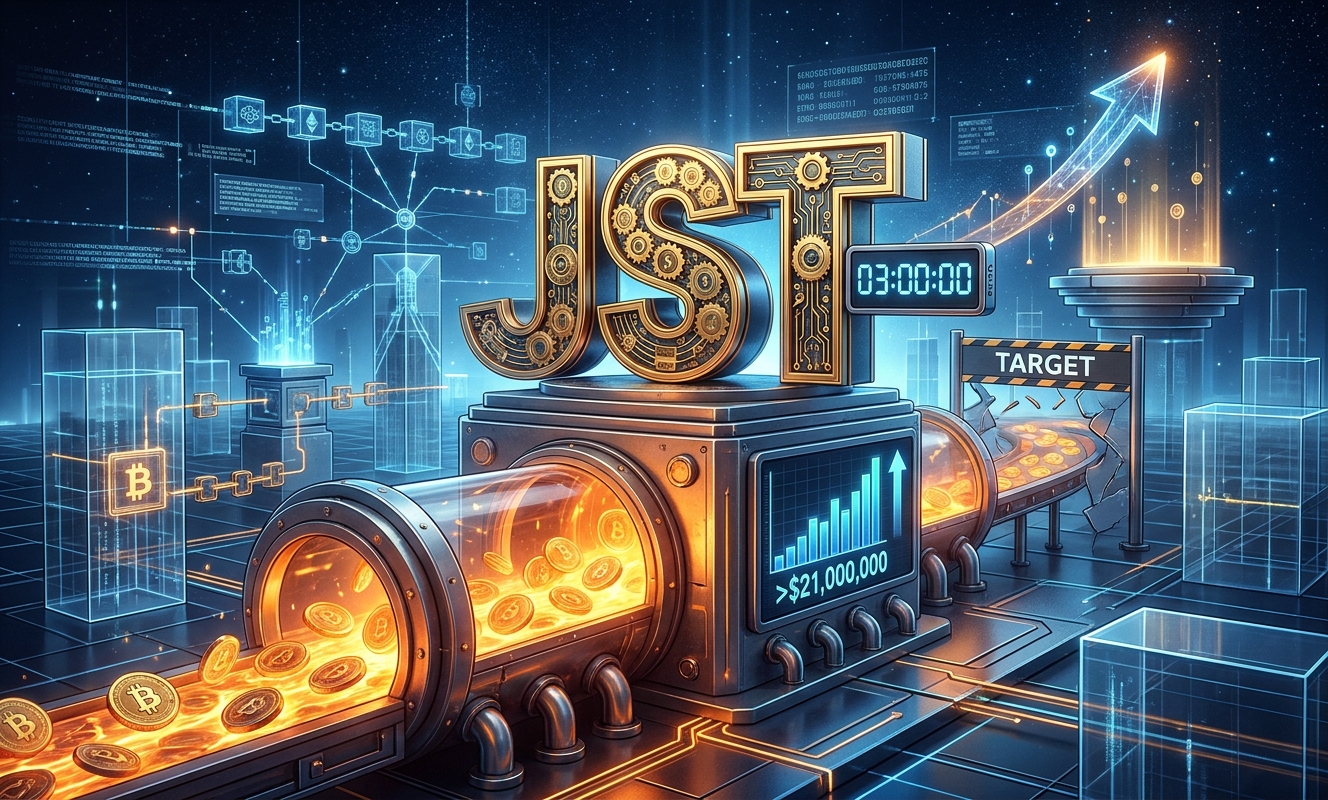
JustLend DAO just wrapped its third JST buyback and burn. Round 3 took out 271,337,579 tokens worth roughly $21.3 million, funded entirely from organic protocol revenue. No treasury raids. No token inflation to cover it. That distinction matters enormously.
Here’s the full breakdown:
Total damage to supply: 1,356,228,332 JST, permanently out of circulation. The price has responded accordingly, moving from roughly $0.03 to $0.08 since October. That’s over 100% in a market that has chewed up and spat out dozens of projects in the same window.
Look, the buyback-and-burn mechanic itself isn’t new. Dozens of protocols have tried it. Most quietly shelved it when revenue dried up. The reason JST’s program has teeth is because JustLend DAO generates genuine revenue from actual product usage, not paper yields paid out in native tokens.
The platform runs four distinct revenue lines:
That $6.75 billion TVL isn’t marketing fluff. JustLend consistently ranks in the global top three for lending TVL. The revenue is real, the on-chain transactions are public, and every token burned has a traceable hash. Grants DAO executed the entire Round 3 burn on-chain, meaning no centralized custodian touched the capital. That’s structurally cleaner than most DeFi burn programs you’ll see shilled on Crypto Twitter.
The burn funding formula is also worth understanding. Capital comes from two sources: JustLend’s net revenue and USDD ecosystem earnings above a $10 million threshold. Since USDD hasn’t crossed that threshold yet, all three rounds have been funded exclusively by JustLend’s organic earnings. When USDD revenue kicks in above that floor, the burn rate accelerates. That’s the hidden multiplier most analysts are sleeping on.

Here’s the thing. Supply destruction creates upward price pressure only when demand stays flat or grows. JST has benefited from a tailwind that combines shrinking supply with a recovering broader market since Q4 2025. The 100%+ price move is real, but you have to ask how much of that was macro crypto recovery versus JST-specific fundamentals.
Honestly, it’s probably both. And that’s fine. But here’s the investor lens you should apply:
Early JST holders from October 2025 are sitting on clean gains. Good for them. The question now is whether new capital entering at $0.08 is buying into a compounding deflationary story or becoming exit liquidity for those early movers.
The transparency mechanism is legitimately strong here. Every burn is traceable. No whale manipulation in the burn execution itself because the Grants DAO process is publicly verifiable. That’s a meaningful structural advantage over protocols where “burns” happen in back-room multisig wallets you can’t audit.
But don’t confuse operational transparency with zero risk. They’re different things entirely.

If you’re building a position in JST or monitoring it, set an alert for any official announcement that USDD ecosystem revenue has crossed the $10 million threshold. That’s the moment the second funding pillar activates and burn capital potentially doubles. Right now, the market doesn’t seem to have priced in that scenario at all. That’s the asymmetric information edge sitting in plain sight in the protocol documentation.
Track the JustLend DAO transparency page directly. Don’t rely on secondhand summaries. When Round 4 gets announced, the capital commitment size relative to USDD revenue contribution will tell you everything about the program’s trajectory.
JustLend’s entire value proposition is TRON-native. If TRON’s on-chain activity contracts, whether through regulatory action, user migration, or a competitor like Solana’s DeFi ecosystem pulling TVL, JustLend’s revenue compresses directly. A sustained revenue drop below the burn capital threshold doesn’t just slow the flywheel. It stops it entirely. And a stopped flywheel in a market that has already priced in future burns is where prices get ugly fast.
Position sizing accordingly. The deflationary thesis is structurally sound. The single-chain dependency is the real risk nobody’s talking about in the JST shilling threads.
References & Sources:
The JST buyback and burn program is a powerful deflationary mechanism designed to reduce the total circulating supply of JUST (JST) tokens. By systematically purchasing tokens from the open market and permanently removing them from circulation (burning), the protocol aims to increase token scarcity. For token holders, breaching the $21 million mark indicates remarkably strong protocol revenues and a firm commitment to enhancing long-term token value and ecosystem stability.
JST breached the impressive $21 million milestone during its third buyback and burn event by successfully utilizing excess generated platform fees and protocol revenues to purchase tokens. Being reported as “on schedule and above target” highlights the robust financial health, higher-than-expected user activity, and the unparalleled efficiency of the JUST decentralized finance (DeFi) ecosystem in generating sustained yield.
A $21 million token burn significantly impacts the JUST ecosystem by permanently eliminating a large portion of the JST supply. This creates substantial deflationary pressure that can positively influence the token’s market dynamics. Furthermore, it builds immense trust within the community, showcasing the development team’s dedication to maintaining a balanced, sustainable DeFi network while actively rewarding its long-term supporters.
While the exact frequency of JST token buybacks and burns can vary based on community governance decisions and protocol revenue accumulation, they are typically executed on a scheduled basis, such as quarterly or bi-annually. This third successful buyback proves the team’s unwavering commitment to adhering to their publicized roadmap and consistently returning tangible value to the decentralized Web3 community.