Subtotal $0.00


Magazines cover a wide array subjects, including but not limited to fashion, lifestyle, health, politics, business, Entertainment, sports, science,


Magazines cover a wide array subjects, including but not limited to fashion, lifestyle, health, politics, business, Entertainment, sports, science,
 Fact Checked by Coinsbeat Editorial Team | Expert Reviewed by Themiya
Bitcoin already had its say on Kevin Warsh. When his nomination odds started climbing earlier this year, BTC sold off. Not because the market doesn’t like crypto-adjacent people in power. Because it ran the math, and the math said tighter money is coming.
That’s the uncomfortable truth nobody in crypto Twitter wants to sit with right now. The most “crypto-aware” Fed chair nominee in history could end up presiding over exactly the kind of monetary squeeze that guts speculative assets. Owning a Polymarket position doesn’t make you a dove. And the market already knows it.
Warsh’s financial disclosure confirmed holdings tied to crypto-related ventures, including Polymarket. He’s pledged to divest under Fed ethics rules if the Senate confirms him. Fine. Standard procedure. But here’s the thing: this still makes him the first nominee to walk into the chair’s seat with visible sector exposure at a moment when crypto is actively lobbying for deeper access to the American financial system.
Previous chairs treated digital assets like an awkward relative at Thanksgiving. Kept at arm’s length, acknowledged when necessary, never given a seat at the main table.
Warsh does. And yet the market’s initial read on him was a sell signal for BTC. That tells you everything about where the real pressure point is. It’s not about optics. It’s about monetary policy mechanics.
Let’s be real about the underlying dynamic here. Bitcoin is a liquidity-sensitive asset. Full stop. When the Fed expands its balance sheet and risk appetite runs hot, BTC runs. When the Fed pulls liquidity back, crypto gets hit harder than most asset classes because it’s sitting closest to the edge of the risk spectrum.
Reuters has reported that Warsh favors a smaller Fed balance sheet and a tighter monetary regime. That framing isn’t subtle. It’s the exact backdrop that historically weighs on speculative assets, and Bitcoin sits squarely in that category for most institutional allocators, regardless of the “digital gold” narrative retail keeps shilling.
So you end up with this bizarre paradox. The nominee with the most personal proximity to crypto could deliver the monetary environment that hurts it most. Honestly, it’s almost impressive in its irony.
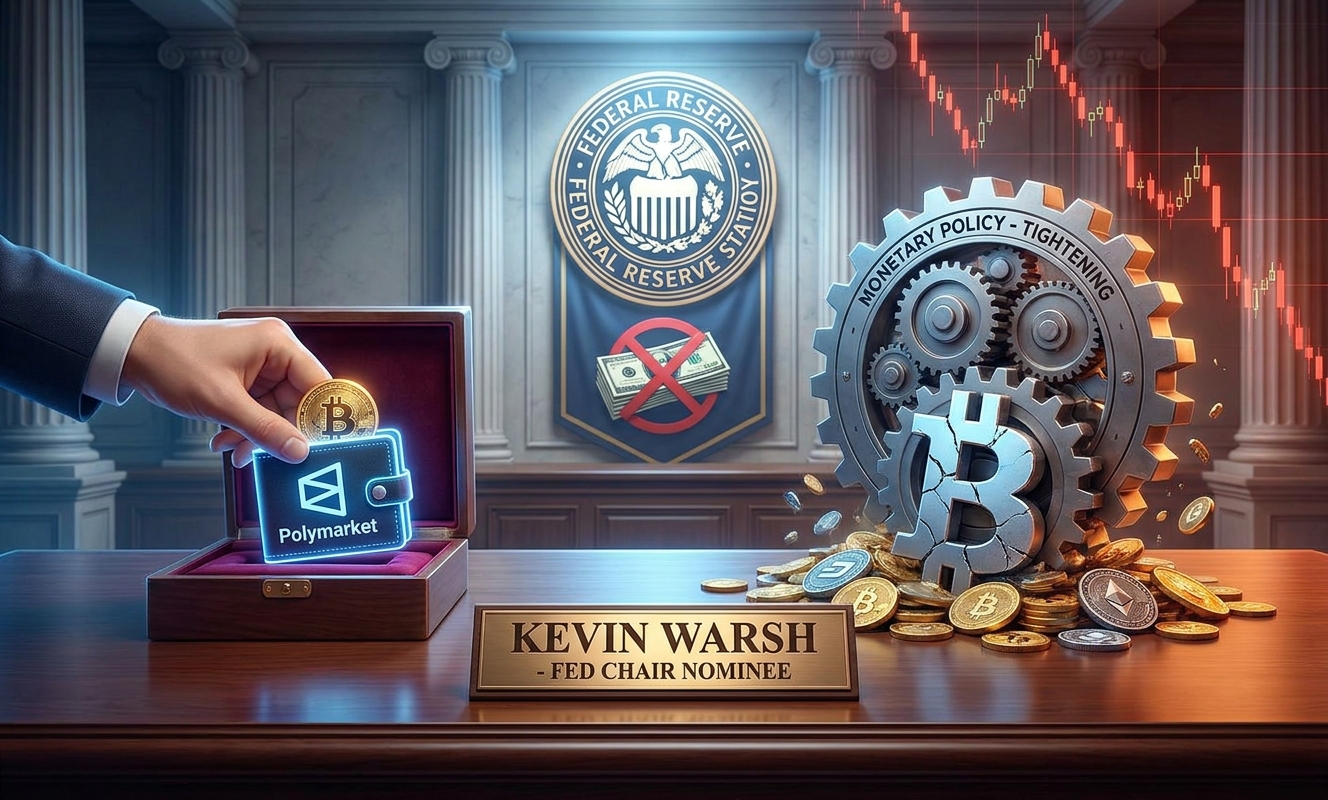
Warsh controls all three levers. His personal holdings in crypto-adjacent firms are getting divested. What remains is the policy worldview, and that’s what actually moves markets.
Earlier this month, Kraken became the first crypto firm to secure a Fed master account. Direct access to Fed payment rails, with restrictions. That’s a genuinely significant structural development, not just a headline. It signals a crack in the wall between crypto infrastructure and the core of American finance.
Regional Fed banks manage those accounts. The Fed board sets the guidelines. A Warsh-led board will inherit the open question of whether that model expands, stays narrow, or quietly gets walked back through supervisory tightening without anyone announcing it publicly.
Look, the Fed chair doesn’t write crypto legislation. Congress does that. But the chair’s posture shapes how willing banks feel to custody digital assets, how aggressive examiners get with firms operating at the banking-crypto border, and how quickly the compliance burden on legitimate crypto businesses eases or tightens. That’s a lot of informal power sitting behind a job title that sounds purely monetary.
Warsh is scheduled to appear before the Senate Banking Committee on April 21. Powell’s term ends May 15. The hearing will carry real signal value for crypto markets. Here’s what to actually listen for:
Markets will read every one of these answers through the same lens they used in January. Any signal of hawkishness on the balance sheet will hit BTC first.

Here’s the angle most coverage is missing. Warsh reportedly wants to be seen as the Fed chair who restores institutional credibility after years of what critics frame as balance-sheet excess. That’s his brand. The “tough medicine” guy. The “shrink the balance sheet and mean it” guy.
If that framing is accurate, then crypto’s proximity to his disclosed holdings might actually create a perverse incentive to be harder on the sector, not softer. Nothing signals independence like being tough on the industry where you just divested your personal positions. It’s the oldest move in Washington, and it absolutely applies here.
Between you and me, this is the scenario the crypto industry should be stress-testing right now. Not the optimistic one where a Polymarket holder naturally tilts favorable toward the sector. The cynical one where he overcompensates to prove he’s not captured. That’s how this town works.
The market is partially pricing Warsh’s hawkishness. The January sell-off showed that. But there’s a gap between “partially priced” and “fully understood.”
The pro-tip is simple and unglamorous. Don’t let the “crypto-adjacent nominee” narrative fool you into a false sense of regulatory comfort. Watch the balance sheet guidance. Watch the tone on bank access. And for the love of everything, don’t front-run a dovish pivot just because the guy once held a Polymarket position. That’s how retail becomes exit liquidity for institutions that already read the hearing transcripts before the rest of us did.
References & Sources:
Kevin Warsh has been remarkably open to digital assets, famously declaring that “Bitcoin is your new gold” for investors under 40. He has pointed out that as Bitcoin matures, it is increasingly recognized as a viable alternative currency. Furthermore, Warsh has noted that Bitcoin’s growing strength and market dominance should come as no surprise, especially when evaluated against the weakening performance and inflationary pressures facing global fiat currencies.
Yes, in January 2026, President Donald Trump nominated Kevin Warsh to succeed Jerome Powell as the Chair of the Federal Reserve. Warsh brings a wealth of experience to the position, having conducted extensive research in the fields of economics and finance. In addition to his previous public service on the Federal Reserve Board of Governors, he has served as a strategic advisor to several prominent private and public companies.
Kevin Warsh could be the most impactful Fed Chair for Bitcoin because he fundamentally understands its value as a decentralized hedge against inflation. Unlike traditional central bankers who often view cryptocurrency with extreme skepticism, Warsh recognizes Bitcoin’s utility and massive demographic appeal. His leadership at the Federal Reserve could signal a historic shift toward crypto-friendly monetary oversight, heavily accelerating institutional adoption and integrating digital assets into mainstream financial frameworks.
A Federal Reserve led by Kevin Warsh would likely foster a more innovative and welcoming environment for the broader crypto market. Because he acknowledges the shortcomings of traditional fiat systems, Warsh is expected to avoid heavy-handed, restrictive central banking policies against digital assets. This progressive stance could provide massive regulatory confidence, encouraging traditional banks to interact with crypto firms and potentially sparking a sustained era of growth for digital currencies.