Subtotal $0.00


Magazines cover a wide array subjects, including but not limited to fashion, lifestyle, health, politics, business, Entertainment, sports, science,


Magazines cover a wide array subjects, including but not limited to fashion, lifestyle, health, politics, business, Entertainment, sports, science,
 Fact Checked by Coinsbeat Editorial Team | Expert Reviewed by Themiya
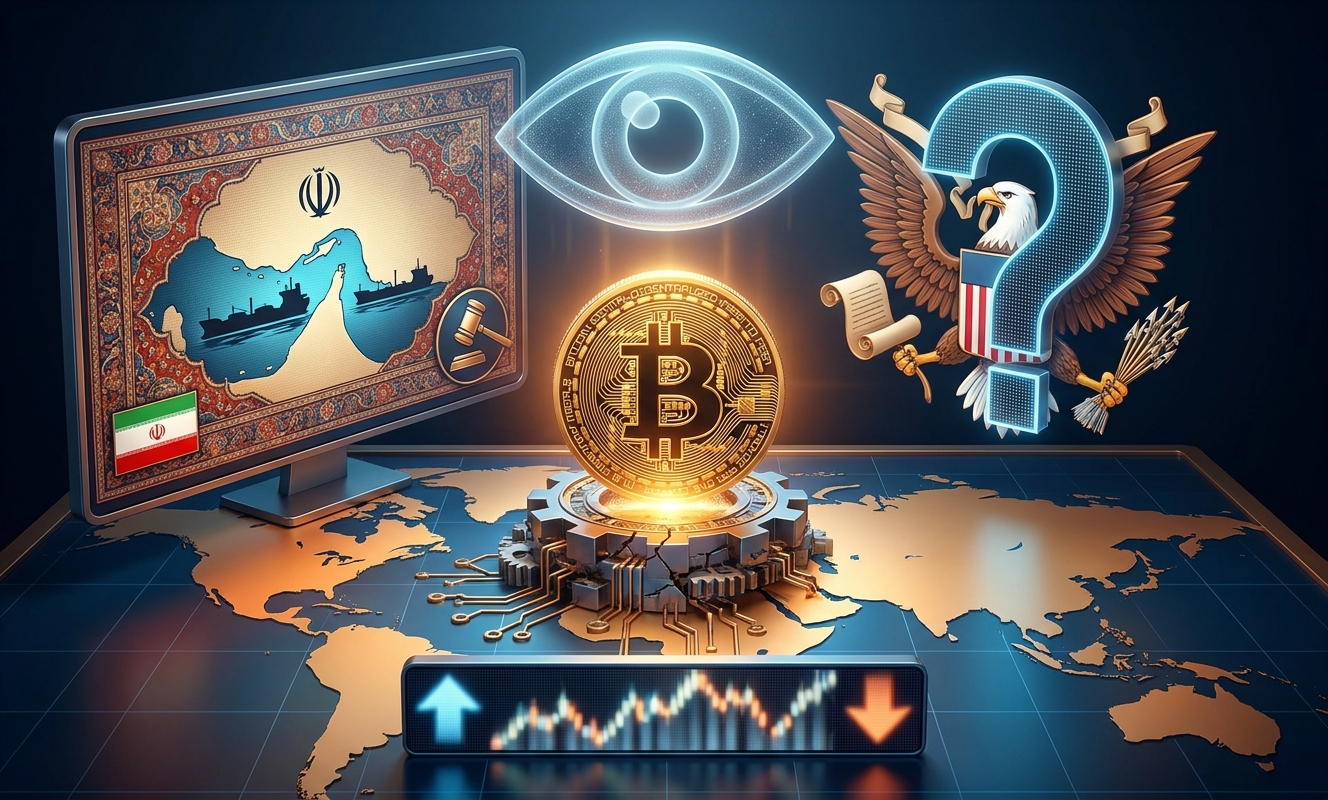
Friday’s rally felt great. Bitcoin surged toward $80,000, oil dropped, Wall Street hit new records, and traders exhaled. The Strait of Hormuz was “open.” Crisis over, right?
Wrong. Not even close.
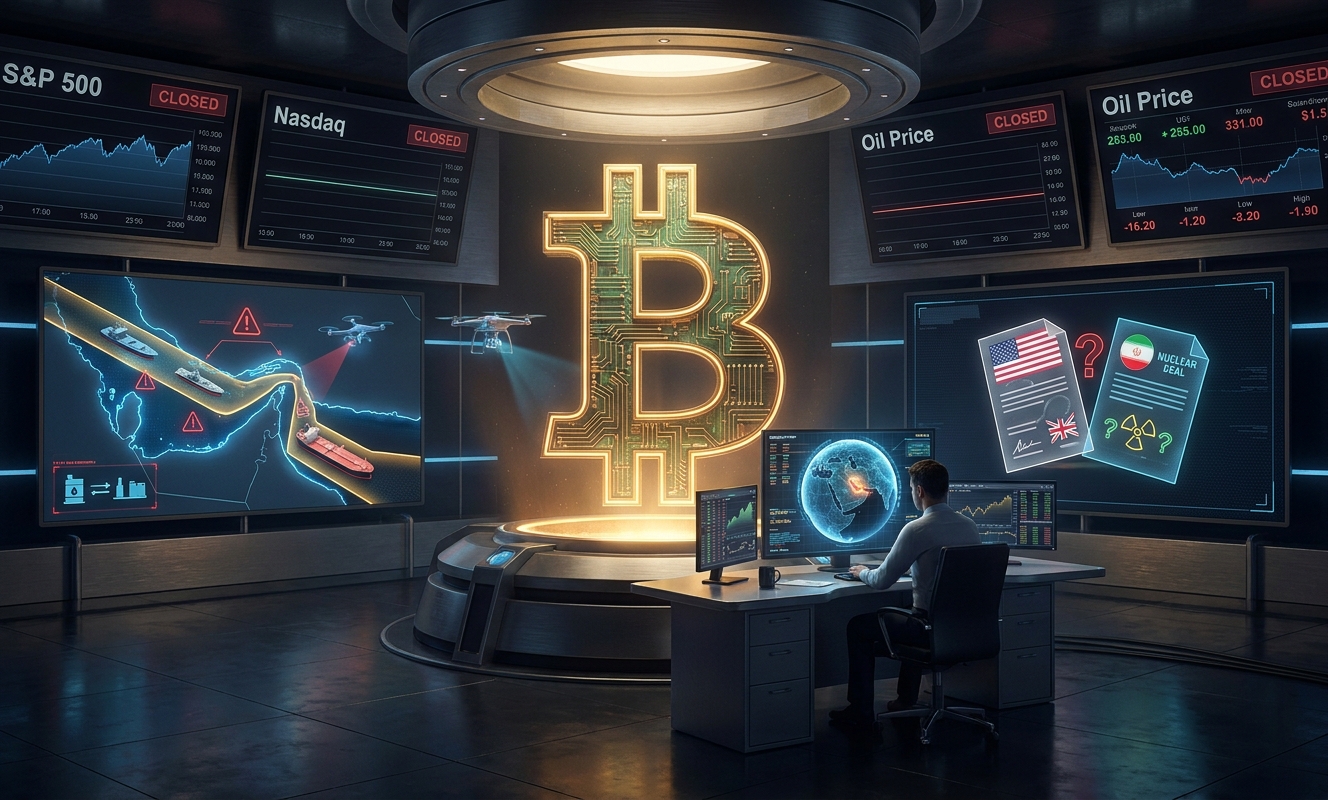
Here’s the thing: the deal that markets celebrated on Friday is, at best, half-real. At worst, it’s a diplomatic press release that Tehran hasn’t actually signed off on. And now, with U.S. stocks, bonds, and most major markets closed for the weekend, Bitcoin sits alone as the only liquid risk barometer available to price whatever happens next.
Let’s be real about the sequence of events. Iran announced a temporary reopening of the Strait of Hormuz to commercial shipping. That’s it. That’s the trigger for everything that followed. Bitcoin’s short squeeze, the oil selloff, the Treasury yield dip to 4.24%, all of it traced back to that single headline.
But dig one layer deeper and the story gets uncomfortable fast.
Maersk said it plainly: every transit is still a judgment call. Shipping firms aren’t exactly lining up to test the route. The 600-plus vessels stuck in the Gulf, including 325 tankers, don’t clear overnight because someone in Tehran gave a vague statement to a state media outlet.
Oil prices reflected some relief, sure. U.S. crude closed at $82.59, Brent at $90.38. But both are still elevated compared to pre-conflict levels. The risk premium didn’t disappear. It just shrank a little on optimism.
This is the part that should genuinely concern every trader holding a leveraged long over the weekend.
Trump told Axios a deal could come “in a day or two,” framing it around the U.S. releasing $20 billion in frozen Iranian funds in exchange for Tehran surrendering its enriched uranium. He used the phrase “nuclear dust.” It’s a vivid image. The problem is Iran’s Foreign Ministry spokesperson, Esmaeil Baghaei, went on record rejecting any uranium transfer to the United States and called U.S. statements on Hormuz contradictory.
That’s not a minor semantic dispute. That’s two sides describing fundamentally different realities.
The Washington Post noted that earlier U.S. claims about Iranian commitments had already fallen apart or proved unreliable. Tasnim reported on April 15 that Iran was still defending uranium enrichment as a non-negotiable sovereign right. Non-negotiable. As in, not on the table.
So the gap between what traders priced into Friday’s close and what diplomats are actually arguing about is enormous. And that gap doesn’t get resolved over a weekend. It festers.

This is the structural problem that doesn’t get enough attention. Institutions have made Bitcoin a deeply liquid weekday market. When the weekend hits, that liquidity mostly vanishes, and whoever’s left holding positions is retail and degens.
Bitcoin’s Friday rally was heavily driven by short liquidations, a classic squeeze mechanic. A flood of forced buybacks pushed price higher fast, which attracted momentum chasers, which squeezed more shorts. That’s the technical engine. The macro narrative just gave it permission to run.
Squeezes are violent in both directions. The same positioning that powered the move up can unwind just as quickly if the narrative cracks. And here’s exactly how that crack could appear this weekend:
There’s no middle ground here. Bitcoin doesn’t get to sit this one out.
One more layer worth watching. The 10-year Treasury yield slipped to 4.24% on Friday, partly because oil dropped and took some heat off the inflation narrative. That’s constructive for risk assets in the short term.
But here’s the trap. If oil bounces back over the weekend, either from a breakdown in talks or a shipping incident, the inflation debate roars back to life by Monday. Higher oil means higher inflation expectations. Higher inflation expectations mean bond yields go up. Higher yields tighten liquidity conditions for everything, including crypto.
Bitcoin then faces a double hit. First, the immediate macro repricing from a geopolitical shock. Second, the downstream pressure from a bond market that has to absorb fresh inflation fears. Honestly, the weekend risk isn’t just “will Bitcoin go down a bit.” The risk is that it becomes the first place a genuine macro reversal shows up, while most investors are completely unable to act on their stock and bond exposure.
That’s the situation retail traders are walking into right now. Again.
Look, if you’re holding a leveraged long over the weekend based on Friday’s headlines, you need to be honest about what you’re actually betting on. You’re betting that Trump’s version of the Iran deal is accurate, that Tehran quietly accepts it, that mine-clearing goes smoothly, that no maritime incident occurs, and that the Lebanon ceasefire holds. That’s four or five things that all need to go right simultaneously.
Each one of them has real precedent for going wrong. Several already have, multiple times during this conflict.
Friday’s rally was real. The momentum was real. The short liquidations were real. What wasn’t real was the assumption that a temporary corridor reopening in a heavily mined strait means Washington and Tehran have resolved a decades-long nuclear standoff.
Those are two very different things. And Bitcoin, trading alone all weekend, is the only market that gets to figure out which one actually matters first.
References & Sources:
Despite fears of a market downturn, a complete Bitcoin crash due to the Iran conflict seems unlikely. Historically, geopolitical turmoil drives investors toward safe-haven assets. While traditional safe havens like gold have ripped higher through the recent US-Iran conflicts, Bitcoin bulls anticipate that cryptocurrency will soon catch up. Furthermore, on-chain wallet data indicates strong market conviction; “whales”—the largest Bitcoin holders—have consistently bought through the worst of the geopolitical turmoil rather than dumping their positions. However, with Iran already disputing the US narrative on the Hormuz deal, traders should remain prepared for sudden weekend volatility.
The Strait of Hormuz is one of the world’s most critical oil choke points, meaning any disruption or diplomatic breakdown there instantly sends shockwaves through traditional energy and equity markets. When conflicts arise—such as the current dispute between US and Iranian officials over a proposed deal—investors look to hedge their portfolios against rising energy costs and inflation. Cryptocurrency markets, notably Bitcoin, often react as alternative, decentralized investments. While initial geopolitical shockwaves can cause temporary dips as investors seek liquid cash, prolonged tension typically drives institutional capital toward crypto to hedge against fiat currency instability.
Bitcoin volatility tends to spike over the weekend due to a combination of lower overall trading volumes and the closure of traditional financial markets. Because the cryptocurrency market trades 24 hours a day, 7 days a week, major geopolitical news breaking over the weekend—such as new developments in US-Iran relations or immediate disputes over the Hormuz narrative—cannot be priced into traditional equities or commodities until Monday morning. Consequently, global market participants channel their immediate reactions and speculations solely through cryptocurrencies, leading to exaggerated, rapid price swings.
The narrative of Bitcoin as “digital gold” or a reliable safe-haven asset is thoroughly tested during intense geopolitical crises in the Middle East. During the recent US-Iran tensions, Bitcoin’s initial price action showed mixed signals compared to the steady, rapid rise of physical gold. However, the underlying fundamentals suggest strong resilience. The fact that high-net-worth investors and institutional buyers are heavily accumulating Bitcoin amidst the Hormuz deal uncertainty highlights a growing long-term conviction that Bitcoin serves as a highly effective, decentralized hedge against global instability and government-driven market manipulation.