Subtotal $0.00


Magazines cover a wide array subjects, including but not limited to fashion, lifestyle, health, politics, business, Entertainment, sports, science,


Magazines cover a wide array subjects, including but not limited to fashion, lifestyle, health, politics, business, Entertainment, sports, science,
 Fact Checked by Coinsbeat Editorial Team | Expert Reviewed by Themiya
The US government isn’t trying to regulate all of crypto. It’s doing something smarter, and honestly, more strategically dangerous for the rest of the market. It’s picking a lane. And that lane has one passenger: the dollar-pegged, federally compliant stablecoin.
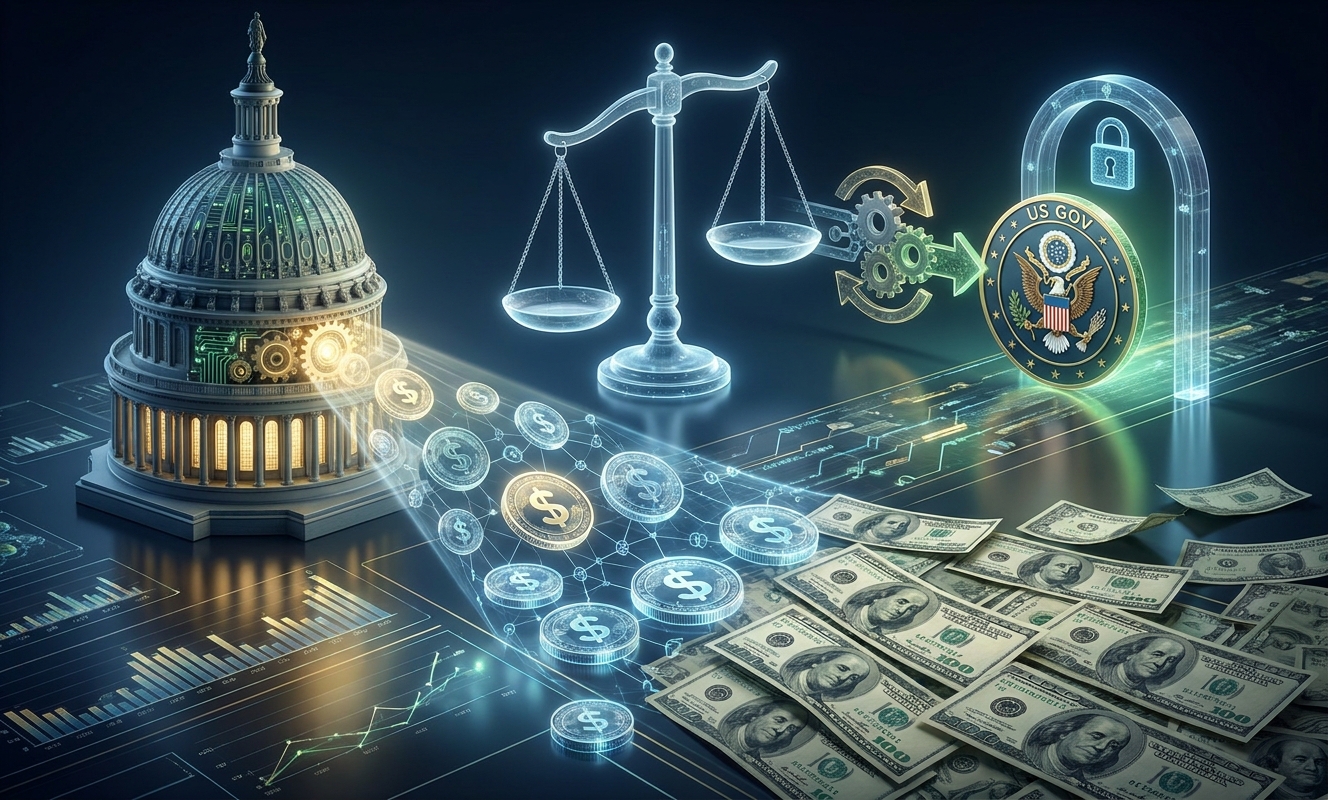
Two pieces of legislation are moving in tandem right now. The GENIUS Act is already law. The Digital Asset PARITY Act is a discussion draft with serious bipartisan backing. Together, they’re not just regulatory paperwork. They’re a coordinated effort to build a two-tier crypto economy inside the United States, one where regulated stablecoins get all the perks and everything else stays in legal purgatory.
Let’s be real about the GENIUS Act first. It passed the Senate 68-30 and cleared the House 308-122. Those aren’t close votes. That’s Washington moving with unusual conviction. The law defines what a legal payment stablecoin is, who can issue one, what reserves must back it, and what compliance programs must run underneath it. 100% liquid reserves. Full Bank Secrecy Act obligations. Anti-money-laundering programs baked in at the issuer level.
It’s a tight rulebook. Deliberately so.
Now the PARITY Act discussion draft, re-released in March 2026 by Representatives Max Miller and Steven Horsford, comes in as the second half of the play. Here’s the core proposal: gains from selling a qualifying regulated dollar stablecoin generally wouldn’t count as gross income. Losses wouldn’t be recognized either, unless your cost basis drops below 99% of the redemption value. Recipients on exchanges get a deemed basis of exactly $1.
Translation for normal people? Buying a coffee with USDC would stop creating a micro tax event every time the token drifts 0.003 cents from its peg. That frictionless cash-like experience is exactly what stablecoin adoption has been missing in the US for years.
Here’s the thing nobody is saying loudly enough. This isn’t purely about crypto adoption. This is about dollar dominance.
Stablecoins pegged to the dollar and backed by US Treasuries are, functionally, a mechanism to export dollar demand globally without the Federal Reserve lifting a finger. Every USDC held on a wallet in Brazil or Nigeria or Vietnam is a unit of demand for US government debt. The GENIUS Act’s reserve requirement mandating liquid assets, read: Treasuries and cash at regulated banks, makes that pipeline explicit.
Washington is using stablecoin regulation as a soft-power instrument. The compliance framework isn’t just consumer protection. It’s a moat. A moat that keeps foreign, offshore, or algorithmically-backed stablecoins out of the “qualified” category and keeps Treasury demand flowing inward.
Cynical? Sure. Also accurate.

Circle and USDC are the obvious frontrunner. Monthly reserve attestations from a Big Four firm. Treasuries and cash at regulated banks. Existing state money transmitter licenses. USDC was essentially built for a regulatory environment like this. It won’t need major structural surgery to qualify as a permitted payment stablecoin issuer under the GENIUS Act.
Tether played it differently. Rather than retrofitting USDT, which carries years of reserve controversy and offshore baggage, they launched USA₮ in January 2026 through Anchorage Digital Bank. Separate token. Clean US-compliant wrapper. Smart, actually. They’re not fighting the framework. They’re building around it.
Then there’s the wildcard: banks. JPMorgan’s Kinexys unit. Bank of America’s public statements about on-chain banking as a “multi-year shift.” The GENIUS Act opened a door for FDIC-insured institutions to issue payment stablecoins through subsidiaries. If those tokens qualify under the Act and gain PARITY Act tax treatment, you’re looking at a stablecoin market where JPMorgan competes directly with Circle for institutional and retail flows.
Look, the OCC proposed its implementing rules in early March 2026. Treasury and FinCEN dropped a joint proposed rule in April covering AML and sanctions compliance. The FDIC is laying out application procedures. None of this is finished. Final implementing rules under the GENIUS Act aren’t required until July 2026, and no issuer has received formal “permitted payment stablecoin issuer” status yet.
Meaning the foundation is being built while the second floor is already being designed.
And the PARITY Act itself isn’t law. It’s a discussion draft. That’s legislative for “we like this idea and we’re floating it publicly.” Discussion drafts can die in committee, get stripped out of reconciliation packages, or simply run out of political oxygen. The bill text still has unfinished technical provisions and explanatory notes that signal it’s not ready for a floor vote.
Miller and Horsford have said they intend to introduce it as a formal bill. There’s been chatter about crypto tax provisions fitting into a broader reconciliation package. But “chatter” doesn’t move markets. Enacted law does.

The direct market impact on Bitcoin? Honestly, minimal in the short term. This framework doesn’t make BTC easier to use or less taxable. If anything, it draws a sharper distinction between “digital dollars” and “crypto assets,” which could quietly reinforce the narrative that Bitcoin is a speculative asset rather than a payment tool. That’s not catastrophic for BTC. It might even push more capital toward it as the uncorrelated “hard asset” in the room. But don’t mistake regulatory clarity for stablecoins as a BTC catalyst.
The real story is in the stablecoin market structure itself. USDC’s circulating supply and adoption metrics become worth watching very closely through H2 2026. If the OCC finalizes its rules and Circle gets formal issuer status, USDC flows into merchant payment rails could accelerate fast. That’s a structural demand story, not a speculation play.
For altcoins broadly? The two-tier regulatory system being built here could starve oxygen from non-compliant tokens over time. If everyday payment use cases get legally routed through GENIUS-compliant stablecoins, the “utility token” narrative for dozens of altcoins gets harder to sustain.
The entire PARITY Act benefit is conditional. The token must be issued by a permitted issuer under the GENIUS Act. It must be pegged only to the US dollar. And it must demonstrate tight price stability over the prior 12 months. That last condition is interesting because it means a token that even briefly breaks its peg during a market stress event could potentially knock itself out of eligibility for the tax carve-out.
Think about March 2023. USDC briefly depegged to around $0.87 during the Silicon Valley Bank collapse. Under the proposed PARITY Act framework’s 12-month stability requirement, that kind of event would be a problem. Not necessarily fatal, but it creates a perverse dynamic where a stablecoin issuer’s regulatory tax advantage depends on price stability it doesn’t fully control.
And here’s the kicker nobody wants to say: the more capital that piles into GENIUS-compliant stablecoins chasing the tax treatment, the bigger the systemic risk if one of those issuers stumbles. The government is essentially creating a preferred class of stablecoin with implicit credibility. When that credibility gets tested, the fallout won’t stay contained to the crypto market.
The framework is smart. The sequencing is deliberate. But the assumption underneath all of this is that regulated stablecoins are inherently safer because they’re regulated. History has a habit of being unkind to that assumption.
Pro-Tip: Don’t front-run the PARITY Act becoming law. Watch the OCC’s final implementing rules in July 2026 instead. That’s the real signal. When formal “permitted payment stablecoin issuer” status starts getting granted, USDC’s institutional partnerships and merchant integration announcements will accelerate. That’s your entry signal for any exposure to Circle-adjacent infrastructure plays, not a discussion draft that hasn’t seen a floor vote.
References & Sources:
No, Tether’s main operations remain highly active, and its core USDT stablecoin is not shutting down. While Tether recently discontinued its Chinese Yuan-pegged stablecoin (CNH₮) due to low demand, its U.S. dollar-pegged assets are stronger than ever. With Congress on the verge of passing legislation to regulate dollar stablecoins and make them function almost like digital cash, Tether is actively adapting its core infrastructure to secure its long-term presence and compliance in the U.S. market.
Based on recent market capitalization data, the top stablecoins currently dominating the cryptocurrency market are led by Tether (USDT) at over $185 billion and USD Coin (USDC) at approximately $78 billion. They are followed by USDS ($11.3 billion), Ethena USDe ($5.8 billion), and typically Dai (DAI) or First Digital USD (FDUSD) rounding out the top five. As Congress moves closer to establishing a comprehensive federal framework, these major dollar-backed stablecoin issuers are positioning themselves to serve as regulated digital cash for everyday mainstream transactions.
The “9 banks stablecoin” refers to Qivalis, a joint venture formed by a consortium of nine major European banks: Banca Sella, CaixaBank, Danske Bank, DekaBank, ING, KBC, Raiffeisen Bank International, SEB, and UniCredit. Operating under the supervision of the Dutch Central Bank, this group plans to launch a MiCAR-compliant euro stablecoin by the second half of 2026. While Europe advances with its banking consortiums, the U.S. Congress is simultaneously working on its own legislation to ensure regulated dollar stablecoins can operate seamlessly and safely as digital cash within the American financial system.
The U.S. is unlikely to rely on a single state-issued stablecoin; instead, it will utilize highly regulated, privately-issued dollar-backed tokens that comply with emerging federal legislation like the GENIUS Act. For example, Tether recently launched “USA₮,” a new dollar-backed stablecoin issued by a federally chartered U.S. institution, Anchorage Digital Bank, designed specifically for the American market. As Congress finalizes laws to make regulated stablecoins act almost like digital cash, Americans can expect to use compliant tokens like USA₮, USDC, and others that meet strict federal reserve and consumer protection standards.