Subtotal $0.00


Magazines cover a wide array subjects, including but not limited to fashion, lifestyle, health, politics, business, Entertainment, sports, science,


Magazines cover a wide array subjects, including but not limited to fashion, lifestyle, health, politics, business, Entertainment, sports, science,

 Fact Checked by Coinsbeat Editorial Team | Expert Reviewed by Themiya
Most sports token projects are, bluntly, exit liquidity dressed up in a jersey. Jonathan Ludwig knows this. It’s probably why he built Fantium to work completely differently.
In a recent SlateCast conversation with CryptoSlate’s Liam “Akiba” Wright and Nate Whitehill, Fantium’s CEO laid out a thesis that cuts against almost everything the fan token space has been selling for the past five years. His core argument? Tokenization only makes sense when there’s a real financial relationship underneath it. Everything else is speculation with branding on top.
He’s not wrong. And the market has already proven his point, repeatedly.
Here’s the thing nobody wanted to say out loud during the Socios era: the clubs issuing those fan tokens had almost no incentive to make them valuable. They got paid upfront. The token holders? They got voting rights on bus wrap colors and a speculative asset with zero cash flow. That’s not a financial product. That’s a merch drop with extra steps.
Ludwig put it plainly. The clubs and athletes “were not owning the upside.” And if you don’t own the upside, you don’t hustle for the holders. Simple as that.
This is the hidden incentive problem the whole industry glossed over. When the entity issuing the token cashes out at launch and faces no downside if the token craters, alignment is structurally impossible. Retail investors were, in almost every case, providing liquidity for someone else’s exit.
Ludwig’s framing flips this. Fantium’s model requires athletes to own both “the upside and the downside.” That single design change does more for token health than any whitepaper ever could.
Let’s be real about what makes a tokenized asset investable versus speculative. Predictability. Auditability. A clear cash flow mechanism. Prize money from professional tennis hits all three.
Sponsorship revenue? Endorsement deals? Those are negotiated privately, hard to audit, and wildly inconsistent. You can’t build a payout model on something you can’t verify. Fantium figured this out early. Tournament winnings are public record. The math actually works.
The P2P structure Ludwig describes, no intermediaries, direct athlete-to-supporter financing, is also quietly significant. Traditional sports finance routes significant capital through agents, agencies, and sports banks, all of whom clip a fee. A junior tennis player raising career capital directly from a global supporter base, with utility like access built into verified ownership, is genuinely different from anything that came before it.
Ludwig mentioned that some junior players “have completely changed their lives” through the platform. Cynical as I try to stay, that’s a hard data point to dismiss.
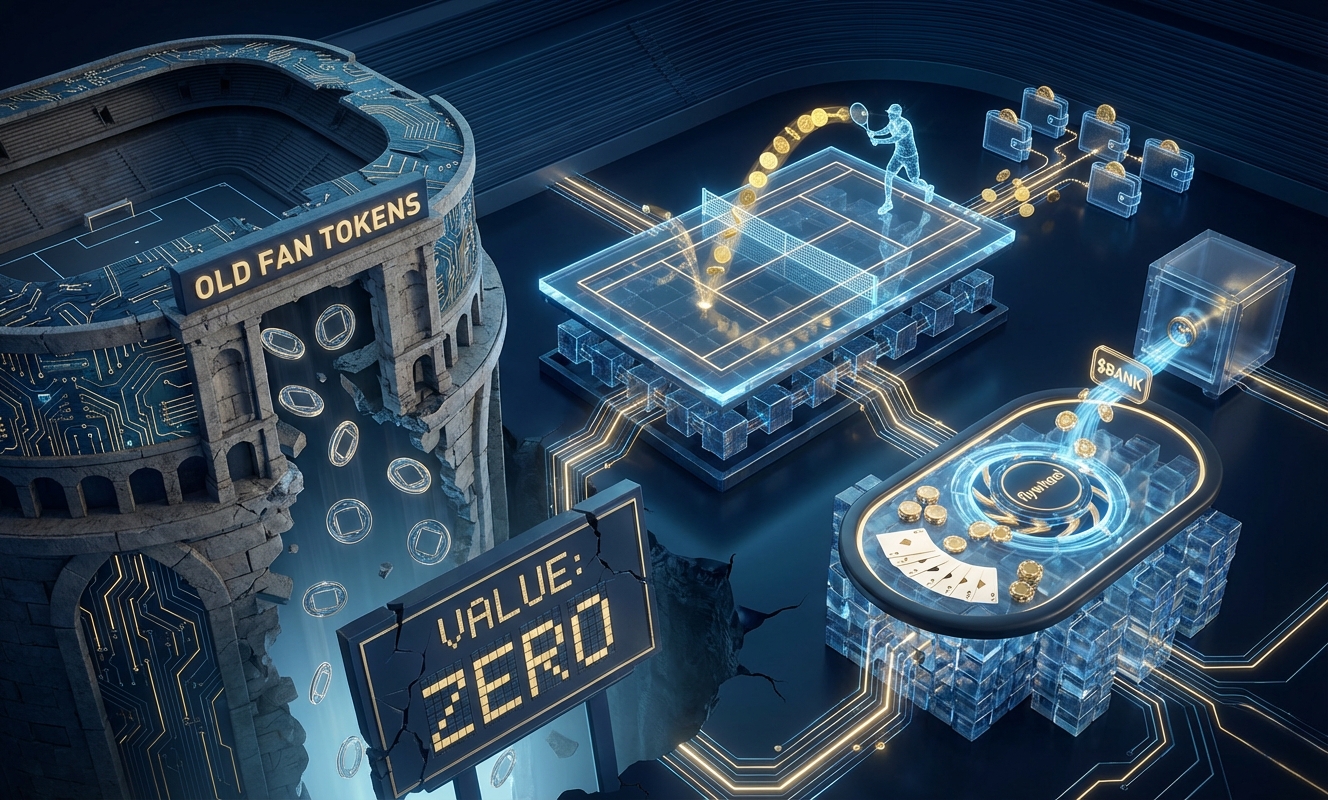
This is where it gets interesting, and where scrutiny is warranted.
The $BANK token finances professional poker players’ tournament buy-ins. Returns get recycled back to buy the token. It’s essentially an on-chain staking vehicle for variance management in poker, a real problem that pros have always solved through informal backing deals.
Formalizing that on-chain is genuinely clever. Poker players sell action all the time. Putting that on a transparent, auditable ledger with token mechanics attached is a logical extension. The “flywheel” framing, returns buy back tokens, which deepens liquidity, which attracts more capital, which funds more players, is coherent in theory.
But here’s where I pump the brakes slightly.
Ludwig’s reasoning for choosing Solana, go where the liquidity is, is strategically sound. You don’t build a market where no one is trading. Solana has the volume, the infrastructure, and the on-chain activity that makes a sports capital markets product viable today.
His rejection of bonding curves for sports audiences is also sharp thinking. Bonding curves reward speed. Crypto natives can front-run a launch in milliseconds. A football fan trying to buy their club’s token on a bonding curve is going to get eaten alive by bots before they even finish loading the page. That’s not accessibility. That’s a trap.
Avoiding mechanics that punish the exact audience you’re trying to serve is a good sign that Fantium is thinking about product-market fit rather than just shipping crypto-native features for the sake of it.
Look, the thesis is coherent. Real financial assets, aligned incentives, transparent cash flows, and genuine utility. That’s the right framework. The execution risk is still significant, and the sports token category carries baggage from years of low-quality projects that burned retail participants.
Adoption is going to hinge on exactly what Ludwig acknowledged: better regulation, cleaner on-ramps and off-ramps, and products that non-crypto users can actually navigate. The abstraction layer matters enormously. If a tennis fan has to understand Solana wallets and token mechanics to support their favorite player, most of them won’t bother.
The category is worth watching. The specific execution still needs to prove itself over a few market cycles.
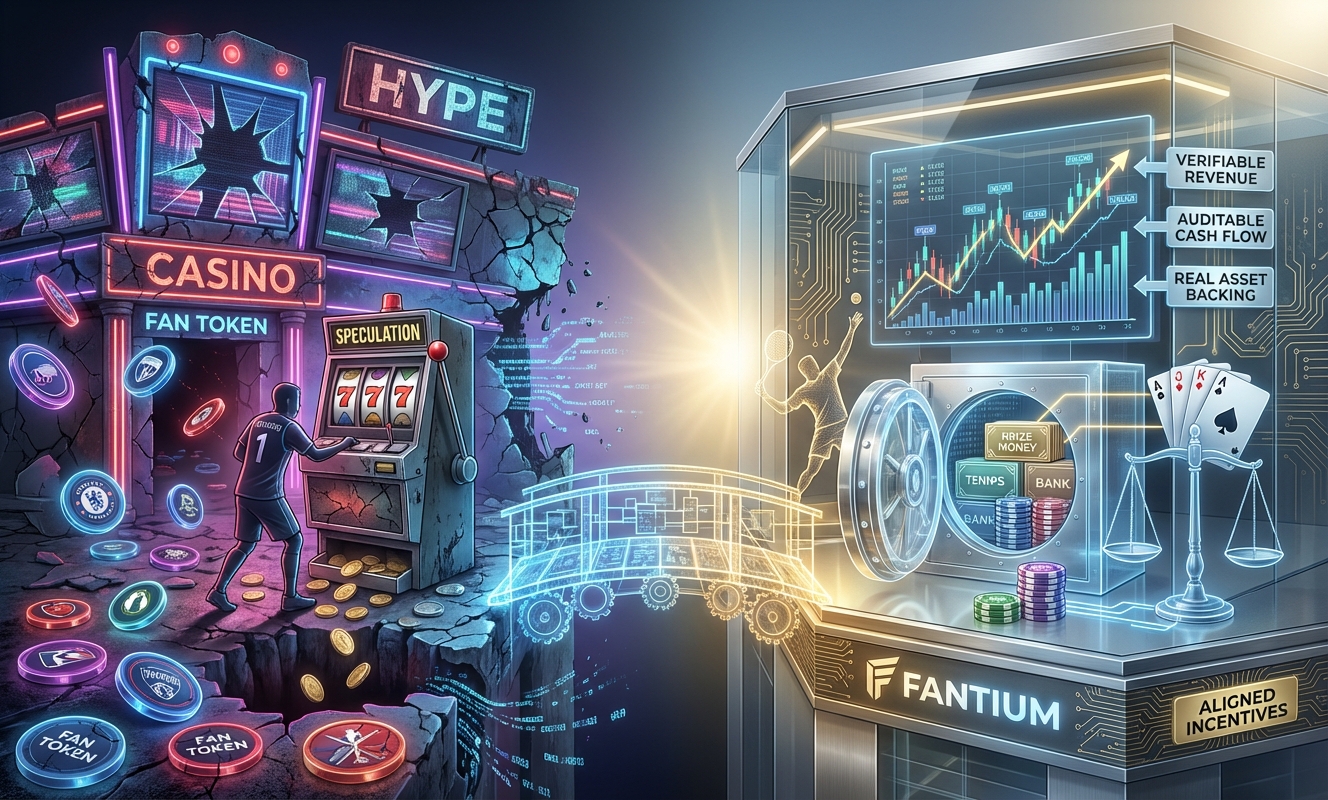
If you’re evaluating any sports token product, including Fantium’s, run through four questions before touching it with capital. One: does the issuer own meaningful downside if the token fails? Two: is the cash flow underpinning the token publicly auditable? Three: is there a real payout mechanism, or is price appreciation the only return narrative? Four: who gets liquid first?
If any of those answers is murky, wait. The sports tokenization space is early enough that patience is a legitimate strategy. Let the model prove itself through a full cycle before committing serious size.
References & Sources:
Fantium CEO Jonathan Ludwig emphasizes that successful sports tokenization requires three core elements: genuine utility, strong alignment of interests between athletes and fans, and real, tangible access to the sports ecosystem. Without these pillars, sports tokens and NFTs risk becoming mere speculative assets rather than innovative tools that drive meaningful, long-term fan engagement and value creation.
Tokenization creates powerful alignment by turning passive fans into active, invested stakeholders. According to Jonathan Ludwig, when fans purchase sports tokens, they are essentially investing directly in an athlete’s career or a team’s success journey. This shared financial and emotional alignment means that as the athlete succeeds, grows their brand, and earns more, the fans who supported them early on also share in the rewards, forging a deeply loyal and mutually beneficial community.
“Real access” in the context of sports tokenization goes far beyond standard VIP tickets or generic merchandise discounts. Ludwig envisions utility-driven tokens granting fans exclusive, behind-the-scenes experiences, direct interactions with their favorite athletes, voting rights on specific team or athlete decisions, and entry into private, token-gated communities. This model bridges the traditional gap between the audience and the sporting world, offering fans unprecedented proximity to the stars they support.
Utility is absolutely critical because it shifts the industry’s focus away from pure financial speculation toward delivering actual, ongoing value to the token holder. Jonathan Ludwig points out that for sports NFTs and Web3 projects to survive and thrive long-term, they must offer continuous, real-world perks. This includes exclusive content, potential financial yields tied to athletic performance, and unique physical and digital experiences that consistently validate the fan’s initial investment.