Subtotal $0.00


Magazines cover a wide array subjects, including but not limited to fashion, lifestyle, health, politics, business, Entertainment, sports, science,


Magazines cover a wide array subjects, including but not limited to fashion, lifestyle, health, politics, business, Entertainment, sports, science,
 Fact Checked by Coinsbeat Editorial Team | Expert Reviewed by Themiya
Oil dropped below $90. Bitcoin is ripping higher. Everyone’s celebrating the “de-escalation trade.” And almost everyone is missing the actual story.
The crude price is the headline. It’s not the damage. The damage is happening in the plumbing underneath global trade, in the shipping lanes, the LNG terminals, the fertilizer supply chains, the aviation fuel depots, and the trade finance windows that keep the whole system moving. That plumbing is breaking. Quietly. And the effects won’t show up neatly on a crude futures chart.
Let’s be real about what’s happening at Hormuz right now. The IMO has confirmed repeated attacks on commercial vessels since late February. Civilian seafarers have been killed. UNCTAD data shows vessel traffic through the strait collapsed to single digits in early March. Single digits.
Here’s the thing most analysts aren’t saying out loud: a shipping lane doesn’t need to be physically blocked to stop functioning. It just needs to be too expensive to use. War-risk insurance premiums spike. Underwriters tighten terms. Crew unions refuse routes. And suddenly, the corridor is technically open and operationally dead.
That’s the situation developing right now. And the lag is brutal. Insurance pricing and routing behavior don’t snap back the moment a ceasefire gets posted on social media. Underwriting decisions follow incident history, not press releases. So even a genuine diplomatic pause doesn’t immediately restore the confidence that keeps commercial vessels moving through that corridor at normal volumes.
This isn’t a commodity shock anymore. A commodity shock changes prices. A transport shock changes what can physically move. Those are very different problems.
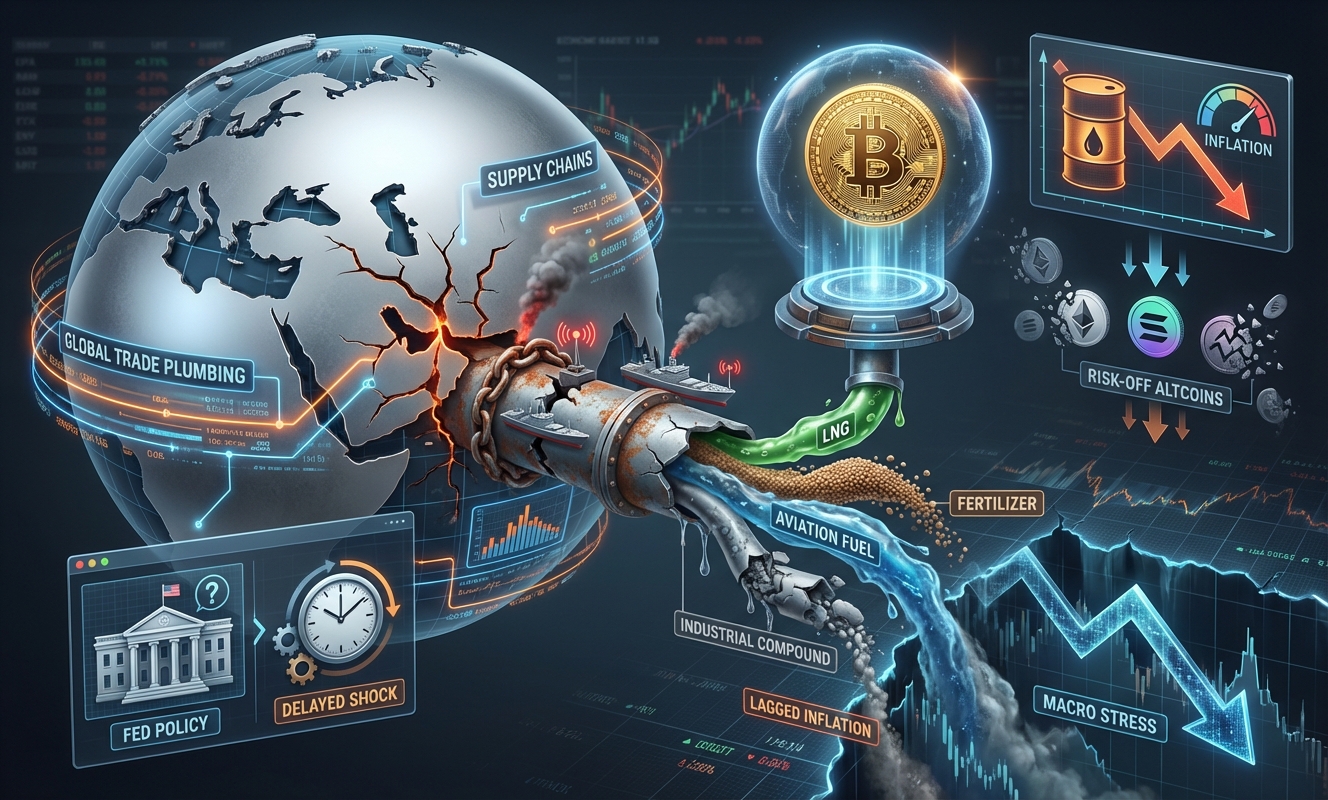
The Strait of Hormuz carries a substantial share of global LNG. Asian importers sit directly in the blast radius, specifically through power generation, chemical feedstocks, and industrial manufacturing. ICIS has already flagged that India’s ammonia production is under threat because LNG supply economics are deteriorating. Reuters’ reporting on China’s March trade data shows the pressure in real numbers: export growth slowing sharply, imports surging. That’s a cost-push squeeze showing up in the data.
Weaker external demand plus rising input costs. That’s the combination. And it hasn’t fully landed in global prices yet.
Roughly one-third of global seaborne fertilizer trade passes through Hormuz. One third. UNCTAD flagged this explicitly and the FAO has warned about food security risks with unusual directness. Tightness in ammonia, urea, and related feedstocks flows directly into agriculture, not immediately but through planting decisions, input-use calculations, and eventually crop yields.
Food inflation has a long memory. And the policy response is usually clumsy because the shock starts upstream in gas and fertilizer markets long before anyone feels it at the grocery store. By the time retail prices move, the window for prevention is already closed.
Europe’s airport sector has warned of potential jet-fuel shortages within weeks if impaired flows continue. Qantas has already cut flights and lifted fares. Airlines can reroute around conflict zones but that burns more fuel, stretches rotations, tightens fleet utilization, and raises costs across both passenger and cargo networks.
Airfreight matters for high-value goods, pharmaceuticals, precision components, and time-sensitive electronics. Higher friction here hits supply chains that had only recently stabilized. This is not a theoretical risk. It’s an operational constraint building in real time.
Naphtha, methanol, ethylene. These aren’t glamorous. They’re also inside almost everything that gets manufactured. S&P Global has reported that the conflict is already forcing companies and governments to rethink supply-chain strategies across chemical feedstocks. South Korea moved to ban petrochemical hoarding preemptively. Governments don’t ration behavior without seeing genuine physical supply risk. That’s a tell.
Honestly, this is where most crypto analysis goes completely wrong. People are still framing this as a simple “risk-on, risk-off” toggle. Bitcoin goes up when oil goes down, Bitcoin goes down when oil spikes. That’s not the framework that applies here anymore.
A narrow oil spike is absorbable if global liquidity stays loose and growth expectations hold. This is not a narrow oil spike. This is a multi-channel supply-side impairment spreading through shipping, gas, fertilizer, aviation, and trade finance simultaneously. That’s a different animal. It creates stickier inflation, weaker growth trajectories, tighter financial conditions, and more selective capital allocation.
In that environment, the crypto complex doesn’t move as one block. It splits. Hard.
There’s also the Iran-Bitcoin toll angle. Reports from the FT indicated Iran proposed Bitcoin payments as fees for safe Hormuz passage. Look, that could be theater. It could also be the first live test of Bitcoin functioning inside a geopolitical chokepoint. Either way, it adds a narrative dimension that traditional safe-haven assets like gold simply can’t access.
March PPI data did come in soft, with headline PPI at 4.0% and core PPI at 0.1% month-on-month against a 0.5% expectation. That’s a real near-term offset to the straight-line inflation acceleration story. But it doesn’t touch the structural risk building underneath. The fertilizer shortages, shipping disruptions, and aviation fuel stress feed into later rounds of cost pressure. Soft PPI today doesn’t neutralize the lagged hits coming through agricultural and industrial channels over the next two to four months.

Here’s where I get genuinely concerned. There’s a meaningful difference between a severe but temporary shock and a situation where the costs of moving energy, goods, and capital become structurally higher for an extended period.
The IMO’s public statements make it clear that fragmented responses are failing to restore commercial confidence in the corridor. In practical terms, confidence is the commodity that keeps shipping routes functional. Without it, Hormuz stays open on paper and half-closed in practice. That’s a regime, not a shock.
If fertilizer shortages persist into planting cycles, you get lagged crop-economics repricing that hits inflation expectations months after the initial conflict premium fades from crude. That’s the kind of shock that catches central banks flat-footed and keeps rate cuts off the table even as growth weakens. Bessent has already told the Fed to “wait and see,” which is Washington’s polite way of saying the inflation picture is too murky to ease into.
For Bitcoin bulls banking on cheaper money to drive the next leg up, that’s a problem. Rate cuts are not coming fast. The Iran conflict just made the Fed’s calculus significantly messier.
Don’t trade this like a normal risk-on rally. The macro backdrop is not normal. Here’s a practical framework.
Risk Factor: The scenario nobody wants to model is a genuine Hormuz closure combined with a failed Fed pivot. That combination would mean stagflationary conditions hitting global risk assets just as Bitcoin approaches the ATH zone around $77k-$80k. In that scenario, even BTC could face significant selling pressure from institutional holders managing macro risk at the portfolio level. Bitcoin isn’t fully immune. It’s just more immune than everything else in the digital asset complex.
References & Sources:
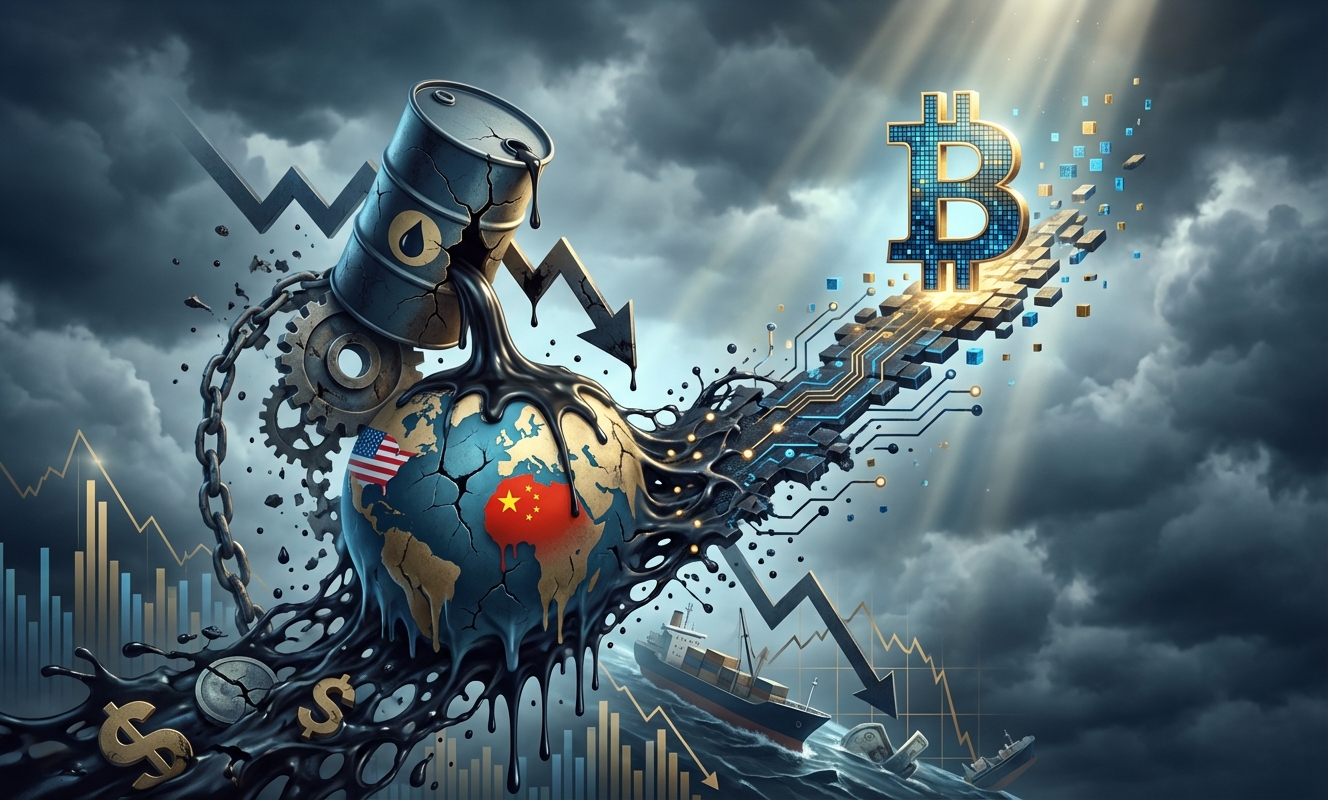
According to market forecasts from financial institutions like J.P. Morgan Global Research, Brent crude is expected to see a significant price adjustment, averaging around $60 per barrel in 2026. This is primarily driven by soft supply-demand fundamentals on a global scale. While a catastrophic “crash” is not the consensus, the downward pressure is substantial. Despite ongoing geopolitical friction—such as tensions between the U.S. and Iran—protracted disruptions to the global oil supply remain unlikely. Instead, the persistent drop reflects broader economic headwinds, including weakening demand from slowing Chinese trade and spreading global economic contagion.
Historically, falling oil prices provide a net benefit to the U.S. economy. Lower energy costs are quickly passed on to everyday consumers at the gas pump, creating a “windfall income” effect. As consumers spend this extra money on other goods and services, it can raise real GDP—historically boosting it by around 0.7 percent during major drops. However, in the current macroeconomic climate, this positive stimulus is being offset. Even with dropping energy costs, U.S. inflation data is steadily weakening and economic contagion is spreading, suggesting that deeper structural issues and cooling global trade are dampening the traditional consumer spending boost.
The ongoing trade tensions and broader economic standoffs between the United States and China inject significant volatility into global oil prices. The relationship dictates massive swings in global demand expectations. When trade negotiations progress or economic stimulus in China seems imminent, market optimism rises and oil prices tend to climb. Conversely, when tensions escalate or China’s import-export data weakens, demand projections plummet, dragging oil prices down. This fragility in U.S.-China trade is currently serving as a major catalyst for broader economic contagion across global commodity markets.
As falling oil prices signal a slowdown in global industrial demand—compounded by weakening Chinese trade and cooling U.S. inflation—investors are becoming increasingly wary of traditional macroeconomic stability. This spreading economic contagion exposes the vulnerabilities of fiat currencies and traditional equities. In this environment of uncertainty and potential central bank rate cuts to stimulate failing economies, decentralized assets like Bitcoin often see a surge in demand. Bitcoin acts as an alternative store of value and a non-correlated hedge, thriving on the liquidity shifts and shifting investor sentiment that arise when traditional global markets falter.